Duck Pizza

Ingredients:

Pizza Dough

1 pkg. active dry yeast

1 c. warm water (110o)

2 ½ c flour

2 T. oil

1 t. sugar

1 t. salt

Topping

4 duck breasts

2 T. olive oil

1 bunch scallions, thinly sliced

2 c. provolone Cheese, grated

Hoisin sauce, bottled

Directions:

To prepare duck breasts: Score skin side with a sharp knife in a criss-cross pattern.  In a frying pan on medium high heat, sear duck breasts in olive oil.  Cover pan, reduce heat to low and cook for 10 minutes.  Remove from heat.  Remove skin and cut duck breast into ½ inch pieces. Set aside while you make the pizza dough. Dissolve yeast in warm water.  Stir in flour, oil, sugar and salt.  Beat 25 strokes or until mixture forms a ball.  Cover and let rest five minutes. Divide dough into four portions.  Grease fingers and spread out dough on baking sheet to form four 8” rounds.  Spread Hoisin sauce on each pizza dough round. Divide duck breast, scallions and provolone cheese between the four pizzas. Bake at 425o F. for 10-15 minutes.  (For crispier crust, prebake five minutes before adding ingredients.) Cut into wedges and serve hot.

Pizza

My day in the kitchen was beginning to follow a routine.  When I first arrived at the hotel, I changed into my uniform and then got a cup of espresso from Domenico.  He was the barista for the restaurant.  Then I donned a fresh apron and started working.

In the mornings we did a lot of prep work.  At first I thought they were giving me all the tomatoes to dice, carrots and potatoes to peel and zucchini to shred with the mandoline because I was the intern or apprentice (or maybe a woman?).  But I looked around and noticed that everyone was dicing and slicing ingredients for the day’s recipes.  Chef posted the daily specials on the bulletin board along with that day’s employee menu.  We washed lettuce, separated basil, made tomato sauce, cleaned fish and grated Parmigiano cheese each morning.

After the employee lunch, I changed into a clean apron and followed the other chefs through the main dining room and hotel lobby to the elevator etched into the rocky hillside at the back of the hotel.  We traveled down several levels to the restaurant. The restaurant by the pool is open air with views of theMediterranean. Tables are set with white table cloths and flowers. Hanging baskets adorn the thatched roof. They serve about 50-60 people during lunch service and guests dine in pool attire. White jacketed waiters (no waitresses) took the orders and brought them to an open counter that separated the smaller kitchen from the open air dining room. They read out the orders in Italian and then place the order slip under a paperweight on the counter.  One chef manned the brick pizza oven and grill, another handled all the cold salads and appetizer plates, one assembled the desserts and Alessandro was in charge of preparing the pasta and main dish.

“Let me show you how to make an Italian pizza.”  Alessandro said as lunch service ended. He led me over to the alcove in the dining room where the brick oven was located.

“This is our pizza oven.  It is made of brick and is fired by wood.  It is supposed to keep an even temperature, but it has a crack in it and cooks unevenly.”  He opened a refrigerated, stainless steel drawer beneath the oven and extracted a round ball of pizza dough.  Alessandro flattened it with his hands and carefully rolled it out with a marble rolling pin.

“I thought you were supposed to toss it in the air,” I said.

He smiled, “That is only in the movies.”  He spread sliced tomatoes on the flattened round of dough and adorned it with fresh mozzarella cheese.  Alessandro scooped it up with a flat, wooden paddle and inserted it into the oven near the hot coals.  We watched the cheese melt and he turned it slightly to keep the crust from burning.  Then he removed it with the wooden paddle and placed it on the counter.  Alessandro sliced the pizza with a sharp knife and handed me a piece.

“This is Pizza Margherita,” he said. It was delicious!

When I returned to Positano, I always went down to the internet cafe to check my email.  Brandi was using the computers at the internet café when I got there after work.  We talked for a few minutes and she told me what her kids were doing. I purchased a bottle of water and found a stool in front of a computer.

Craig emailed that he had been spending a lot of time working on our lawn and clearing a path down the hillside behind our property to the beach. He sounded resentful that I wasn’t there to help and seemed to indicate that he was working hard while I was having fun. Although I felt a little guilty about not being there helping, I decided not to address his complaints. Instead, I complimented him on all the work he was doing. I told him what I’d been doing in the kitchen and thanked him again for encouraging me to become a chef.

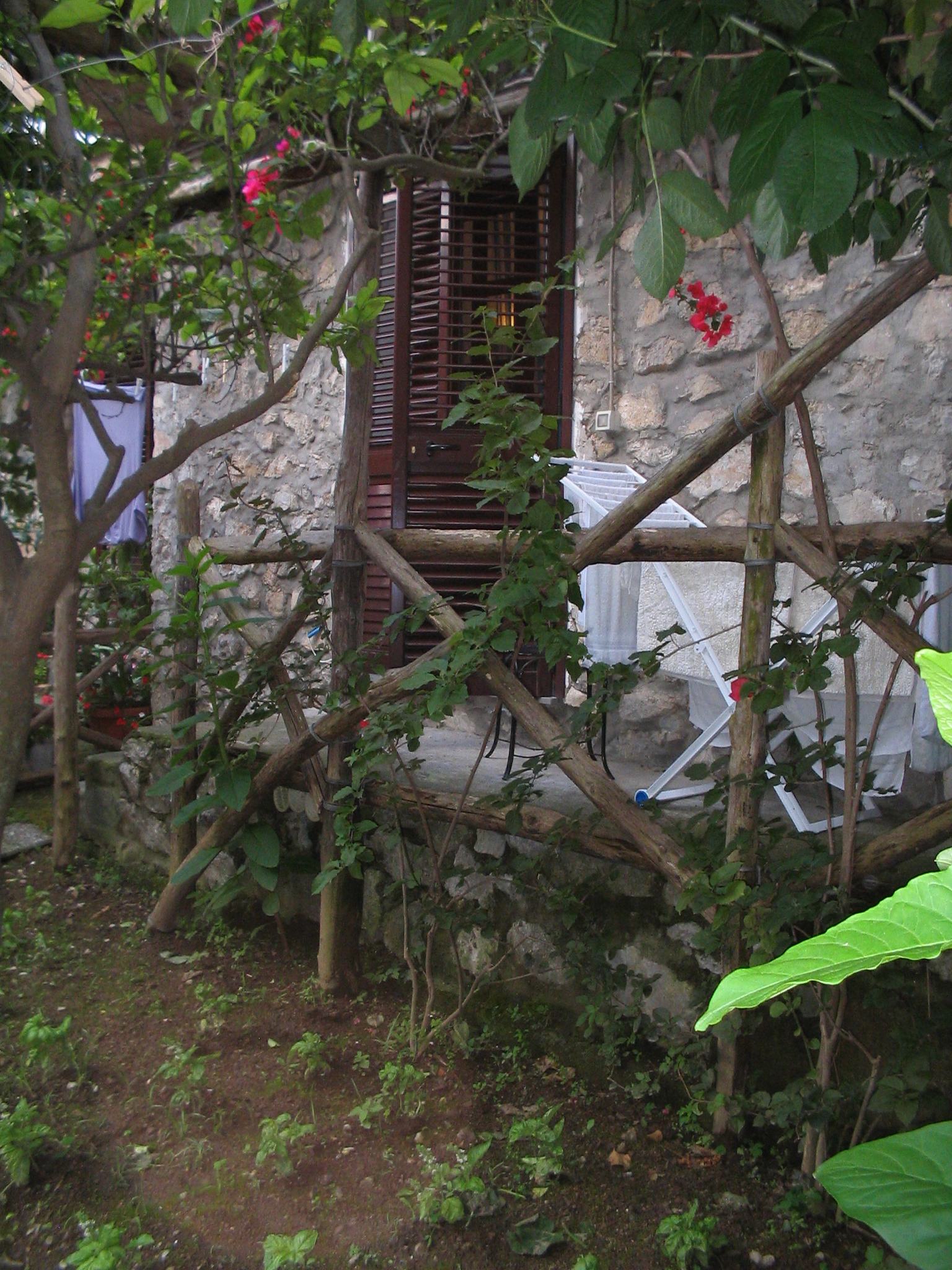
After answering emails, I headed back up the stone steps that would take be to the apartment. I found our neighbor Paulo watering the vegetables and flowers in his garden.  Paulo was in his mid-70s – short and wiry, his skin was like tanned leather and he always had a smile on his face. He was the one who had planted basil in lieu of grass in our front yard, and he regularly harvested the huge lemons from the trees that shaded the laundry on our clotheslines.

Basil & lemons in our front yard


            “Buona sera. Good afternoon,” he greeted me.


Buona sera,” I replied.  “Come sta oggi? How are you today?”


Molto bene. Very well. I have been making limoncello.” He turned off his hose and asked, “Have you tried it? Let me pour you a glass of my homemade recipe,” he offered as he invited me into his apartment. Paulo told me his recipe started with grain alcohol as he poured me a tiny little glass of the chilled liquid. Whoa!  It was like fire going down and made my eyes water.


“Oh,” I choked. “That tastes nice and lemony.” It was not as smooth as the limoncello we had purchased for the apartment, and it was the nicest thing I could think of to say.

Positano

Positano is…

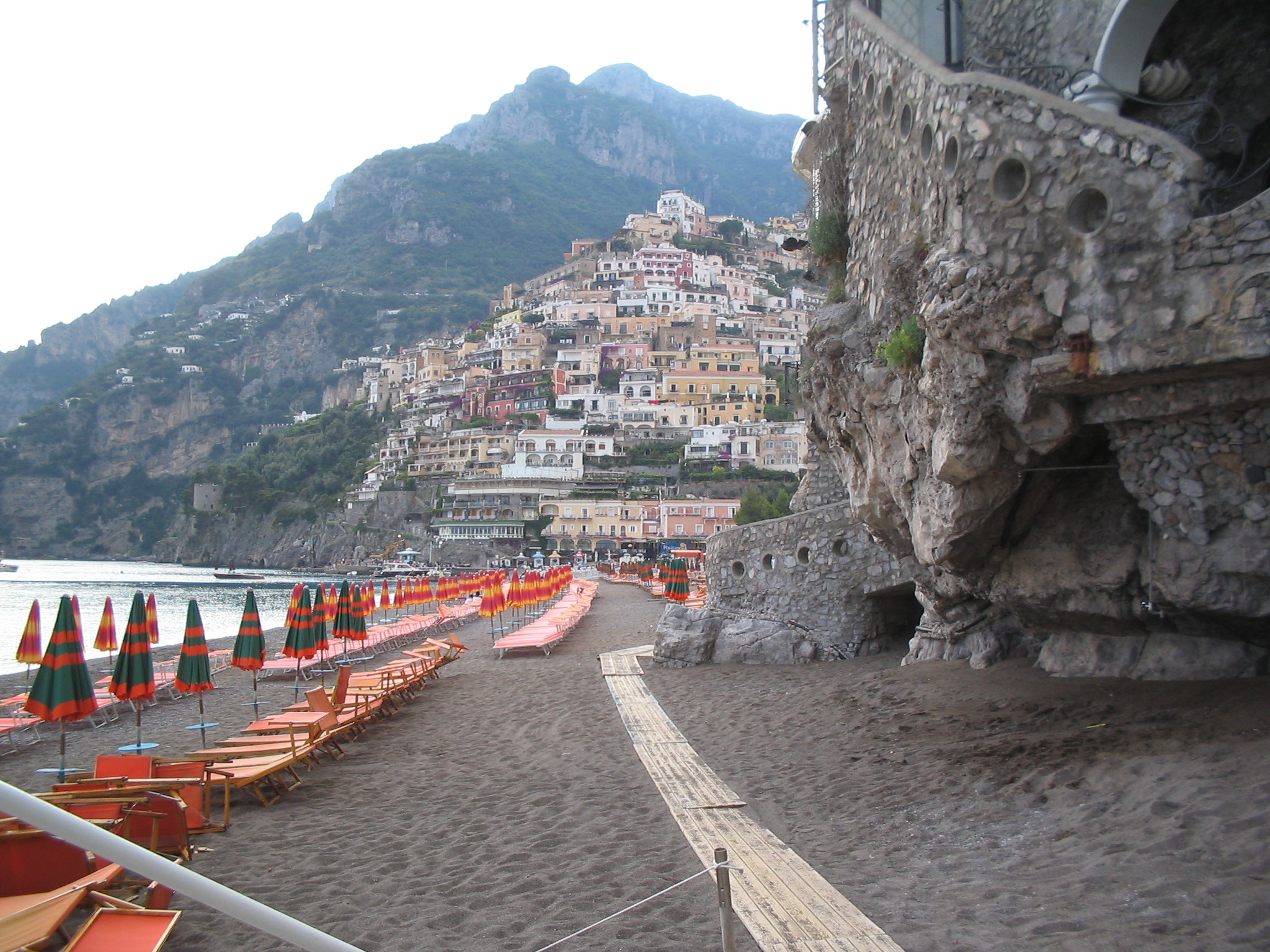
Pastel-colored stucco buildings, weathered by the sun and wind, spilling down steep hillsides that plunge to the turquoise sea;

Purple Bougainville-draped arbors, lemon trees laden with aromatic fruit and gray-green olive trees clinging to the terraced slopes;

Laundry dancing on balcony railings and clotheslines strung from window to window above the narrow cobblestone alleyways.

A rooster crows “koo-kee-eye-oh” that sounds like the word cucchiaio which means “spoon” in Italian;

A stray cat softly mewing as it stretches itself in the morning sun;

The whoosh of cappuccino machines and the aroma of fresh-baked pastries wafting out open windows;

Melodic church bells calling the devout to mass.

A gray sand beach speckled with towels and beach chairs you can rent by the day;

Blue and yellow row boats lined up on the beach waiting to be inspected by fishermen;

Old men playing the card game Scopa on the sidewalk outside the internet café;

Artists at their easels capturing the town in vibrant colors on canvas.

Shop keepers standing in doorways smoking cigarettes;

Tourists strolling by with cones of gelato inspecting brightly-colored beach towels and t-shirts, Hand-painted ceramic bowls, and Rows of handmade leather sandals bedecked in jewels.

The whine of motor scooters and the screech of bus brakes as they maneuver the tight turns along the cliffs above the village;

The smell of garlic and olive oil wafting on a balmy breeze;

Cafes with tables on the sidewalk;

Shouts from a bar when Italy’s team scores a soccer goal and occasional fireworks that celebrate a victory.

 …where I lived one summer

Insalata Caprese

This traditional Italian salad is even better with marinated artichoke hearts, roasted red tomatoes and avocado slices!

Ingredients:

4 vine ripened tomatoes, sliced

1 pound fresh mozzarella , sliced

2 avocadoes, peeled, pitted and sliced  into wedges

2 jars marinated artichoke hearts, drained

1 jar roasted red peppers, drained

4 c. baby arugula

½ c. fresh basil leaves

¼ c. extra-virgin olive oil

Salt and pepper to taste

Directions:

Add one cup of baby arugula to each of four individual plates. Arrange alternating slices of tomato topped with slices of mozzarella on each plate.  Add slices of avocado, marinated artichoke hearts and strips of roasted red pepper. Stack and roll basil leaves into a cylindrical shape (like a cigar) and slice into thin strips.  Sprinkle on each salad. Drizzle with olive oil and sprinkle with salt and pepper.  Makes 4 servings.


Classic Caesar Salad

The homemade croutons and the freshly grated cheese make all the difference in a good Caesar salad!

Ingredients:

Garlic Croutons

1 c. bread cubes (½ inch cubes)

1 large clove garlic, minced

3 T. butter

1 T. olive oil

Caesar Salad Dressing

1 large egg

¼ c. extra-virgin olive oil

1 medium garlic clove, minced

4 flat anchovies

1 t. Worcestershire sauce

¼ t. dry mustard

1 t. freshly ground black pepper

3 T. fresh lemon juice


1 head of romaine lettuce, washed and drained

1/3 c. fresh Parmesan cheese, grated


Directions:

Make croutons first: Melt butter and olive oil in a skillet.  Add garlic and bread cubes. Stir gently until lightly toasted. Drain on paper towels.

Bring a small sauce pan of water to boil and add egg.  Coddle egg by cooking for just 45 seconds.  Remove from water and let it cool.  Add olive oil, garlic and anchovies to salad bowl.  Mash together with fork.  Add remaining ingredients. Crack shell and add the cooled egg. Whisk until smooth.

Tear lettuce into 1-2 inch pieces.  Toss with dressing and croutons.  Top with cheese.  Serves 6.


Pomodore Galore

Cooking in Southern Italy, where we were located, is characterized by lots of tomato dishes, made with the freshest pomodore (tomatoes) possible.  The Italian name for the tomato means “apple of love” or “golden apple,” because the first to reach Europe were yellow varieties.  Initially, they were planted as ornamental plants, but were not eaten because they were thought to be poison. However the innovative (and probably starving) peasants of Naples started using the supposedly deadly fruit in many of their foods, including their early pizzas.

Tomatoes have healthy properties that are now recognized throughout the world.  They are good sources of Lycopene, one of nature’s most powerful antioxidants. Tomatoes are an excellent source of vitamin C, vitamin A, and vitamin K, Vitamin E and numerous other vitamins and minerals.

The Italians consume approximately 50kg (110lb) of tomatoes per head per year, most of this in the form of sauces and purees. There are thousands of varieties of tomatoes in an array of shapes, colors and sizes . The most common shapes are round (Beefsteak and globe), pear-shaped (Roma) and the tiny cherry-sized (Cherry and Grape).  Tomatoes can be red, yellow, pink, orange, green, purple, or brown in color. The San Marzano plum tomato, an heirloom variety grown in volcanic soil on the slopes of Mt.Vesuvius near the southern Italian city of Naples, is probably the most famous tomato grown in Italy.  It was supposedly a gift from the Kingdom of Peru to the Kingdom of Naples in 1770.

When you select tomatoes for purchase, smell the blossom (not stem) end. The most flavorful ones will have a rich tomato aroma. If they are not yet ripe, keep them in a sunny window sill until they are ready to eat. Remember, too, that it is best not to refrigerate tomatoes or their texture becomes mushy and the flavor fades.

I spent the morning dicing and chopping different kinds of tomatoes for the recipes that we were making that day. I started with plump ripe tomatoes for use in making cream of tomato soup.  Back at school, we would have peeled and seeded the tomatoes first, but they didn’t bother with that here.  As I diced the tomatoes, I found myself still wondering if I was destined to be a Chef or if the future had something else in store for me.

I picked another tomato out of the wooden crate and placed it on the cutting board.  I had always believed that God gives us certain talents and then provides opportunities for us to develop them, although we make the choices.  Maybe I should evaluate my strengths and weaknesses?  Would that provide a clue? Let’s see… I am tidy, well organized, patient, and am good at nurturing.  In fact, some times I try to do too much for my husband and children.  Creating recipes that bring pleasure to others certainly utilized all my talents and I thoroughly enjoyed all that I was learning, so maybe I was on the right track.

After the employee lunch of sliced pork roast, steamed zucchini and macaroni and cheese,  I changed into a fresh apron and followed Alessandro down the steps to the restaurant by the pool to help with lunch service.

           The special of the day was a sautéed sea bass, garnished with some of the tomatoes that I had chopped in the morning.

“You know how to make Caesar salad?” asked Alessandro as he gently shook the sauté pan containing the sea bass back and forth. “You teach me?” This surprised me.  Wasn’t Caesar Roman?  Surely every Italian chef knew how to make Caesar salad.

“Yes, I make Caesar salad.  I write it down for you.” I pulled out the little tablet that I kept in the pocket of my chef’s pants and, mulling over the proper Italian terms, I wrote the recipe down for Alessandro.  Maybe Eric was right – I could teach them something.

            Later that afternoon when I returned to Positano, I headed down to the beach. I had heard that there were shards of pottery washed smooth by the sea lying along the beach much as we find beach glass in the states.  I wanted to collect some of it and maybe make a necklace or bracelet when I returned home. I had forgotten that there was a music festival taking place in Positano this week.  A huge wooden platform was set up on the beach as the stage for a series of performers that begin serenading the tourists at dusk with music that varied from jazz to classical.
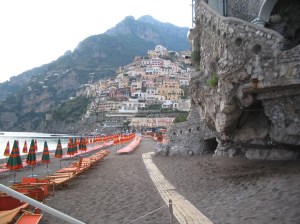
            I removed my sandals and walked in the cool sand looking for “beach pottery,” as the words of an Italian love song filled the air.  It reminded me of the Andrea Bocelli CD “Romanza” that I listen to at home, and made me think of Craig. I had been away from home only a few weeks, but it seemed like much longer. As I bent down to retrieve a piece of blue and white pottery the size of a quarter, my cell phone rang.

“Hello.”

“Hi, Mom.  It’s Gretchen.  What are you doing?”

“Gretchen!  What a nice surprise!  I was just collecting bits of pottery on the beach to bring back home.  I thought maybe I could figure out how to make some jewelry out of it. What are you doing?”

“I can’t promise anything for sure, but I was thinking of coming to visit you.  I have a trip coming up to Rwanda and since I have to change planes in Europe, I thought I might be able to stop in Rome and come down and see you for a couple of days.”  Gretchen and her husband, Andrew, had spent their honeymoon in Positano so she was familiar with where I was working.

“That sounds like a great idea,” I responded.  “We have a sofa that you can sleep on.” I reminded myself to make sure that Ben wasn’t going to be using it. Gretchen was very eager to hear about everything that was going on in the kitchen.  We spoke for several minutes before she had to go.  I hoped she would be able to make it to Italy.

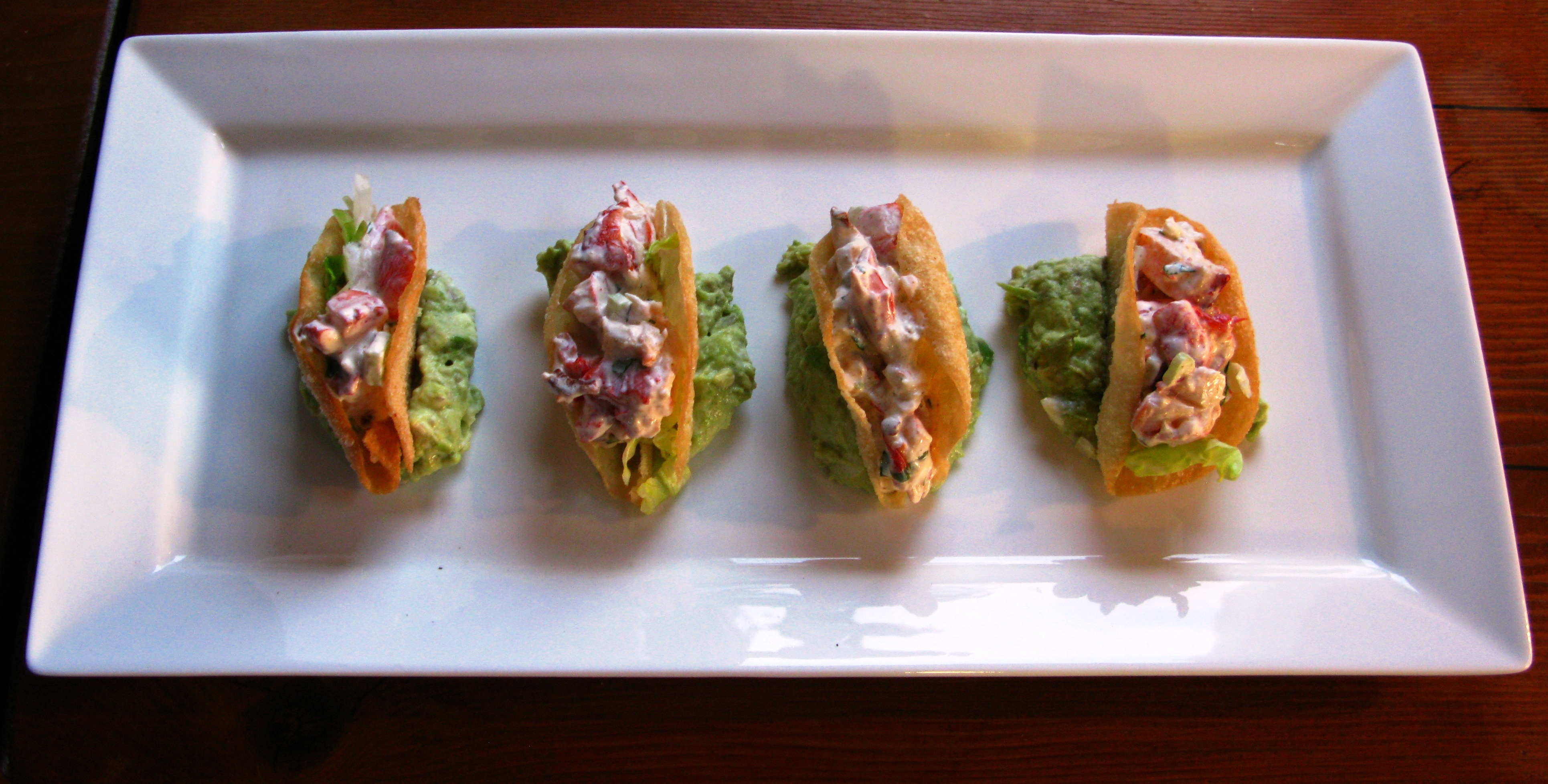
Lobster Tacos with Chipotle Cream

These lobster tacos make great appetizers with taco shells made from won ton wrappers! You can make them full size as well for a meal using regular corn tortillas.

Ingredients:

Lobster salad

4 Lobster tails, steamed

1 stalk celery, diced

1 c. chipotle cream

Freshly-ground black pepper, to taste

Chipotle Cream

½ c. sour cream

½ c. mayonnaise

3 t. chipotle pepper, canned in adobo sauce, seeded and chopped

1/2 teaspoon ground cumin

1 Tablespoon fresh cilantro, chopped

Guacamole

2 ripe avocadoes

2 t. lemon juice

½ medium onion, diced

¼ t. garlic salt

2 T. mayonnaise

Shredded lettuce

1 package won ton wrappers

Vegetable oil for frying

Directions:

To make chipotle cream: Combine all ingredients in a small bowl and whisk until smooth.

To make lobster salad: Cut open the lobster shells with a sharp knife and remove the lobster meat. Cut the lobster meat into bite-sized chunks. Place in a medium bowl and add celery, 1 c. chipotle cream and black pepper to taste. Stir to combine.

To make guacamole: Halve avocadoes, remove seed and use a spoon to scoop out the pulp. Place in a small bowl and mash with a fork. Add lemon juice, onion, garlic salt, and mayonnaise. Set aside.

Using a 2-inch round cookie cutter or the bottom of a glass, cut the won ton wrappers into circles. Heat vegetable oil for frying. Place the won ton rounds into the oil, 2-3 at a time. Using two forks, gently fold them in half in the oil and allow to cook for 6-8 seconds. Remove and drain. Continue folding and frying the rest of the won ton wrappers. To assemble: Place a small amount of shredded lettuce in the won ton “taco shell.” Add a generous tablespoon of lobster salad. On a plate, place four small mounds of guacamole (about 1 T. each). Set the lobster tacos onto each mound to keep it upright and serve. Makes 30 appetizers.

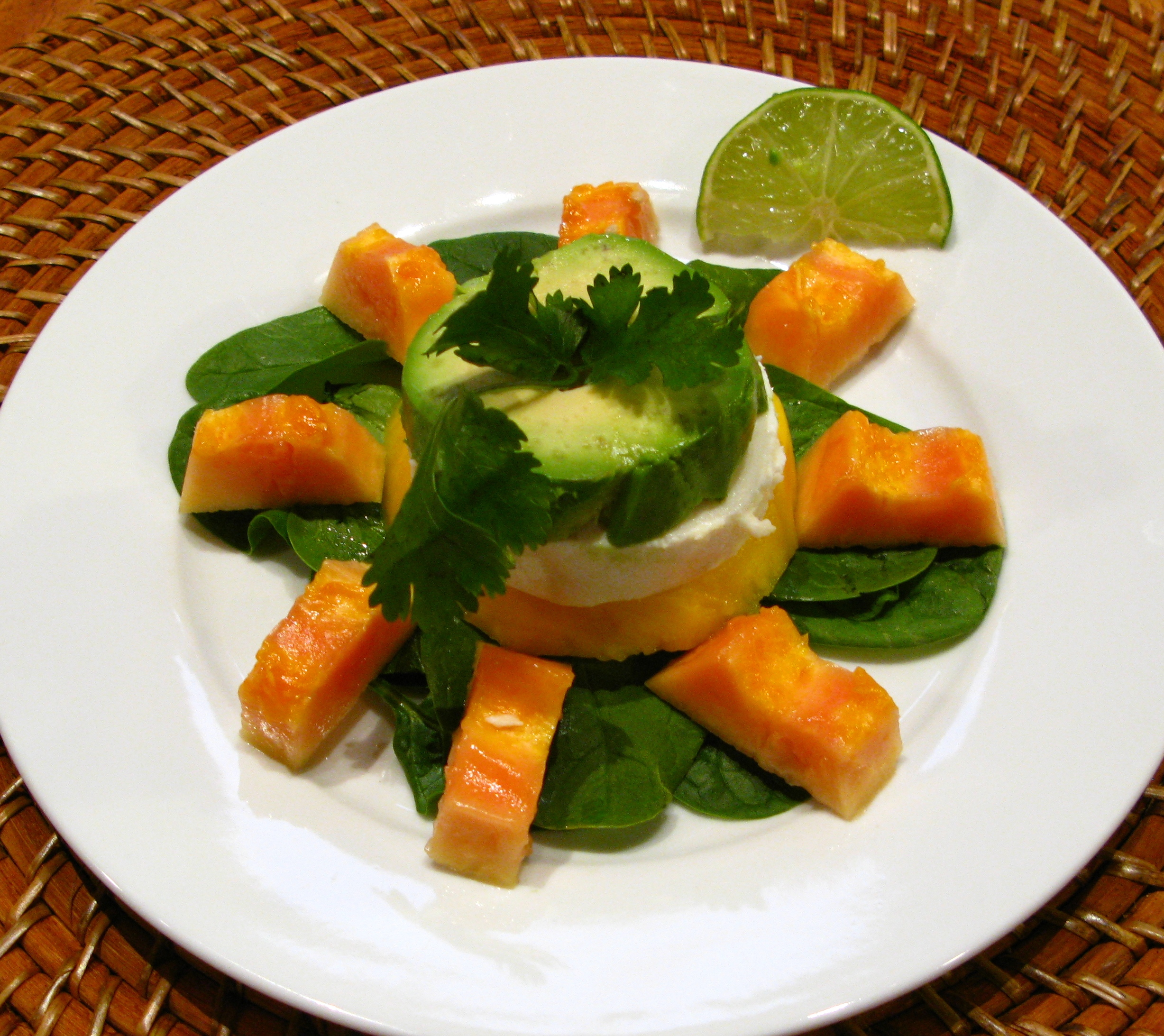
Tropical Caprese

Ingredients:

1 Ripe mango, peeled and sliced lengthwise

1 ripe papaya, peeled, seeded and sliced

1 ripe avocado, peeled, pitted and sliced

Fresh mozzarella

2 c. Baby spinach

Lime

Extra-virgin olive oil

2 T. fresh cilantro, minced

Directions:

Place about 1/2 cup of baby spinach leaves on a plate.  Add a slice of mango and top it with a slice of fresh mozzarella and a slice of avocado. Arrange wedges of papaya around the edges of the plate.  Squeeze fresh lime juice over the salad and then drizzle with olive oil.  Garnish with fresh cilantro.  Serves 4.

The Walk-In

Mornings in the kitchen are very busy.  In addition to doing prep work for the day’s menu, there are deliveries of fresh produce, meats and seafood to receive—lettuce, escarole, zucchini, eggplant, tomatoes, pumpkin, onions, and carrots.  Italian cuisine relies on the freshest ingredients. Alessandro said that Chef wanted us to help clean out the walk-in refrigerator where the produce was stored to make room for that morning’s delivery.  We were to throw away all the old vegetables, wipe down the shelves, sweep and mop the floors.

The walk-in refrigerator at Santa Caterina is like a refrigerated closet about half the size of a single-car garage. It was kept at a temperature of 38 degrees F.  Alessandro and I carried the plastic crates of vegetables out of the walk-in and placed them on the marble table where the Garde Manger chef usually worked.  We sorted through everything and began reshelving the crates.  He handed me a large container of eggplant and opened the door to the refrigerator for me so I could enter.  My face was hit by a blast of cool air and I smelled the earthy fragrance of the vegetables in the locker as I stepped inside. “Clunk” the refrigerator latched behind me.  The light was still on and I was able to see where to place the crate of eggplant on one of the shelves.  Then I turned around and fully realized that the door had locked behind me. There wasn’t a handle on the inside that I could use to open the door.  The walk-in refrigerator at HCAT back in the U.S. had a handle on the inside.  What was I going to do now?  Hmmm. Well, I certainly wouldn’t go hungry.  There was a lot of food in here. But I was wondering how to calculate the amount of air inside.  Craig would know how to figure it out. How long would I last? Would someone notice I was missing?  Then I had an idea. I timidly stepped towards the door and knocked.  A few seconds passed and the door opened. Alessandro stood there shaking his head.  He raised his arms, palms up and said,

Che cosa sono io che vado fare con voi?” (What am I going to do with you?)

I gave him a sheepish grin and went to get the mop.

Chef had been carving watermelons with floral designs to decorate the tables in the main restaurant While we were cleaning out the refrigerators. He finished the one he was working on and beckoned for me to come over. He showed me how he carved designs in them.

The afternoon was spent prepping things for dinner service.  I was exhausted by the end of the day. Dark clouds promised rain as I left the hotel.  There were more tourists than usual hovering around the bus stop in Amalfi waiting to see which buses would take them to their destinations.  I realized that the ferries were not running due to the weather and the bus would be crowded.  If you are not one of the first people to board the bus, you chance having to stand up which is always challenging given the twists and turns of the roads. I decided that it would be a good time to browse through the bookstore and board a later bus to Positano.  I also wanted to purchase a scale so I could see if I had lost any weight.  Walking up and down these steep hills must be making a difference.  When I had first arrived in Positano, I had weighed myself on the scale in front of the pharmacy in town and the result was alarming.  But it had been broken ever since with a sign taped to it that said “Non funzionando,” or not working.  I wanted to know if my weight loss was progressing. I found a couple of interesting novels at the book store and then wandered through the piazza and up the cobblestone walkway to search for a hardware store.  Luckily, there was a small appliance store that had an assortment of scales and I purchased one.

When I returned to the bus stop, the bus to Positano had just arrived and I climbed on board and scanned the available seats for one next to the window.  As I started to sit down, I noticed a big wad of chewing gum on the cloth seat and decided to move across the aisle to another seat.  Some English tourists boarded the bus behind me and the woman plopped down on the seat that I had rejected.

“Oh,” she cried out a moment later. “There’s gum on me bum!”

Her husband scrutinized her wide bottom and produced a white handkerchief that he used ineffectively to wipe the gum from her skirt.  They were both still muttering over her plight when the bus reached Positano and I got out.

I arrived at the apartment earlier than usual that afternoon and found Brandi talking on the telephone to her children at home, David sleeping and Ben reading in the living room.  They were all taking their afternoon break and had to return to work at 6 PM. I knew that Brandi really missed her two children, who were living with her Mom for the summer while she was in Italy.  David had a girlfriend at home and talked to her and his parents often in the late evening after work. He was generally very quiet and was very focused on his work at Le Sirenuse. He kept a small, digital camera in the pocket of his chef’s pants and would show us all photos of some of the food that he had helped prepare. When he wasn’t working, he spent a lot of his free time trying to catch up on his sleep.  Ben was an avid reader and was engrossed in The Hitchhiker’s Guide to the Galaxy. Sometimes he would read right up until the time he was supposed to start his afternoon shift and would dart out the door running to get there in time. I think that was why he often left the apartment a mess.  I decided that this would be a good time to talk with him about keeping things clean.

“Ben?”

“Yes, Mama,” he replied. (Was he mocking me?  Making fun of my age?)

“Ben, I don’t care what your bedroom looks like, but we all need to use the main rooms and you’ve got to keep your junk picked up.”

“Yes, Mama. I understand.  I’ll clean up from now on.”  He got up off the couch, put down his book and carried his dirty dishes into the kitchen. It annoyed me that he had called me “Mama.”  I was here to learn about Italian cooking – not to be his babysitter!

Lemon Tofu, Winter Greens, Mushroom and Sun-dried Tomato Strudel

Tofu

1 lb extra-firm tofu

Finely grated zest of one lemon

1/3 c. fresh lemon juice

¼ c. extra-virgin olive oil

3 T. fresh dill, chopped

3 garlic cloves, finely grated or mashed to a paste

Pinch of red pepper flakes

Sea salt or kosher salt

Vegetables

Sea salt or kosher salt

1 ½ lbs. collard greens or kale, tough stems removed

2 T. extra-virgin olive oil

1 ½ c. thinly sliced onions

12 ounces white or cremini mushrooms, sliced (about 3 c.)

Freshly ground black pepper

1/4 c. olive oil

1/3 c. thinly sliced sun-dried tomatoes

8 oz. phyllo, thawed in refrigerator

Paprika, for dusting

 Directions:

For the tofu:  Place the tofu in a bowl and mash to a rough puree with a fork, or squeeze through your fingers.  Add the lemon zest and juice, olive oil, dill, garlic and pepper flakes.  Stir well to combine and season with salt to taste.  For the vegetables: Bring a large pot of water to a boil and add 1 T. salt.  Add the greens and boil until tender but still bright green, 3-4 minutes.  Drain in a colander or sieve, pressing down hard on the greens with the back of a wooden spoon to remove excess water.  When the greens are cool enough to handle, transfer them to a cutting board and coarsely chop.  In a large skillet, heat the remaining ¼ c. olive oil over medium-high heat.  Add onions and cook, stirring until browned around the edges, 3-4 minutes.  Add the mushrooms and season with salt and pepper.  Increase the heat and cook, stirring, until the mushrooms are caramelized and the pan juices have thickened and glazed the vegetables, about 5 minutes. Stir in the greens and sun-dried tomatoes.  If there is a lot of liquid in the pan, simmer, stirring, for a few minutes until it has evaporated.  Remove from heat.  Set a rack in the lower third of the oven and preheat the oven to 400o F.  To assemble:  Brush a 10-inch skillet or 10-inch deep pie plate with some of the olive oil.  Unwrap the phyllo and unfold on a large work surface.  To prevent drying, keep the phyllo covered with a damp kitchen towel as you work.  Lay 5 sheets of phyllo in the prepared pan, brushing each layer with olive oil and placing each sheet at a slight angle to the one below to make an even overhang, and letting the edges hang over the sides.  Spread the vegetable mixture evenly over the phyllo.  Cover the vegetables with 2 ore more layers of phyllo, brushed with olive oil after each layer.  Spread the tofu mixture evenly on top of this layer and then finish with 8-10 more sheets of oiled phyllo.  Trim the edges of the phyllo with kitchen shears.  Brush the top layer with olive oil and score the top layers (as far down as the tofu layer) into 6 wedges.  Dust the top with paprika.  Bake until golden brown and crisp, about 35 minutes.  Rest for 5 minutes, then slice through the score marks and serve.  Serves 6.