Category Archives: Recipes

Harvest Bread

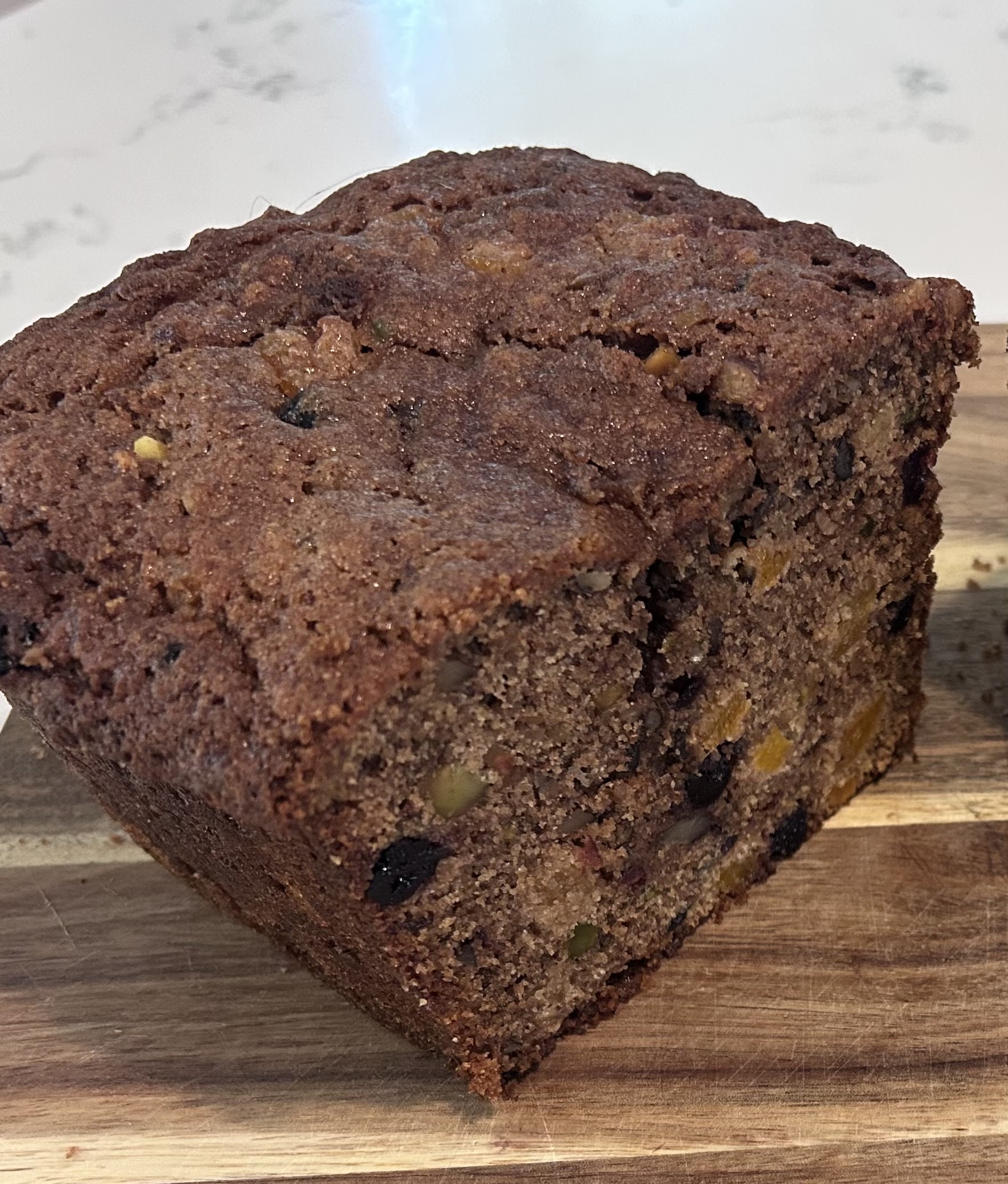
In a small town along the Maine coast, there is a cafe that serves pastries, great breakfast sandwiches, coffee and other beverages. They are known for their “cronuts” – a combination croissant and donut. But the best item in their bakery case is the Harvest Bread.

The ingredients are posted on a note in front of the thick, moist slices (probably to make sure you don’t have any allergies before you order), but the recipe is never shared. It took multiple trials to create a recipe that comes close to what they offer. The weather in Maine will start to chill in a month or so. You should be stacking firewood now, stocking up on good books to read, bird seed for your little feathered friends, dusting off the chess set and setting the snow shovel by the back door. Don’t forget to get the ingredients for Italian Wedding Soup or a hearty Lobster Chowder – and of course for the Harvest Bread. You won’t be disappointed. Enjoy!

EINKORN HARVEST BREAD

INGREDIENTS
1 ¾ cups Jovial Foods Einkorn flour (plus 2 tablespoons for tossing the fruit)
1 teaspoon baking soda
½ teaspoon salt
1/4 teaspoon baking powder

2 teaspoons cinnamon

2 eggs
½ cup mashed banana
½ cup applesauce
¾ cup packed dark brown sugar
¾ cup virgin coconut oil, melted and cooled
1 teaspoon vanilla extract
The Fruit and Nut Mix:
½ cup chopped walnuts
1,2 cup chopped pecans
½ cup chopped pistachios
½ cup dried cranberries
1/2 cup dried blueberries
1/2 cup dried apricots, diced


DIRECTIONS
Preheat oven to 325 degrees. Grease a 8.5 in x 4.5 in loaf pan and line it with parchment
paper, leaving an overhang on the sides.
Combine the fruit and nuts in a bowl and toss with 2 tablespoons of Einkorn flour and set aside.
In a large bowl, stir together the flour, baking soda, baking powder, salt and cinnamon. Set
aside.
In a large mixing bowl, beat the eggs, bananas, applesauce, dark brown sugar, melted coconut
oil and vanilla until well blended.
Pour the dry ingredients into the wet mixture. Gently fold with a spatula until the flour tracks
disappear. Do not overmix. Fold in floured fruit and nut mixture until evenly distributed. Again,
do not overmix.
Using a spatula, transfer the batter into the prepared loaf pan. Bake at 325 degrees for 30
minutes.

Crucial step: At the 30 minute-mark, loosely tent a piece of aluminum foil over the top of the
pan to prevent the crust from getting too dark while the dense center finishes baking. Bake an
additional 30 minutes, or until a toothpick inserted into the center comes out clean. Let the loaf
cool in the pan for 20 minutes, then lift it out using the parchment handles. Let it cool
completely on a wire rack before slicing to allow the fruit-heavy crumb to set.


White Chicken Chili

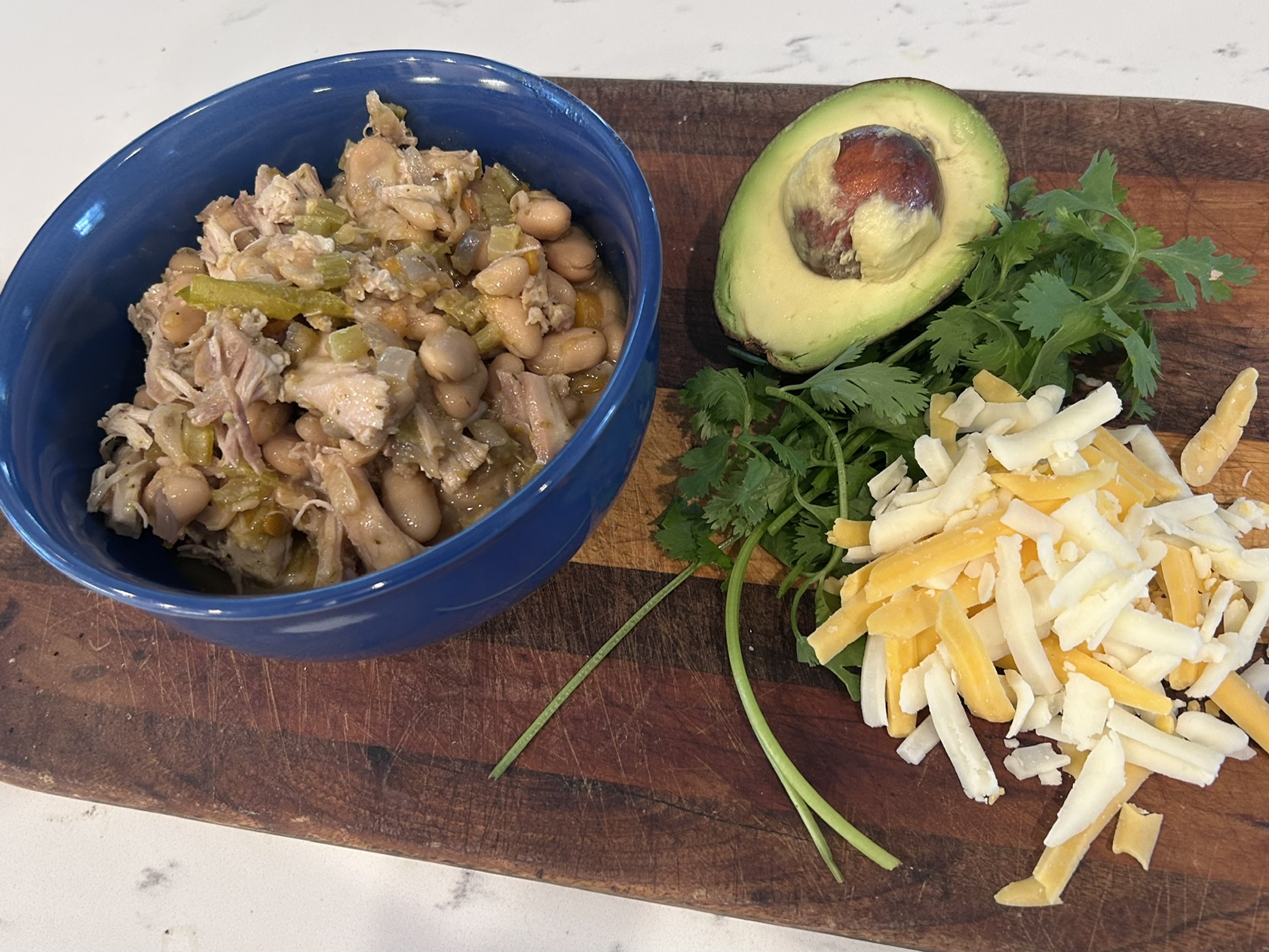
Here in the Pacific Northwest, the skies are blue, cedars and Douglas spruce are tall and snowcapped mountains overlook Puget Sound. It’s perfect weather for sailing, hiking or camping. And at the end of the day, you’re looking forward to quenching your thirst with an ice cold beverage and sharing a hearty meal with friends or family. This white chicken chili comes together very quickly and is perfect with a green salad and a fresh loaf of sourdough bread. So, put on your apron and let’s get cooking!

Ingredients

3 Tablespoons olive oil

1 red onion, chopped

4 ribs celery, diced

½ cup carrots, diced

2 gloves garlic, minced

1 teaspoon oregano

1 teaspoon cumin

½ teaspoon paprika

½ teaspoon chili powder

¼ teaspoon cayenne

Salt & pepper to taste

3 – 15 oz cans cannellini beans, undrained

1 – 4 0z can diced green chiles, undrained

3 cups shredded chicken (from rotisserie chicken)

Directions:

In a large Dutch oven, heat the olive oil over medium heat.  Sauté Onion, celery and carrots and cook, stirring often, until the onions are tender, about 6 minutes.  Add garlic, oregano, cumin, paprika, chili powder, cayenne, and cook for one minute until fragrant.

Add cannellini beans and green chiles with their liquid. Bring to boil over medium high heat.  Lower the heat and simmer, stirring occasionally until beans are tender, approximately 15-20 minutes. Use a potato masher or pastry blender to mash some of the beans (this helps thicken the mixture).

Add shredded chicken, salt and pepper. Garnish with your choice of shredded Monterey jack cheese, sour cream, cilantro, and diced avocado.

Spring Vegetables

Today is the third day of spring, although we’re having a late winter storm in New England and the ground is covered with a layer of snow. We are located in USDA Plant Hardiness Zone 6A and usually don’t plant our vegetable gardens or annuals until Memorial Day weekend to insure they survive. (The USDA Plant Hardiness map is based on 30-year averages of the lowest annual winter temperatures at specific locations.) But now (well, when the snow melts) is the time to start thinking about adding nutrition to the soil in your raised garden beds. The easiest way to do this is to add a few inches of composted manure or rich topsoil to the garden beds and rake it in. Once your soil is ready, you can begin planting vegetables that relish cool weather like arugula, lettuce, broccoli, cauliflower, and peas. These vegetables can be sowed directly into the soil and should be watered daily until they sprout.  If you don’t water them daily, they can dry out and shrivel up. Once they have grown their secondary leaves, you can add organic fertilizer to the garden. If you add this too soon, it can burn those new, delicate leaves. Vegetables like tomatoes, bell peppers, zucchini, eggplant, green beans, and beets can be started indoors or you can purchase starter plants from your local nursery. These vegetables can be transferred to the garden when all danger of frost has passed.  

The Food Pantry in the town where I live has a community garden that grows fresh produce for our shoppers. Occasionally some of the shoppers ask me how to prepare a certain vegetable or what dish they can make with the vegetables.

One of my favorite recipes for early spring vegetables is Pasta Primavera (“primavera” means spring in Italian). This may sound like an Italian dish, but it was actually created by New York restauranteur Sirio Maccioni’s restaurant Le Cirque. It was made famous in an article written for the New York Times by Craig Claiborne and Pierre Franey in 1977 which included a recipe for the dish.

I like to use a variety of tender spring vegetables with lots of different colors: peas, asparagus, broccoli, carrots, red and yellow bell peppers, zucchini and scallions. And although you could add them to your choice of pasta and dress with olive oil, I like a light cream sauce that clings to the pasta.

Pasta Primavera

Ingredients:

16 oz penne pasta (or shape of your choice)

Instructions:

1 teaspoon salt

1 tablespoon olive oil

8 oz asparagus, cut into I ½ inch pieces

1/2 yellow bell pepper, diced

1/2 red bell pepper, diced

2 cups small broccoli florets

1 small zucchini, sliced

8 cherry tomatoes, halved

2 scallions, sliced at a diagonal

1/2 teaspoon garlic salt

1 cup frozen peas

2 tablespoons butter

1 cup heavy cream

½ cup grated parmesan cheese

2 tablespoons lemon juice 

Salt and pepper to taste

Chopped fresh basil

Crushed red pepper flakes, optional

Instructions:

  1. Bring a large pot of water to a boil. Add 1 teaspoon salt and pasta to boiling water. Cook for 8-10 minutes or until tender, stirring occasionally. Drain well, reserving ½ cup of pasta water. Pour the pasta back into the pot and cover to keep warm.
  2. Meanwhile, in a large skillet, heat the olive oil over medium heat. Add the asparagus, peppers, zucchini and broccoli. Sprinkle vegetables with garlic salt and sauté for 2 to 3 minutes, stirring occasionally. Add the cherry tomatoes and scallions and cook for 1 to 2 minutes or until vegetables are tender, but still crisp. Transfer the vegetables to a large plate or bowl.
  3. Make the cream sauce. Place the skillet back on the stove. Melt the butter over medium heat. Stir in the heavy cream and ½ cup of Parmesan. Add 2 tablespoons of lemon juice. Cook until smooth. Add reserved pasta water If needed to thin the sauce.
  4. Pour the lemon cream sauce over the pasta. Add sauteed vegetables and peas and gently stir until well combined. Season with salt and black pepper, to taste. 
  5. To serve, garnish with chopped basil, extra Parmesan cheese, and crushed red pepper flakes. Serve warm.

Bahraini Cuisine

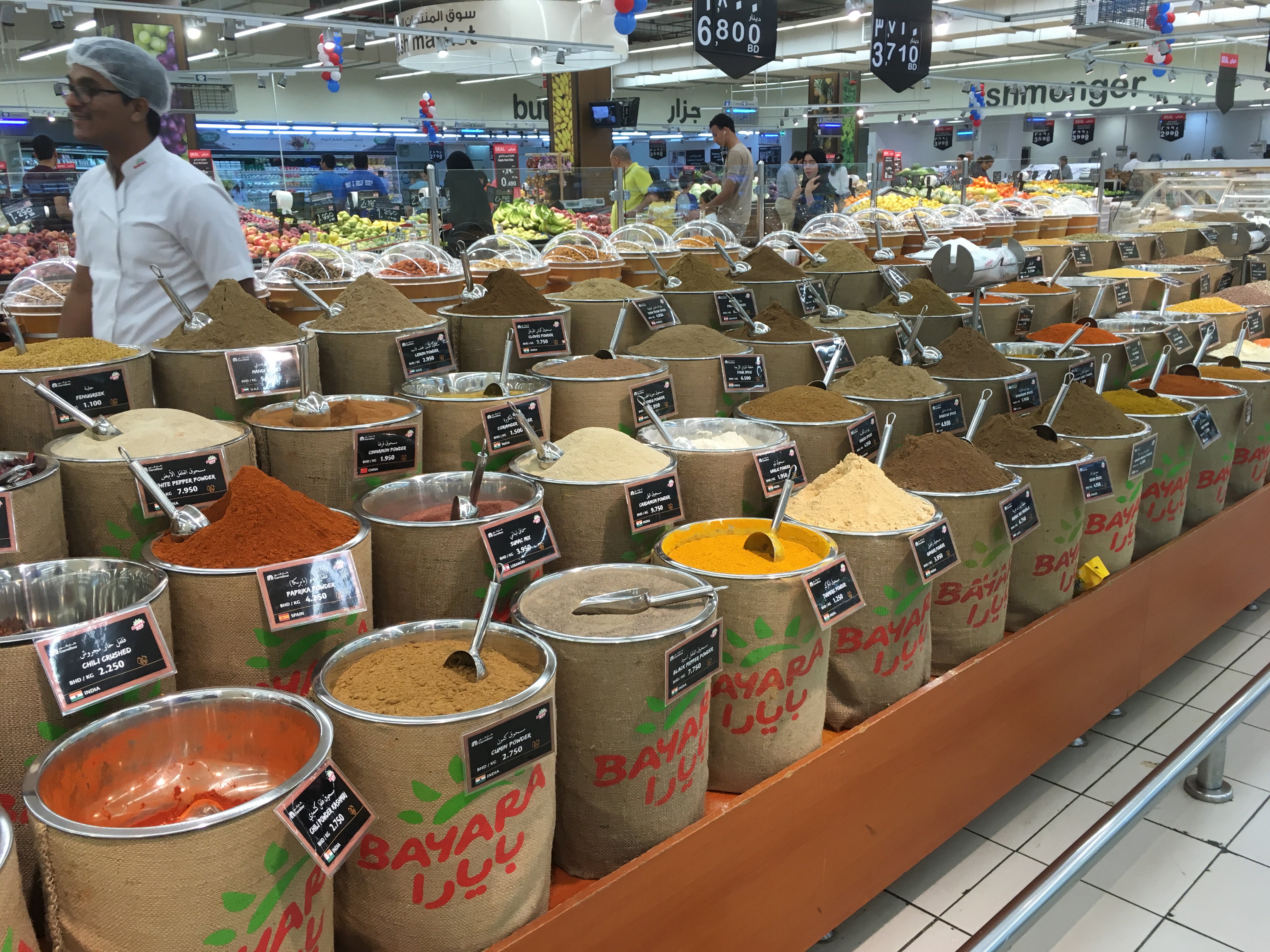
Bahrain is an international port and, as such, imports goods from all over the Middle East, India, Pakistan and Africa. Each restaurant in Manama featured a different cuisine and the food markets offered a dazzling selection of bins filled with spice, shelves stocked with oils, dates, honey and staples from around the world.

Spices

But what did the average Bahraini eat? Every meal was served with flatbread, and various small plates of egg dishes, meat dishes (usually chicken or lamb), vegetables (I liked the white beans with cilantro which were very spicy), hummus, tahini, and curries. These dishes were shared among diners. The flatbread was torn into smaller pieces and a spoonful of one of the other items was placed on the flatbread and rolled up. Diners ate this morsel with their right hand, utensils being reserved for serving. The population is predominantly Muslim and alcohol is not served except in larger establishments and hotel restaurants. Thus, diners drink water or fruit juices with their meals and follow the meal with Arabic style (strong) coffee or chai tea.

The area is subject to dust storms of very fine, white silt, which was probably the reason there was not any “street food” per se as there is in other cities of the world. The famed “shwarma” was sold at many establishments along the sidewalk where doors could be slid open to reveal the juicy, marinated chicken and lamb roasting on a spit. This Middle Eastern variation of a wrap was available everywhere for the equivalent of $3 US.

The vast array of available spices is incorporated into most menus. The following recipe is for the Chicken Machboos that we made in our cooking class.

Bahraini Chicken Machboos

Ingredients

¼ c. rose water

¼ t. saffron threads

2 T. melted butter

¼ c. canola oil

Whole spices:

3 star anise

2 black lemons*

2 cinnamon sticks

5 whole cloves

2 bay leaves

5 whole cardamom

Vegetables:

2 medium onions, diced

2 or 3 garlic cloves, minced

½ t. ground ginger

½ c. fresh cilantro, chopped

½ c fresh dill, chopped

1 medium tomato, diced

Remaining spices:

1 T. salt

½ t. black pepper

½ t. cinnamon

½ t. ground cardamom

½ T. turmeric

½ T. paprika

1 T. curry powder

1 t. cumin

1 2-3 lb. chicken, quartered

2 c. basmati rice

4 c. water

Green chili (optional)

Directions

Pour rosewater into a measuring cup and add saffron threads. Cover with plastic wrap and soak for 4 hours or overnight.

In a heavy stock pot or Dutch oven, heat butter and oil over medium high heat. Add whole spices and sauté until you can smell the aroma. Then add onions, garlic and ginger. Fry for about 5 minutes or until golden brown. Add cilantro and dill and stir for one minute. Add the fresh tomato and mix until it softens. Add remaining spices and mix for 3-4 minutes.

Add the chicken and fry for 5 minutes on both sides to lightly brown. Add 4 c. water and bring to boil. Simmer for 40-45 minutes until chicken is cooked. Remove chicken from pan and set aside.

Rinse rice with cool water until it is clear. Drain. Add to stockpot. There should be 3 c. water in the stockpot for the 2 c. rice. If not, add more water. Bring to boil and then reduce heat and simmer for 10 minutes. Add the rose water and saffron. Place chicken on top of all other ingredients and continue cooking for 10-15 minutes or until rice is cooked. Garnish with lemon slices. Serves 4-6.

African Peanut Stew


Our daughter, Gretchen Steidle, Founder and President of Global Grassroots, was recently named by INC Magazine as one of the top 100 leadership speakers! She is in Rwanda and Uganda this week to oversee the women-led Conscious Change Initiatives that her organization funds. This spicy Peanut Stew recipe is typical of East African cuisine and can be prepared without meat.


Ingredients

6 scallions, thinly sliced

1 medium green bell pepper, diced

1 tablespoon butter

1 tablespoon olive oil

3 tablespoons peeled and finely chopped fresh ginger

3 cloves garlic, minced

2 teaspoons ground coriander

2 teaspoons ground cumin

1 teaspoon crushed red pepper

1 teaspoon salt

1 teaspoon ground black pepper

2 quarts turkey stock

2 cups cubed, peeled sweet potato

1 cup creamy peanut butter

One 6-ounce can tomato paste

3 cups shredded cooked turkey, chicken or pork

One 15 ounce can diced tomatoes

1/3 cup chopped fresh cilantro (leaves and stems)

1 cup chopped lightly salted peanuts

4 scallions, thinly sliced

Optional: 1 cup chopped kale or spinach


Directions

In a Dutch oven or stock pot, cook green onions and sweet pepper in butter and hot oil for five minutes, stirring occasionally. Add ginger, garlic, coriander, cumin, red pepper, salt and black pepper. Cook and stir for 2 minutes. Add stock and sweet potato. Bring to boiling; reduce heat and simmer, covered, 10 to 15 minutes or until potatoes are tender.

In a medium bowl, whisk peanut butter and tomato paste until smooth. Gradually add one cup of the hot turkey stock from the Dutch oven and continue to whisk until well-blended.

Add turkey, peanut butter mixture, and tomatoes to Dutch oven. Cover and cook over medium-low heat 5 minutes, stirring occasionally. Stir in cilantro. Top with green onion slices and peanuts.


Serves 4-6.

Summer Salads: Beets, Quail Eggs, Pistachios and Goat Cheese

Nasturtiums are edible and add summer color to this flavorful salad!

Ingredients:

6 c. baby spinach, stems removed

4 golden beets

8 quail eggs, hard boiled and peeled

4 oz. log of goat cheese, crumbled

1/2 c. pistachio nuts, shelled

Olive oil

Balsamic vinegar

Directions:

Divide baby spinach between four salad plates.  Cut cooked quail eggs in half lengthwise and arrange on baby spinach.  Peel golden beets, cut into 1/2 inch cubes and boil over medium heat until they are tender and can be easily pierced with a fork.  Drain. Arrange hot beets on baby spinach.  Garnish with goat cheese and pistachios. Dress with olive oil and balsamic vinegar. Serves 4.

Summer Salads: Arugula, Oranges and Fennel

Arugula, Orange and Fennel Salad

Ingredients

3 tablespoons extra-virgin olive oil

1 1/2 tablespoons fresh lemon juice

4 large oranges

6-7 cups arugula, trimmed

1 large fennel bulb, quartered lengthwise, cored, thinly sliced crosswise

2 ripe avocadoes, peeled and cut into small cubes

Pecorino Romano cheese

Directions

Whisk olive oil and lemon juice in small bowl to blend. Season dressing with salt and pepper to taste.

Cut off peel and white pith from oranges. Using small sharp knife, cut between membranes to release segments. Combine arugula, fennel and orange segments in large bowl. Toss with enough dressing to coat. Add avocado and gently toss to combine. Garnish salad with long, thin strips of Pecorino Romano cheese shaved with a vegetable peeler. Serves 4.

Thai Cuisine

Thailand is the only country in Southeast Asia that has not been colonized by Europeans. Thus, its cuisine is authentic and has only been slightly influenced by bordering countries or traders.

Thai cuisine is very spicy and focuses on dishes which are well balanced in four areas – sweet (usually palm sugar or coconut milk), salty (fish sauce and salt), sour (lime in several forms and tamarind) and spicy (chilies). Meals served in restaurants are accompanied by a quartet of sauces brought to the table – fish sauce, sliced chili peppers in rice vinegar, dried chili flakes, and palm sugar. Rice is served at most meals, (usually jasmine rice, but also sticky or glutinous rice) and sometimes noodles. Cucumbers are often served to cool the palate. I was told recently that additional ways to counter the spiciness is to add more rice, add sugar, or drink more beer!

Thai food was traditionally eaten by the right hand while seated on cushions on the floor, but today most Thais eat with a fork and large spoon. The fork is held in the left hand and is used to scoop or push into the spoon which is held in the right hand. Chopsticks are reserved only for noodle dishes.

The Thai pantry can be stocked from items available in the international aisle at a grocery store or a local Asian market. Lo’s Seafood in Portsmouth, NH carries Thai canned goods (coconut milk, fish sauce, tamarind paste), kaffir lime leaves, lemongrass, galangal, fresh chilies (bird’s eye chilies or very tiny chilies are hotter than larger chilies), Thai basil and cilantro. Green, yellow and red curry pastes (hottest to mildest, respectively) can be made from scratch or purchased already prepared.

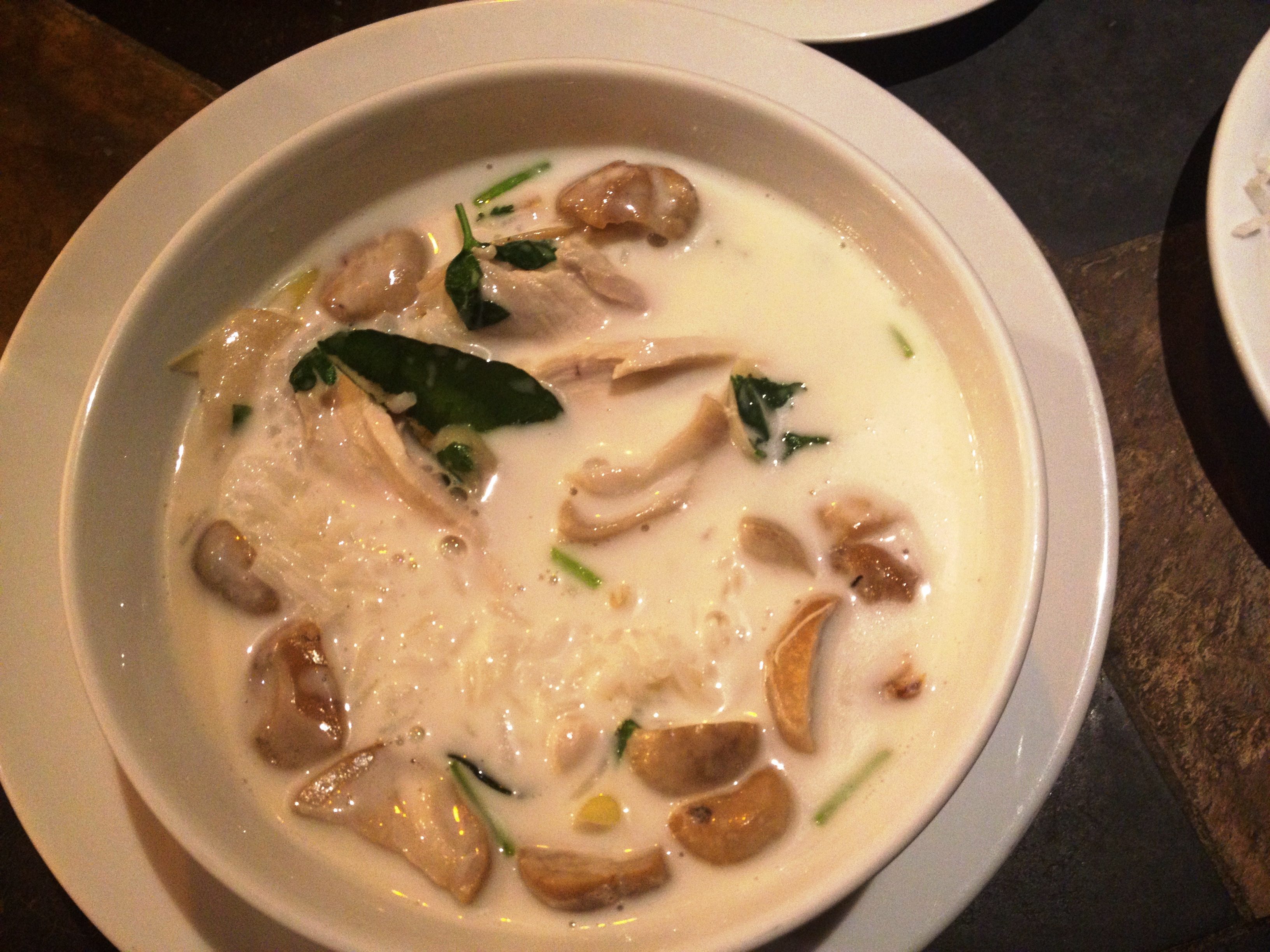
The following recipe for Chicken Coconut Milk Soup is one which we prepared at the Thai Farm Cooking School while I was in Thailand recently.

Tom Kaa Gai (Chicken Coconut Milk Soup)

Ingredients:

½ c. water

¼ cup of peeled, thinly sliced galangal or ginger

1 stalk of lemongrass, sliced into one-inch pieces

½ cup halved grape tomatoes

½ cup sliced mushrooms

1-5 bird eye’s chili peppers

1 chicken breast, sliced thinly and cut into bite-sized pieces

1 can coconut milk

2-3 kaffir lime leaves

1 stem of cilantro, finely diced

3 sliced scallions

1 T. fish sauce or soy sauce

½ teaspoon light brown sugar

Pinch of salt

2 teaspoons of lime juice

Directions:

Combine water, galangal, lemongrass, tomatoes and mushrooms in a saucepan over medium high heat and bring to boil. Remove stems from chili peppers and crush open by banging down with your palm on the flat side of a heavy knife. Add chili peppers, coconut milk and chicken pieces to broth. Reduce heat to medium and cook until chicken is milky white all the way through. Fold kaffir lime leaves in half along spine and remove spine of each leaf to release flavor. Add to soup with cilantro, scallions, fish sauce, sugar and salt to taste. Continue to cook over medium heat for 5 more minutes to intensify flavor. Finally add lime juice (soup will be too bitter if lime juice is added too early.) Lemongrass pieces, kaffir lime leaves, chilies and  galangal or ginger root should be removed prior to serving as they are all too tough to chew. Serves 2.


Super Soups: Lobster Stew


lobster-corn-chowder2

Here in New England the landscape is dusted with snow and it’s a perfect time to warm up with  a pot of lobster stew. So, add a log to the fireplace, pour a glass of wine and tie on your apron!

Lobster Stew

Ingredients:

1 quart of seafood stock

2 T. tomato paste

2 c. heavy cream

2 T. butter

2 c. lobster meat, cut into bite-sized pieces

2 c. red potatoes, diced

1 c. frozen corn

½ c. celery, diced

1 t. parsley

¼ t. cayenne

½ c. cooking sherry

3 T. cornstarch mixed with cold water

Salt and pepper

Directions:

Boil diced red potatoes until they can just be pierced with a fork. Remove from heat and drain. In a Dutch oven or stock pot, combine all ingredients, including cooked potatoes, and bring to boil. Season with salt and pepper to taste. Add cornstarch mixture and stir until stew is desired thickness. Serves 4.

Summer Cold Remedy Tea

Turmeric tea

Now that you know about all the health benefits of turmeric, prepare this citrus ginger turmeric mixture to have on hand the next time to feel a cold coming on. The lemon decreases the strength of the cold virus, the ginger soothes your throat after coughing, and the honey contains tryptophan which will help you sleep at night.

Ingredients:

2 lemons, thinly sliced with seeds removed

1 orange thinly sliced

2 inches of fresh ginger root, peeled and minced

1 T. of ground turmeric

1 c. honey

Directions:

Mash the ginger root with a mortar and pestle to make a paste. Combine all ingredients in a jar and store in refrigerator for up to one month. To make a cup of tea, simply put a heaping tablespoon of the mixture into a tall mug and fill with boiling water.