Week 10: Soybeans

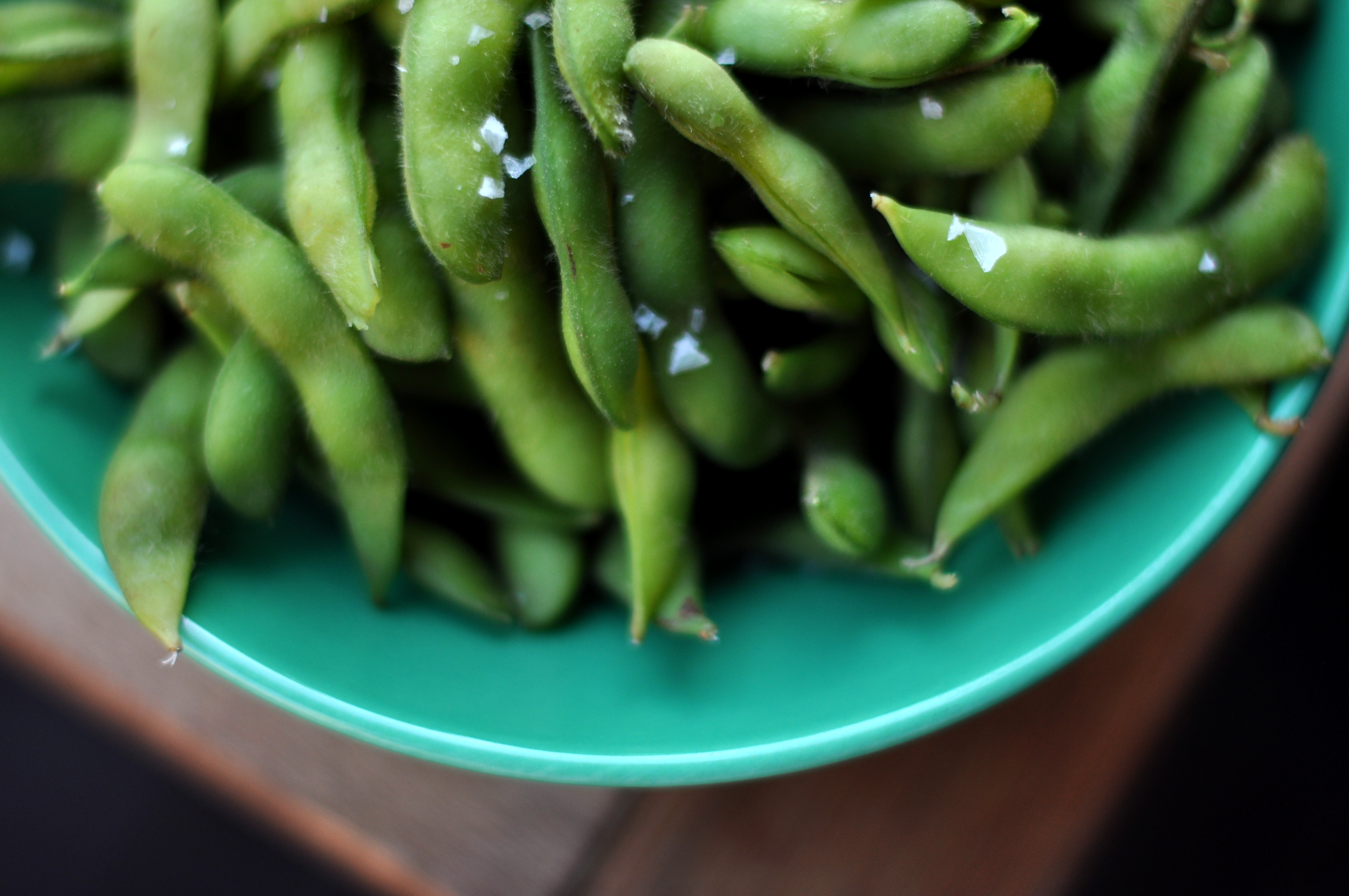
Edamame

The soybean is a legume native to East Asia and grown in many countries throughout the world. Soybeans are considered by many agencies to be a source of complete protein that contains significant amounts of all the essential amino acids that must be provided to the human body because of the body’s inability to synthesize them. For this reason, soy is a good source of protein for vegetarians and vegans or for people who want to reduce the amount of meat they eat. Non-fermented products include edamame, soy milk, soy yogurt. Fermented products include soy sauce, tempeh and tofu.

History
Soybeans have been grown for centuries as a food product, particularly in Asian countries and were originally used in the U.S. as a fertilizer and for crop rotation due to their ability to “fix” nitrogen in the soil. According to an ancient Chinese myth, in 2853 BCE, the legendary Emperor Shennong of China proclaimed that five plants were sacred: soybeans, rice, wheat, barley, and millet. Soy was first introduced to Europe in the early 18th century and to British colonies in North America in 1765, where it was first grown for hay. Benjamin Franklin wrote a letter in 1770 mentioning sending soybeans home from England. Soybeans did not become an important crop outside of Asia until around 1910. In America, soy was considered an industrial product only, and was not used as a food prior to the 1920s.

In 1932–33, the Ford Motor Company spent approximately $1,250,000 on soybean research. By 1935, soybean oil was used to paint Ford automobiles, and was used as fluid for shock absorbers. Henry Ford promoted the soybean, helping to develop uses for it both in food and in industrial products, such as body panels made of soy-based plastics, as well as products like soy milk, ice cream and all-vegetable nondairy whipped topping.

Cultivation
Soybeans can grow in any kind of soil and do best in a climate with hot summers. The height of the plant varies from less than 0.2 to 2.0 m (0.66 to 6.6 ft).The pods, stems, and leaves are covered with fine brown or gray hairs. The fruit is a hairy pod that grows in clusters of three to five, each pod is 3–8 cm long (1–3 in) and usually contains two to four (rarely more) seeds. Raw soybeans, including the immature green form, are toxic to humans, swine, and chickens, thus they must be cooked before they are consumed. The U.S., Argentina, Brazil, China and India are the world’s largest soybean producers and represent more than 90% of global soybean production.

Health Benefits
Consumption of soy may reduce the risk of colon cancer, possibly due to the presence of certain lipids, or fats. Eating soy products is associated with a reduction in prostate cancer risk in men, breast cancer among women and may reduce the risk of colorectal cancer. Recent studies have shown improvement in cognitive function, particularly verbal memory, and in frontal lobe function with the use of soy supplements. The FDA has also approved soy as a cholesterol-lowering food product.

Soybean Products
Soybeans can be processed and consumed in a number of ways. Soybean pods, also known as edamame, can be steamed and eaten lightly salted. Soy Milk is also a substitute for cows milk for lactose-intolerant individuals, although it does not naturally contain significant amounts of digestible calcium. Soy milk can be made into yogurt, ice cream, cheese and margarine. Soy infant formula is often given to babies that cannot process pasteurized milk. Tempeh or fermented cakes can be crumbled and substitute for chicken and ground beef in various recipes. Miso, a Japanese cooking staple, is a thick paste used for sauces and spreads, pickling vegetables or meats, and mixing with dashi soup stock to serve as miso soup.

Tofu, first introduced by the Chinese, is also called bean curd and is made by coagulating soy milk and then pressing the resulting curds into soft white blocks. It is used in many Asian cuisines. Tofu has a subtle flavor and can be used in savory and sweet dishes. It is often seasoned or marinated to suit the dish. Soy Sauce is a condiment made from a fermented paste of boiled soybeans, roasted grain, brine, and a mold called aspergillus. Most varieties of soy sauce are salty, earthy, brownish liquids intended to season food.

Industrial uses for soybeans include animal and fish feed, oils, soap, cosmetics, resins, plastics, inks, crayons, solvents, and clothing. Soybean oil is the primary source of biodiesel in the United States, accounting for 80% of domestic biodiesel production. The soybean is now the prime source of steroidal drugs, including contraceptives and steroidal anti-inflammatory drugs like progesterone and cortisone.

As soybeans are a sustainable, renewable source of protein and oil, the National Soybean Research Laboratory and United Soybean Board report that researchers are continuing to develop new uses for soybean-based products for worldwide use.

Resources
http://www.agri-news-pubs.com
http://www.cancer.org
http://www.naturalfoods.com
http://www.soynewuses.org
http://www.wikipedia.org
http://www.worldsoyfoundation.org

Curried Pumpkin Soup

Pumpkin Soup

Ingredients:

2 T. butter
1 – 8oz package sliced fresh mushrooms
½ c. chopped onion
2 T flour
1 T curry powder
3 C chicken broth
2 C canned pumpkin
1 T honey
½ t salt
¼ t nutmeg
¼ t pepper
1 – 12 oz can evaporated milk

Directions:

Melt butter in large saucepan. Add mushrooms & onions and cook until tender, stirring often. Stir in flour & curry powder. Gradually add chicken broth and cook over medium heat, stirring constantly until thickened. Stir in pumpkin & next 4 ingredients. Reduce heat & simmer 10 minutes. Stir occasionally. Stir in milk & heat through. Garnish with sour cream, chopped fresh chives or toasted coconut (toast coconut in low oven – about 325 degrees – for 5-10 minutes) Makes 6-1 cup servings.

Vegetarian Retreat Menu – Part 2

Black Bean Burger

Here are the remaining menus for the retreat. The participants took a break and went to a local farmer’s market for dinner on Day 7 – besides various prepared foods, the market featured live music, organic meats, cheeses, baked goods, jewelry and knitted items for sale. The recipe for the Black Bean Burgers is at the end. Enjoy!

Day 7Lunch
Quinoa Salad
Apples

Dinner
Farmer’s Market

Day 8Lunch
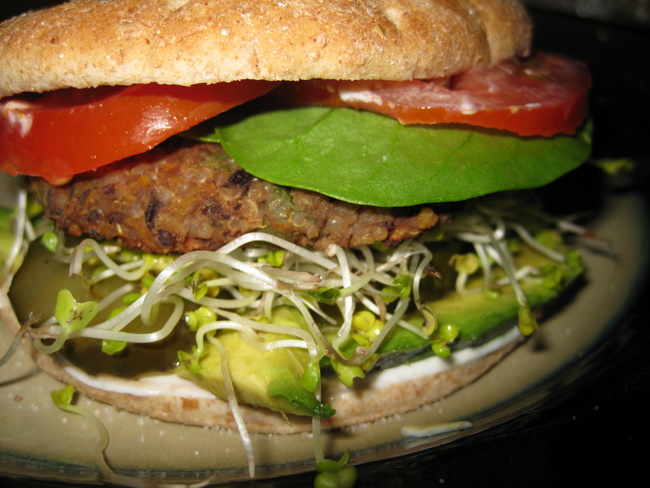
Black Bean Burgers with Avocado & Alfalfa Sprouts
Blue Corn Chips
Oranges

Dinner
Veggie Pizza
Chocolate Chip Cookie Ice Cream Sandwiches

Day 9
Lunch
Veggie wraps (humus, red onion, tomatoes, carrots. cucumber)
Oranges

Dinner
Ginger & garlic linguine with scallions & water chestnuts
Sesame grilled tofu
Steamed Broccoli
Apple Crisp

Day 10
Lunch
Cheese Quesadillas
Black Bean Soup

Dinner
Tempeh Coconut Curry
Brown & Wild Rice
Sesame Green Beans
Ginger Ice Cream

Day 11
Lunch
Curried Pumpkin Soup
Egg Salad Sandwiches

Spicy Black Bean Burger with Avocado, Alfalfa Sprouts
And Chipotle Mayonnaise

Ingredients:

Black Bean Burgers
2 15-oz cans black beans, drained well
6 green onions, finely chopped
½ c. finely chopped seeded red bell pepper
¼ c. chopped fresh cilantro
2 large garlic cloves, minced
1 ½ T. minced seeded jalapeno chili
2 t. ground cumin
1 large egg
2 T. plus 1 c. yellow cornmeal
6 T. olive oil
6 whole wheat hamburger buns
2 large avocadoes, sliced
Alfalfa sprouts

Chipotle Mayonnaise
3/4 cup mayonnaise
1 tablespoon chipotle chilies, finely chopped
1 tablespoon fresh cilantro, chopped
1 1/2 teaspoons fresh lime juice

Directions:

Place drained beans in a large bowl. Using hand masher, mash beans coarsely. Mix in green onions, bell pepper, cilantro, garlic, jalapeno and cumin. Season to taste with salt and pepper. Mix in egg and 2 T. cornmeal. Place remaining 1 c. cornmeal in small dish. Shape bean mixture into 6 flattened patties. Turn to coat in cornmeal. Heat 3 T. oil in heavy large skillet over medium heat. Fry bean burgers until firm and crisp, adding more oil as needed, about 6-8 minutes on each side. Drain on paper towels. Transfer to whole wheat buns and garnish with avocado slices and alfalfa sprouts. Chipotle mayonnaise: Mix the mayonnaise, chipotles, cilantro, and lime juice until well blended. Refrigerate and allow flavors to blend before using. Serve 1/8 c. on the side. Makes 6 burgers.

Week 9: Balsamic Vinegar

Balsamic vinegar

Balsamic vinegar originated in Italy and was first mentioned during the middle ages in a document dated 1046 A.D. It’s name comes from the word “balsimico” which means “balsam-like” and refers to a restorative or curative potion. Balsamic vinegar is made from a reduction of trebbiano grape juice. The resulting thick syrup is subsequently aged for a minimum of 12 years in a battery of seven barrels of successively smaller sizes. The casks are made of different woods like chestnut, acacia, cherry, oak, mulberry, ash, and juniper. True balsamic vinegar is rich, glossy, deep brown in color and has a complex flavor that balances the natural sweet and sour elements of the cooked grape juice with hints of wood from the casks.

There are three types of balsamic vinegar:
1. Authentic traditional artisan balsamic vinegar, the only kind that may legally be described as Aceto Balsamico Tradizionale in the EU.
2. Commercial grade balsamic vinegars produced on an industrial scale.
3. Condimento grade products, which are often a mix of the two above.
The names “Aceto Balsamico Tradizionale di Modena” (Traditional Balsamic Vinegar of Modena) and “Aceto Balsamico Tradizionale di Reggio Emilia” (Traditional Balsamic Vinegar of Reggio Emilia) are protected by both the Italian Denominazione di Origine Protetta and the European Union’s Protected Designation of Origin.

Modena (Aceto Balsamico Tradizionale di Modena) designates the different ages of their balsamic vinegar by the color of the cap on the bottle. A cream-colored cap means the vinegar has aged for at least 12 years and a magenta cap bearing the designation extravecchio (extra old) shows the vinegar has aged for 25 years or more. It comes in a bottle with a bulb at the bottom and a long neck.

Reggio Emilia uses a system of different label colors to indicate the age of its balsamic vinegars (Aceto Balsamico Tradizionale di Reggio Emilia). A red label means the vinegar has been aged for at least 12 years, a silver label that the vinegar has aged for at least 18 years and a gold label that designates the vinegar has aged for 25 years or more. It comes in a bottle with an inverted tulip shape.

While not an authentic balsamic vinegar, white balsamic vinegar has become recently widely available. It is a light colored vinegar that is used in place of regular balsamic when discoloration is undesirable. White balsamic is made from combining white wine vinegar with white grape must, and then cooked slowly. It is not generally aged.

Balsamic vinegar is the best-selling vinegar in the U.S., accounting for over 45% of all vinegar sales. Prices can range from $2-$3 a bottle to over $200, based on the quality. It can be stored indefinitely in a cool, dark place.

Nutritional Information
One tablespoon of balsamic vinegar has 14 calories, 2.7 g of carbohydrates (from sugar), and 0.1 g of protein. It is low in sodium and does not contain any fats.

Health Benefits
In ancient times balsamic vinegar was said to be a miracle cure and was used to treat everything from a mild headache to labor pains. It’s antibacterial and antiviral properties make it ideal for disinfecting wounds and infections. Balsamic vinegar can be used on nail infections and even acne! It is high in antioxidants that protect the body from heart disease and cancer. It also suppresses the body’s appetite and increase the amount of time it takes for the stomach to empty, which can contribute to weight loss by preventing overeating. Balsamic vinegar also improves insulin sensitivity which promotes blood sugar regulation.

Culinary Uses
Balsamic vinegar is used in salad dressings and in dips and marinades. In Italy it is also served on slices of parmesan cheese and mortadella (a cured meat like bologna) as an antipasto. It is also used sparingly to enhance steaks, eggs or grilled fish, as well as on fresh fruit such as strawberries and pears and even on vanilla gelato!

Resources

Wikipedia.
http://www.balsamicnectar.com
http://www.cooksillustrated.com
http://www.livestrong.com
http://www.nutritiondata.self.com

Vegeterian Retreat Menu

Blueberry Tart

I have been hired as the chef for a ten-day Conscious Social Change Retreat near Hanover, NH. The weather has been glorious – intense blue skies with soft summer breezes and most of the meals have been served outside overlooking the pond. The menu is vegetarian, and luckily I have not been challenged by any dietary restrictions. (During a previous retreat, I had one woman who did not eat soy or garlic, one who was gluten intolerant & one who was vegan! Creating a menu that met everyone’s needs was interesting.) Here is what I have served the first few days of this retreat:

Day 1
Dinner
Pasta Primavera
Massaged Kale Salad with Sesame Oil
Brownies with Raspberries & Whipped Cream

Day 2Lunch
Veggie Bacon BLTs
Potato Leek Soup
Carrot Sticks
Apples

Dinner
Fried Rice with Peas, Water Chestnuts, Mushrooms & Scallions
Pot Stickers with Ginger Dipping Sauce
Stir Fried Snow Peas, Mushrooms & Carrots
Fortune Cookies

Day 3Lunch
Veggie Patties on Rolls with Lettuce & Tomatoes
Blue Corn Chips
Carrot Sticks
Apples

Dinner
Spinach & Mushroom Quiche
Tossed Salad
Sour Cream Cake with Berries & Whipped Cream

Day 4
Lunch
Grilled Cheese Sandwiches on Multi-Grain Baguettes
Tomato Soup
Oranges

Dinner
Sweet Potato & Black Bean Burritos with Avocado, Tomatoes, Scallions, Cheddar & Sour Cream
Blueberry Lemon Curd Tart

Day 5
Lunch
Curried Tempeh Salad Sandwiches
Pasta Salad
Blue Corn Chips
Carrot Sticks

Dinner
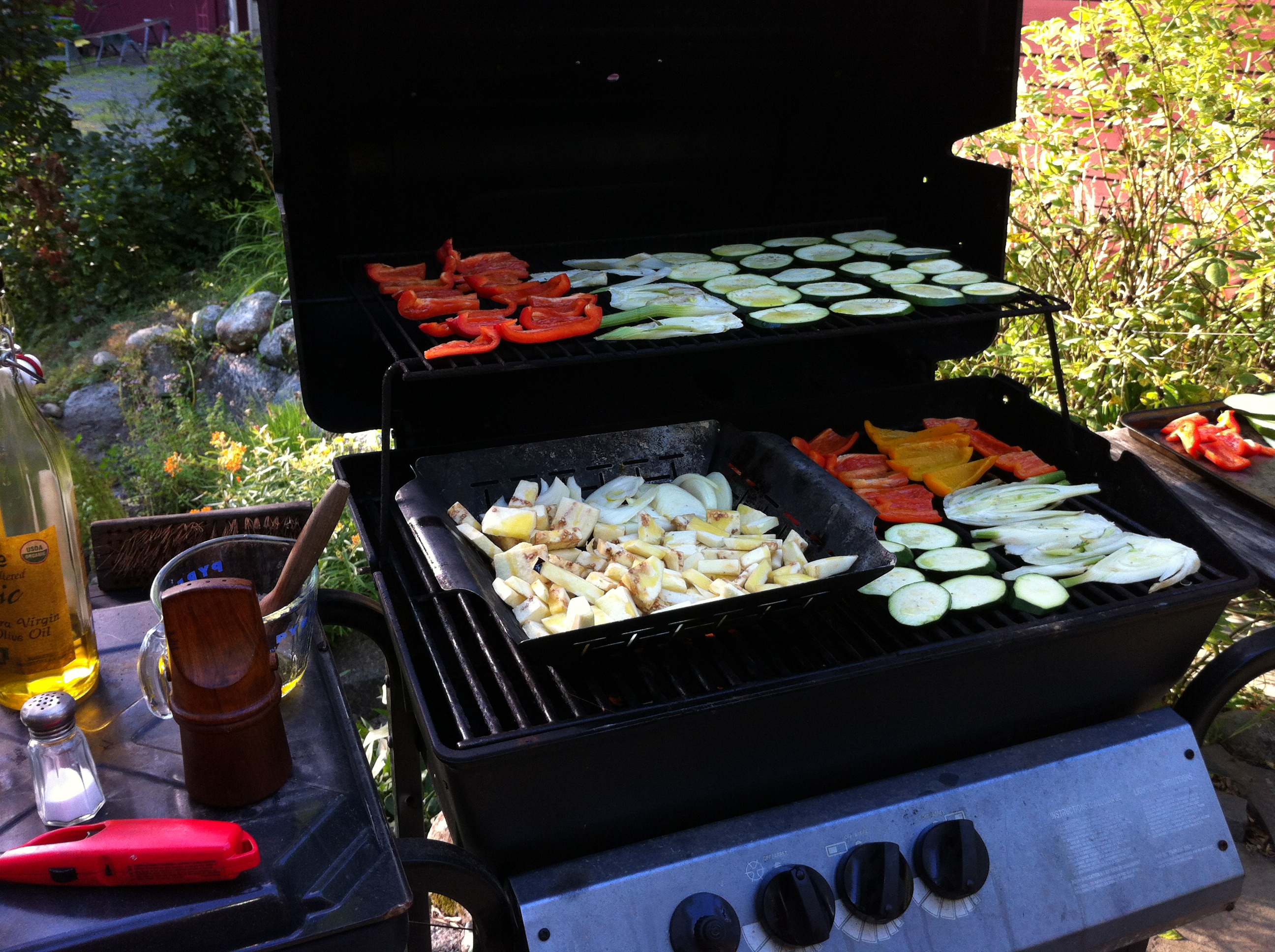
Grilled Vegetables in Pita Pockets with Tzatziki Sauce
Corn in the Cob
Watermelon
Veggies on the grill

Day 6Lunch
Vegetarian Chili
Jalapeño Corn Bread
Oranges

Dinner
Mushroom Risotto
Green Bean, Mozzarella & Tomato Salad
Frosted Brownies and Sliced Strawberries

My recipe for the Blueberry Lemon Curd Tart:

Crust
1 1/2 c. flour
3 T. sugar
1/2 c. vegetable shortening

Lemon Curd
1/2 c. sugar
1/4 c. lemon juice
4 large egg yolks
5 T. butter, cut into pieces

Blueberry Topping
2 quarts blueberries
1/2 c. sugar
2 T. cornstarch

Directions:
Crust – Blend flour and sugar in bowl. Cut in vegetable shortening until it is crumbly and looks like small peas. Add 7 T. ice water and mix with a fork until it forms a ball. Turn out on floured surface and roll until 1/4 inch thick. Fold in half and fold in half again. Set it gently in a greased tart pan or pie plate and unfold. Crimp the edges. Place a sheet of parchment paper or wax paper in the bottom on the pie shell. Fill with rice or dry beans and bake for 20 minutes at 400 degrees. Remove from oven and discard paper and rice or beans. Prick the bottom of the pie shell with a fork and return to oven for 10 minutes at 400 degrees. Remove from oven.
Lemon Curd- Whisk sugar and lemon juice in a heavy medium saucepan to blend. Whisk in egg yolks and then. Cook over medium heat, stirring constantly, until it begins to thicken (about 8 minutes). Remove from heat and spread on prepared pie shell.
Blueberry Topping – Measure out 1 c. of he blueberries and place in a medium saucepan together with sugar and 1/2 c. water. Bring to boil over medium heat. Meanwhile, in a small bowl, whisk together the cornstarch and 2 T. water. When water and blueberries have come to a boil, lower the heat and simmer, stirring constantly for 3 to 4 minutes or until the blueberries start to burst. Stirring constantly, add the cornstarch mixture and simmer for a minute until the mixture becomes translucent. Immediately remove from heat and add remaining blueberries. Carefully spoon the mixture over the lemon curd in the pie shell. Let cool to room temperature and refrigerate.

Week 8: Edible Seaweed

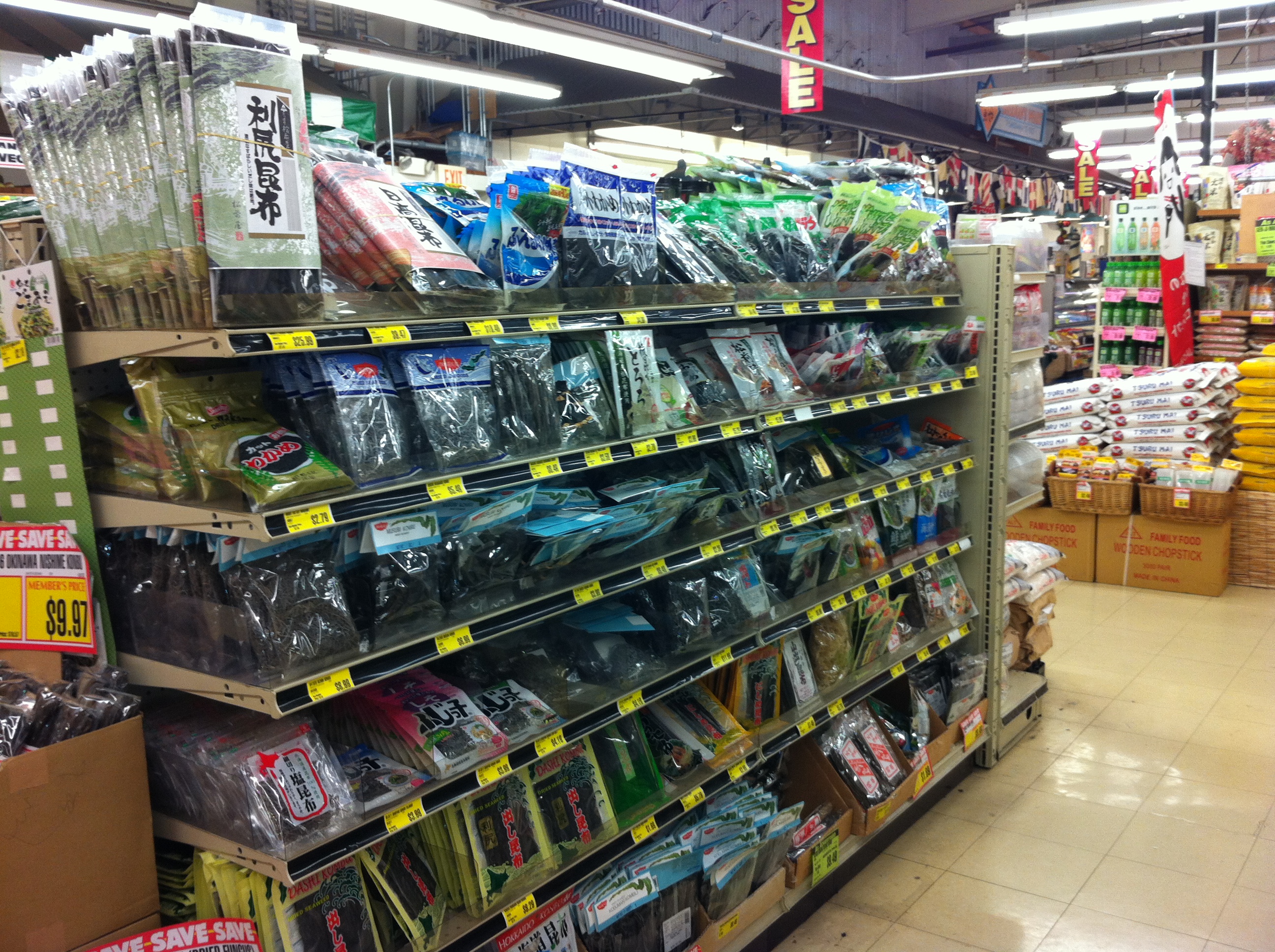
We are all familiar with seaweed-wrapped sushi, but did you know that there are as many varieties of edible seaweed (different shapes, colors and textures) as there are different kinds of vegetables? I recently had an opportunity to visit an amazing Asian market in Honolulu. Amid rows of delicate porcelain rice bowls, bamboo steamers, and chopsticks, there were four aisles of dried and processed seaweed products for sale! I realized how little I knew about the various types and their uses and decided to explore them and report on what I learned.

One of the seaweed aisles in the Asian market

One of the seaweed aisles in the Asian market

First of all, let’s be honest – seaweed is algae. But not all algae is created equal. Edible seaweed is marine seaweed from a salt water source. Seaweed, or algae, from fresh water is toxic. These are a few of the more common types of edible seaweed.

Nori
This is the most familiar seaweed because it’s in sushi, like futo maki or California rolls. It is readily available in supermarkets as dried, flat sheets. You can also add this edible seaweed to soups (like miso soup), bread (like laver bread), and it can be moistened and added to salads. Nori has the highest protein compared to the rest of the seaweeds and is rich in calcium, iodine, iron, phosphorous, potassium, manganese, copper, zinc and Vitamins A, B, C, E and K.

Dulse
Dulse is red algae and is shaped like a hand, which is how it got the genus name, Palmaria.
What’s it taste like? It has a salty flavor and is mildly spicy. It is slightly chewy when rehydrated. This edible seaweed is excellent in soups, salads and stir-fried dishes. Extremely high in Vitamins B6 and B12 (antioxidants), dulse also contains Vitamin C, E and A, iodine, calcium, magnesium, protein and dietary fiber.

Hijiki
Hijiki looks like black noodles when it is dried. It has to be rehydrated before use, so you need to soak it for a few minutes. Hijiki, like most dried seaweeds, expands in size and can be used in casseroles, stews, chopped in burgers, salads and eaten as a snack food. Hijiki is high in calcium and fiber.

Sea Lettuce
Sea Lettuce resembles the look of leaf lettuce and is quite common in ocean waters. This edible seaweed has a strong seafood taste and odor and is slightly pungent. It is quite delicate after drying and crumbles easily. Best added to soups, salads or eaten as a snack, sea lettuce provides roughage for our digestive systems. High in iron, sea lettuce also contains Vitamins A, B1 and C, sodium, potassium, magnesium, and calcium.

Sea Grapes
Sea grapes are also known as “green caviar” and are often seen floating in marine waters or washed ashore on coastal beaches. Sea grapes have a soft, succulent texture, well – like grapes. They are usually eaten raw with vinegar as a snack or in a salad.

Kelp
The three most familiar types of kelp, primarily used in Japanese or Korean dishes as well as in raw recipes, are arame, kombu, and wakame.

Arame is dark brown kelp and stringy in texture. Normally sold dried, it needs to be soaked for about three minutes before using. It tastes somewhat sweet and nutty and is good with beans, grains or noodles, in salads, stews, casseroles and eaten as a snack. Arame is rich in iron, calcium, potassium and iodine.

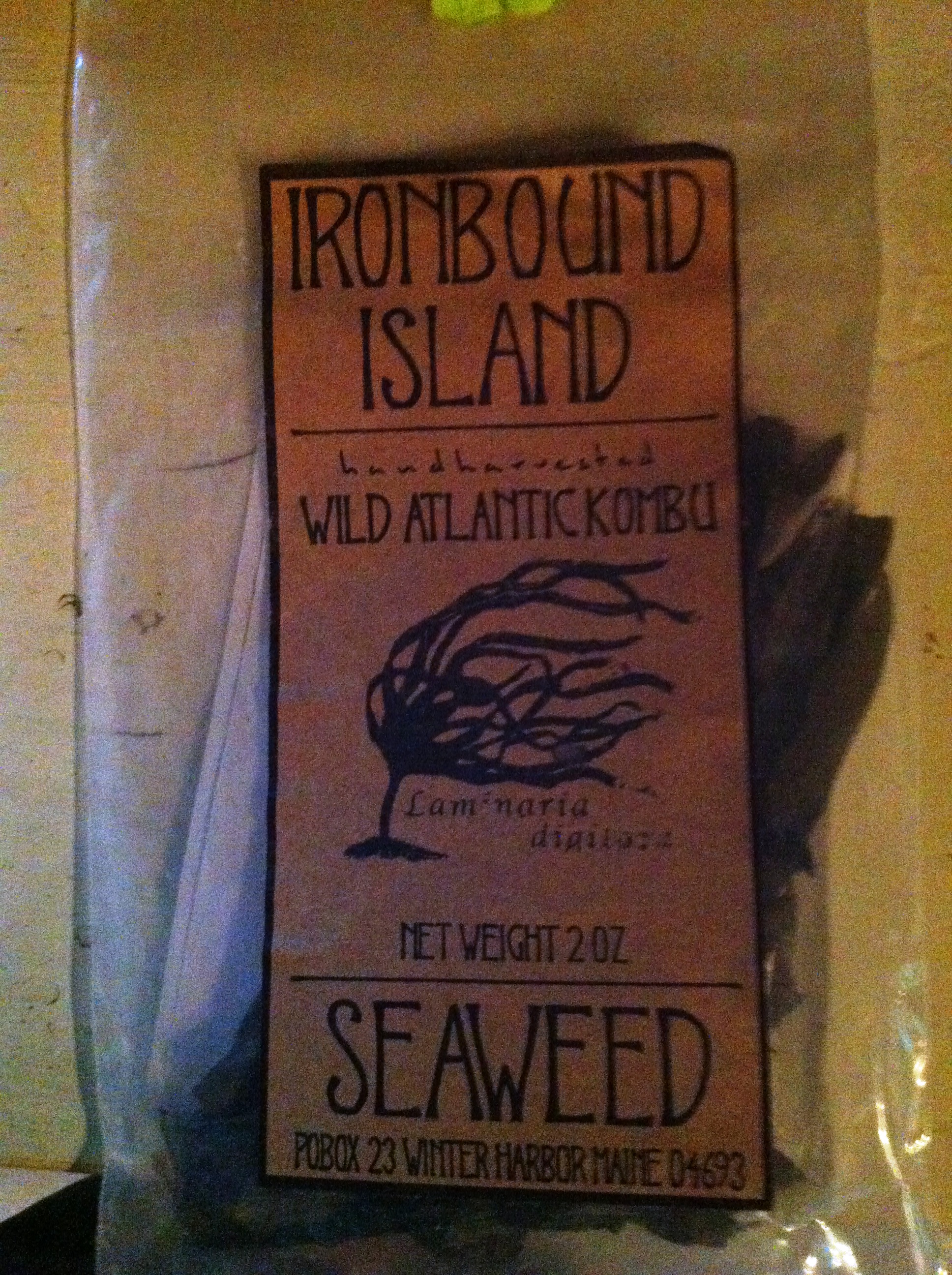
Kombu, when roasted, has a taste similar to that of bacon. So, it tastes delicious and is packed with nutrients such as calcium, carotene, iodine, iron, magnesium, phosphorous, potassium, protein, sodium, and vitamins A, C, D, E, K.

Dried Kombu

Dried Kombu

Wakame contains one of the highest sources of calcium. It is dark green or sometimes brown in color. Excellent in casseroles, soups and stews. It is also good when added to brown rice during cooking.

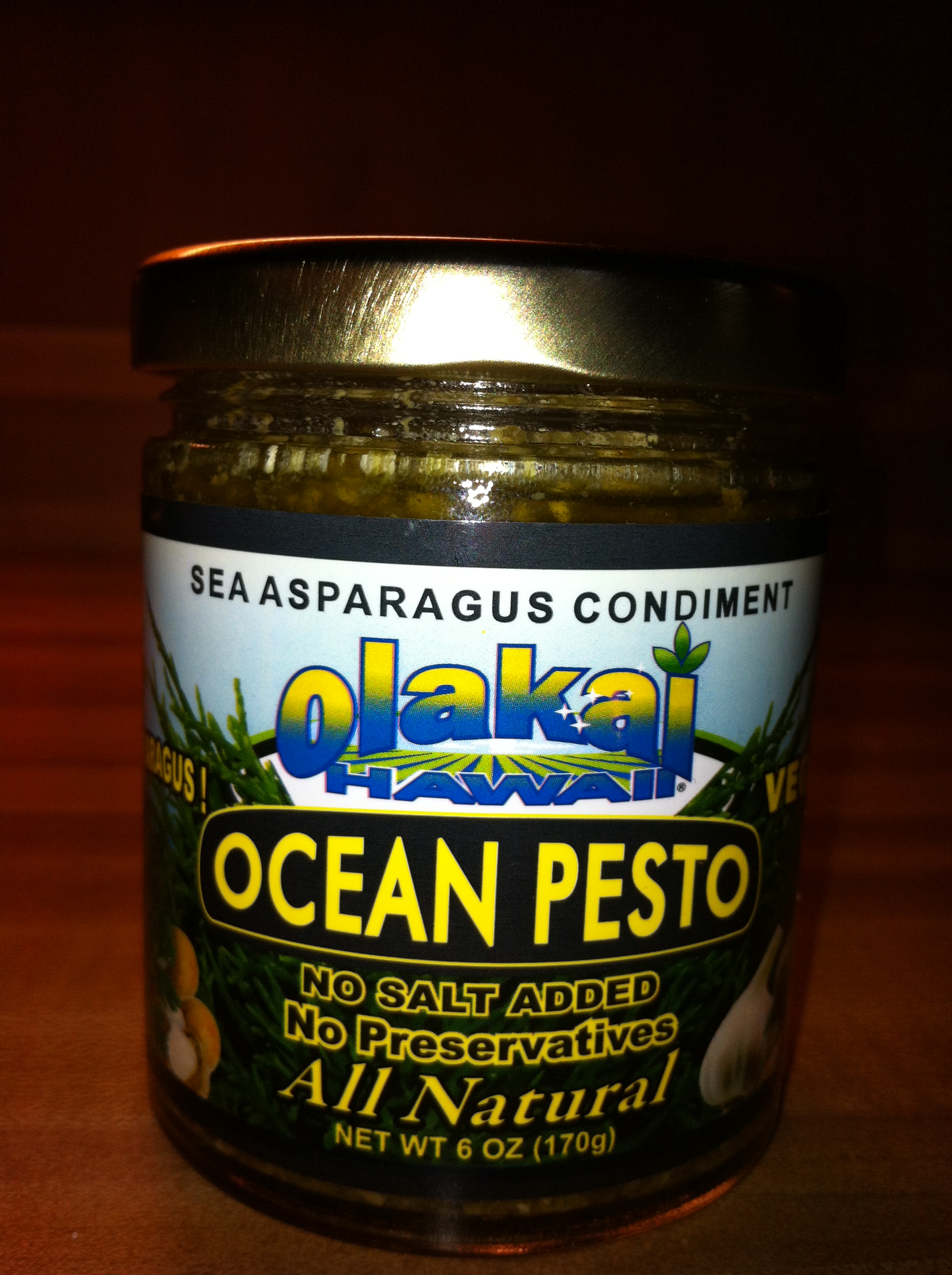
Salcornia

Ocean asparagus

Ocean asparagus

Salcornia is also known as glasswort, pickleweed or marsh samphire and is called “samphire greens” in Canada, “crow’s foot greens” in Nova Scotia, “sea beans” in the US and sea or ocean “asparagus.” It generally grows in brackish water near the edge of the ocean, but is now being cultivated as a hydroponic crop, growing on floating platforms in Hawaii.

Salcornia is very salty and needs to be cooked in plenty of water without any added salt. It has a hard, stringy core, and after cooking, the edible flesh is pulled off from the core. This flesh has the flavor and texture of young spinach stems or asparagus and is reported to have anti-flatulence properties. In some countries, it is used as fodder for cattle, sheep, goats and donkeys. The ashes of salcornia were once used as a source of soda ash for glassmaking and soap making.

And don’t forget – National Seaweed Day is February 6!

Resources
http://www.oceanvegetables.com
en.wikipedia.org
archives.starbulletin.com/seagreens

Week 7: Exotic Fruit

I recently had an opportunity to sample some unusual fruit and wanted to share information about them with you.

DRAGON FRUIT

Dragon fruit exterior

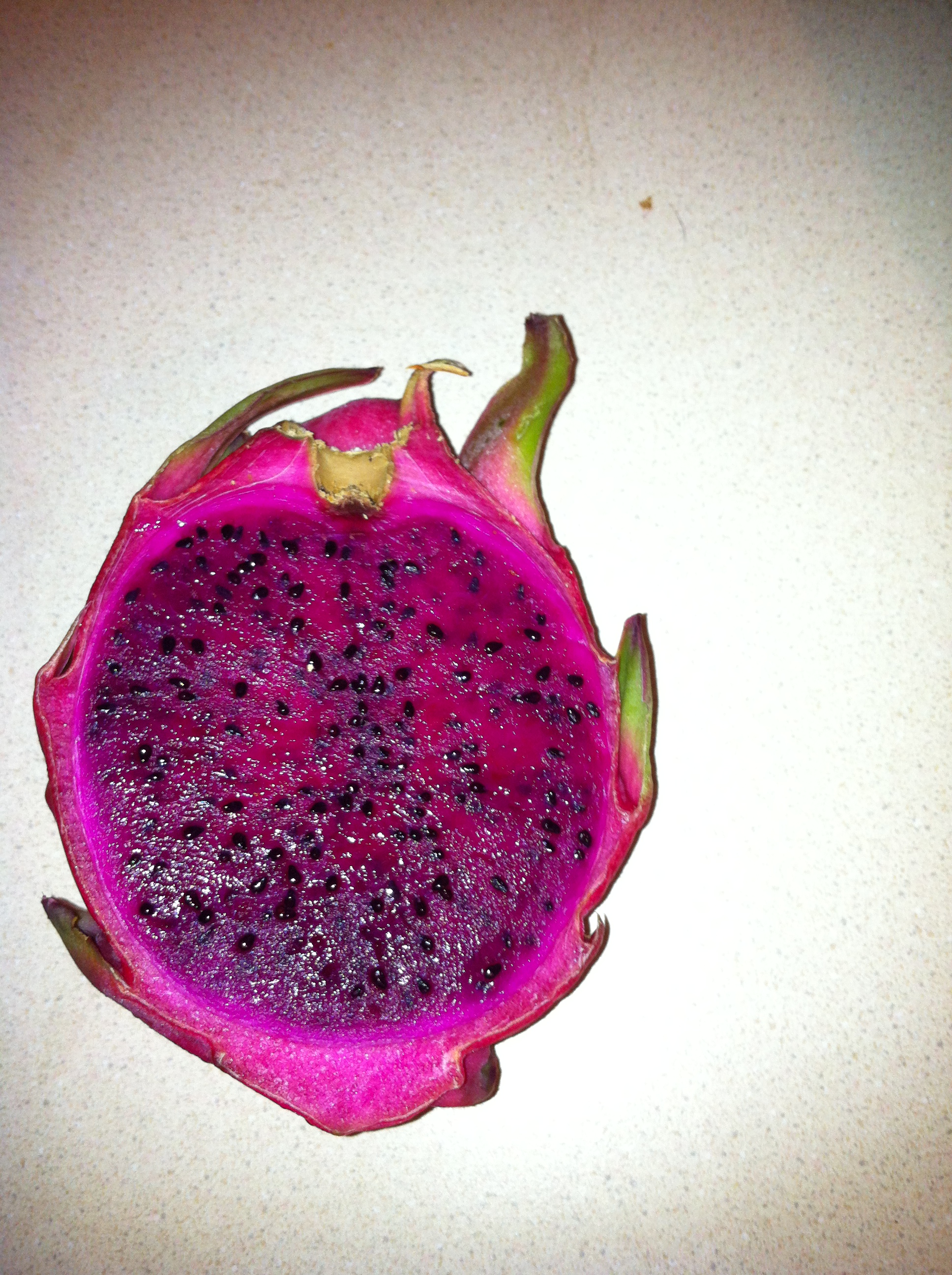
Dragon fruit, also known as pitaya (or pithaya), is the fruit of a cactus and is primarily cultivated in Southeast Asia. It can be found in Cambodia, Thailand, Taiwan, Malaysia, Indonesia, Vietnam, Sri Lanka, China, Okinawa and Hawaii. They are also grown in Israel, Cyprus, and Australia. It likes dry, tropical climates with a moderate amount of rain. The cactus is like a rambling vine, sometimes 10 feet long, and only blooms at night with large, fragrant flowers. It generally blooms 3-6 times a year and is pollinated by bats or moths. The fruit can be red with white or red pulp or yellow with white flesh. I found the dragon fruit to be mildly sweet fruit with crunchy black seeds which liken it to a kiwi.

[caption id="attachment_561" align="aligncenter" width="224"]Dragon fruit interior Dragon fruit interior


Dragon fruit exterior[/caption]

Dragon fruits are available in markets like Whole Foods in the U.S. and sell for $4-$6 each.

Health Benefits

Dragon fruits are one of the most nutritious of exotic fruits – low in calories with an abundance of nutrients, including Vitamin C, phosphorus, calcium, plus fiber and antioxidants. Although the thick peel is not eaten, it contains polyphenols which have cancer inhibiting properties.

Culinary Uses

Dragon fruit can be eaten plain or added to a fruit salad. It is also popular added to beverages. Skyy introduced a dragon fruit flavored vodka a couple of years ago. Celestial Seasonings offers Green Tea with Dragon Fruit. Lite Pom features pomegranate juice paired with dragon fruit and Dragon Kiss is a new pitaya-tinged cream liqueur. Have you had Vitamin Water’s Power C flavor? That’s dragon fruit!

DURIAN

Durian

Durian

Also known as the “King of Fruits,” Durian has a very particular odor, a unique taste and is covered by a hard husk. Having a disagreeable smell often likened to skunk spray or sewage, and described by travel writer Richard Sterling as smelling like “pig-shit, turpentine and onions, garnished with a gym sock,” the fruit is forbidden in hotels and public transportations in Southeast Asia. The fruit can grow as large as 12 inches long and 6 inches in diameter, and it typically weighs 2 to 7 pounds. Depending on the species, it ranges in color from green to brown with the flesh pale yellow to red. Durians are seasonal fruits and are available June to August. In the US, they cost between $8 to $15 each.

The first written account of eating a durian was recorded by the British naturalist, Alfred Russel Wallace, in which he described the flavor as a ” rich custard highly flavoured with almonds.” I thought the interior was very slimy with an overly sweet flavor, although it was a lot like custard.

Health Benefits

Durian fruit contains a high amount of sugar, vitamin C and potassium, and the amino acid trytophan. The Javanese believe the durian to have aphrodisiac properties, and an Indonesian saying durian jatuh sarung naik, means “the durian falls and the sarong comes up”, refers to this belief.

Culinary Uses

Durian fruit is used to flavour a wide variety of sweet edibles such as traditional Malay candy, ice kacang, dodol, and lempuk rose biscuits, ice cream, milkshakes, moon cakes and Yule logs. Red-fleshed durian is traditionally added to sayur, an Indonesian soup made from freshwater fish. In Thailand, durian is often eaten fresh with sweet sticky rice, and blocks of durian paste are sold in the markets. Unripe durians may be cooked as a vegetable. When durian is minced with salt, onions and vinegar, it is called boder. The durian seeds, which are the size of chestnuts, can be eaten whether they are boiled, roasted or fried in coconut oil with a texture similar to a sticky taro or yam. Young leaves and shoots of the durian are occasionally cooked as greens and the husk fo the durian is used to smoke fish.

RAMBUTAN

Rambutan

Rambutan

Rambutan is the fruit of an evergreen tree which grows in warm climates on hillsides that provide good drainage. The tree is native to Malaysia and Southeast Asia, and the name comes from the Malay word rambut which means “hair.”

Rambutans are red, covered with fleshy spikes, and have a white or pink interior. There is usually a single light brown seed, which is high in certain fats and used in cooking and making soap. Rambutan roots, bark, and leaves have various uses in medicine and in the production of dyes.

The fruit only ripens on the tree, is sweet and juicy, reminiscent of a grape, and is commonly used in jams or is available canned. I had the canned variety which did taste a lot like a peeled grape.

To open the rambutan, cut part way through and all the way around with a sharp knife and remove the rind. Squeeze the rind slightly and the fruit will pop out. You should discard the seed, because it is bitter.

Health Benefits

Rambutans are high in vitamin C, plus copper, manganese, and trace elements of many other nutrients such as potassium, calcium, and iron. The fruit is reported to kill intestinal parasites, and it may also aid in lessening symptoms of diarrhea. Malaysian healers also use parts of the rambutan to treat fevers.

Resources

http//:en.wikipedia.org
http://thaifood.about.com
New York Times. “A Fruit with a Future.” May 11, 2011
http://www.exoticfruitx.com
http://www.livestrong.com
http://www.naturalfoodbenefits.com
http://www.rambutan.com

A Trip to Hawaii

Kayak Kaneohe Bay (3)

My last post in the “52 Weeks of Food” series was a little delayed because I have been in Hawaii visiting our son, Eric, and his wife Donna. I had a wonderful time hiking in the jungle past waterfalls, kayaking, snorkeling, browsing through the Asian Market, touring an historic mansion near Diamond Head, sampling products at the Kailua Farmer’s Market and indulging in some amazing cuisine at the local restaurants.

One night we ate at a Moroccan restaurant, Casablanca, in Kailua. It was like stepping into an “Arabian Nights” fantasy! I sat on a low bench in the Oriental carpet draped room lit by hanging lanterns and Eric and Donna sat on chubby leather ottomans. The meal began when our server poured warm water over our hands over a silver catch basin and handed us terrycloth towels.

Hand washing

Hand washing

The towels also served as our napkins. Our first course was Harira Soup, made with tomatoes, lentils and/or chickpeas, saffron, parsley and coriander. Next followed a Moroccan Salad plate of creamy hummus dip, light tabbouli salad, rich eggplant, bright roasted bell peppers, tart tomatoes and flavorful carrots served with wedges of fresh-baked flat bread. My favorite course was the B’stilla, a savory pastry, flaky outside, dusted powdered sugar and cinnamon, with a moist, hot interior of finely shredded chicken, chopped almonds and eggs. I had lamb with honey and almonds as my main course and we were pretty full by the time dessert arrived – a deep-fried honey dipped funnel cake and hot cinnamon tea.

The highlight of the trip was a birthday celebration at Alan Wong’s restaurant in Honolulu where Eric had arranged for us to sit at the “Chef’s Table,” which was actually a special location (for one dining party only) in full view of the kitchen where we could observe the culinary artistry and ask questions of the chefs.

At the Chef's Table

At the Chef’s Table

One of the more interesting appetizers, “Poki-Pines” consisted of Crispy Won Ton Wrapped Ahi Tuna Poke Balls (pronounced poh-kay), Avocado, and Wasabi Sauce. What made them resemble porcupines was the clever way they were deep friend which made strips of won ton wrappers stand up in the air like quills. We also watched them serve the evening’s “Soup and Sandwich” appetizer, which initially had sounded awfully filling. In reality, the chilled tomato soup was served in a martini glass with a piece of lavash (thin flat bread) balanced on the rim of the glass topped with a small grilled cheese and Kahlua pork sandwich. The chilled tomato soup and chilled cream were squeezed simultaneously side-by-side in the martini glass – the separation of the white and red in the glass was beautiful and was swirled at the top to create a yin-yang design!

What did I order? Ginger Crusted Onaga (Red Snapper) with Miso Sesame Vinaigrette, Organic Hamakua Mushroom & Corn, which was moist and flavorful.

Ginger Crusted Onaga

Ginger Crusted Onaga

And for dessert I couldn’t resist “The Coconut”
which was Haupia (coconut) Sorbet in a Chocolate Shell served with tropical fruit and Lilikoi (passion fruit) sauce.

The Coconut

The Coconut

Following our meal, I was presented with an autographed copy of the menu!

Brandied Cherries with Yogurt

CherriesIngredients:

2 ½ c. pitted sour cherries

1 t. fresh lemon juice

¼ c. honey

¼ c. brandy or dark rum

1 t. cinnamon

½  c. plain, nonfat Greek-style yogurt

Directions:

Mix lemon juice, honey, brandy & cinnamon in a glass mixing cup and heat in microwave for 30 seconds.  Stir to blend.  Pour over cherries and marinate in refrigerator for 4 hours or overnight.

To serve, spoon cherries into individual serving bowls and garnish with yogurt.

Week 6: Honey

honey

Honey is the rich, golden liquid that is produced by bees who collect nectar from flowers and mix it with their saliva.  Enzymes in the saliva transform the nectar into honey which is stored in cells in a beehive which typically contains one queen bee and approximately 60,000 drones/workers.  Honey bees will travel up to 3 miles from the hive to collect nectar, and it takes nectar from over 2 million flowers to produce one pound of honey.

Honey is used as a food source for bees during the winter months when they are unable to collect nectar and excess honey is collected by beekeepers for human consumption.

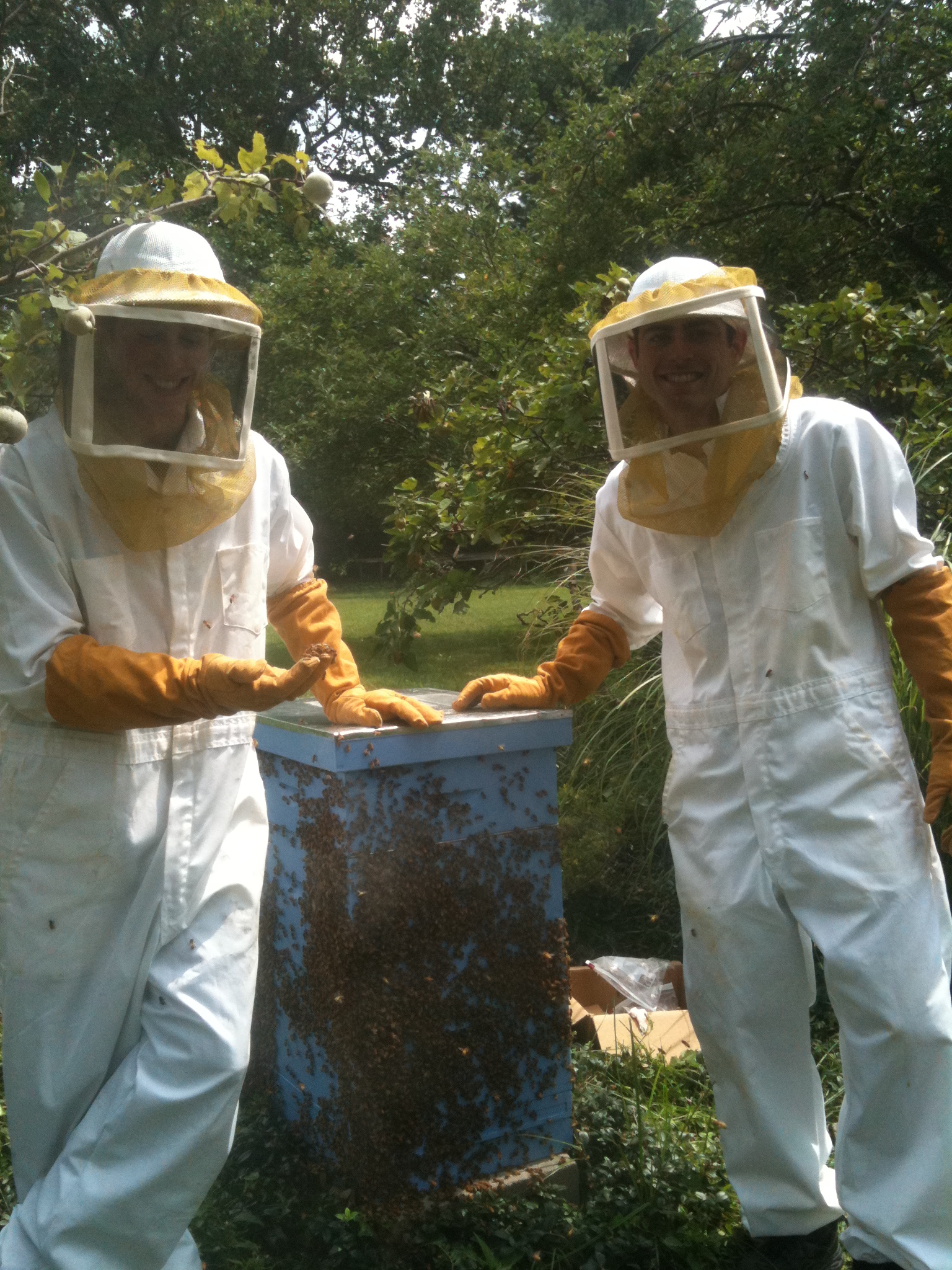
A few years ago, my husband and I decided to try beekeeping and set up our first hive. It was an amazing learning experience and produced the sweetest, purest honey we have ever eaten.

005


There are over 300 different types of honey in the U.S. It comes in a range of colors including white, amber, red, brown, and Buckwheat honey is almost black. The flavor and texture vary with the type of flower nectar from which it was made. While the most commonly available honeys are made from clover, alfalfa, heather and acacia flowers, honey can be made from almost any flowering plant including thyme and lavender.

Honey is graded based upon a number of factors, including water content, fragrance, flavor, aroma, absence of defects and clarity. It is graded A, B, C, or substandard depending on bubbles, clarity and contamination by pollen grains.

History

There is evidence that people were gathering honey at least 8,000 years ago, as shown in cave drawings in Valencia, Spain.  Archaeologists have found honey remains on the inner surface of clay vessels recovered from an ancient tomb in Georgia, dating back to some 4,700–5,500 years ago. Apiculture, or beekeeping, for the purpose of harvesting honey dates back to 700 BC.

Honey has had many uses over the years from sweetening food and beverages as well as making alcoholic beverages (mead), making cement, and as a medicine. Honey was used for embalming the dead in Ancient Egyptian and in the Middle East. In the 11th century A.D., German peasants even paid their feudal lords in honey and beeswax.  Beeswax is also used today in furniture polishes and varnishes.

Religion

There are references to honey in a number of religions. Honey symbolizes the new year, Rosh Hashanah.  In the Bible, in Matthew 3:4, John the Baptist lived for a long period of time in the wilderness on a diet consisting of locusts and wild honey. In Hinduism, honey, or madhu, is one of the five elixirs of immortality. The Buddhist festival of Madhu Purnima, which is celebrated in India and Bangladesh, honey is given to monks to commemorate Buddha’s retreat into the wilderness where reputedly a was fed honey by a monkey. And, in The Qur’an, honey is promoted as nutritious and healthy. Apparently, the Prophet Muhammad recommended it for its healing properties.

Health Benefits

Honey is the only food product that never spoils, as its high sugar content and acidic pH help to inhibit the growth of microorganisms. Honey reportedly boosts immunity and helps heal wounds as well.  It also contains antioxidants and flavonoids that may function as antibacterial agents. Honey has been used topically as an antiseptic therapeutic agent for the treatment of ulcers, burns and wounds for centuries.  Raw honey contains an enzyme called glucose oxidase that, when combined with water, produces hydrogen peroxide, a mild antiseptic. Darker honeys, specifically honey from buckwheat flowers, sage and tupelo, contain a greater amount of antioxidants than other honeys, and raw, unprocessed honey contains the widest variety of health-supportive substances.

Phytonutrients are found both in honey and propolis (also referred to as “bee glue” and used by honeybees to seal the hive to keep it save from bacteria.  The bees make propolis by combining plant resins with their own secretions.)  These phytonutrients have been shown to possess cancer-preventing and anti-tumor properties. Researchers have discovered that these substances prevent colon cancer in animals. These phytonutrients include caffeic acid methyl caffeate, phenylethyl caffeate, and phenylethyl dimethylcaffeate.

NOTE: Do not feed honey-containing products or use honey as a flavoring for infants under one year of age; honey may contain Clostridium botulinum spores and toxins that can cause infant botulism, a life-threatening paralytic disease.

Culinary Uses

Honey is used as a sweetener in beverages and for cooking and baking. It makes a good replacement for sugar in most recipes, but since honey is sweeter than sugar, you need to use less, one-half to three-quarters of a cup for each cup of sugar. For each cup of sugar replaced, you should also reduce the amount of liquid in the recipe by one-quarter of a cup. In addition, reduce the cooking temperature by 25°F since honey causes foods to brown more easily.

Honey is also used to make mead, which is a fermented beverage made from honey and water and sometimes fruit or spices.  Mead contains between 8%-18% alcohol and is the earliest known fermented beverage.

Resources

About.com. Food History

National Honey Board. http://www.honey.com

Wikipedia. en.wikipedia.org/wiki/Honey

http://www.whfoods.com