Category Archives: Recipes

Chocolate Mint Truffles

These chocolate truffles are sinfully rich and delicious.

dark-chocolate-truffles

Ingredients:

12 oz. semi-sweet chocolate

½ c. heavy cream

2 T. butter

¾ c. powdered sugar

2 egg yolks

¾ t. peppermint extract

Unsweetened cocoa

Directions:

Sift powdered sugar and combine with chocolate, heavy cream, butter and egg yolks over low heat. Whisk constantly until smooth and chocolate has melted. Remove from heat and stir in peppermint extract. Chill 3-4 hours until firm enough to handle. Shape into small balls and roll in cocoa. Refrigerate until ready to serve. Makes: 36

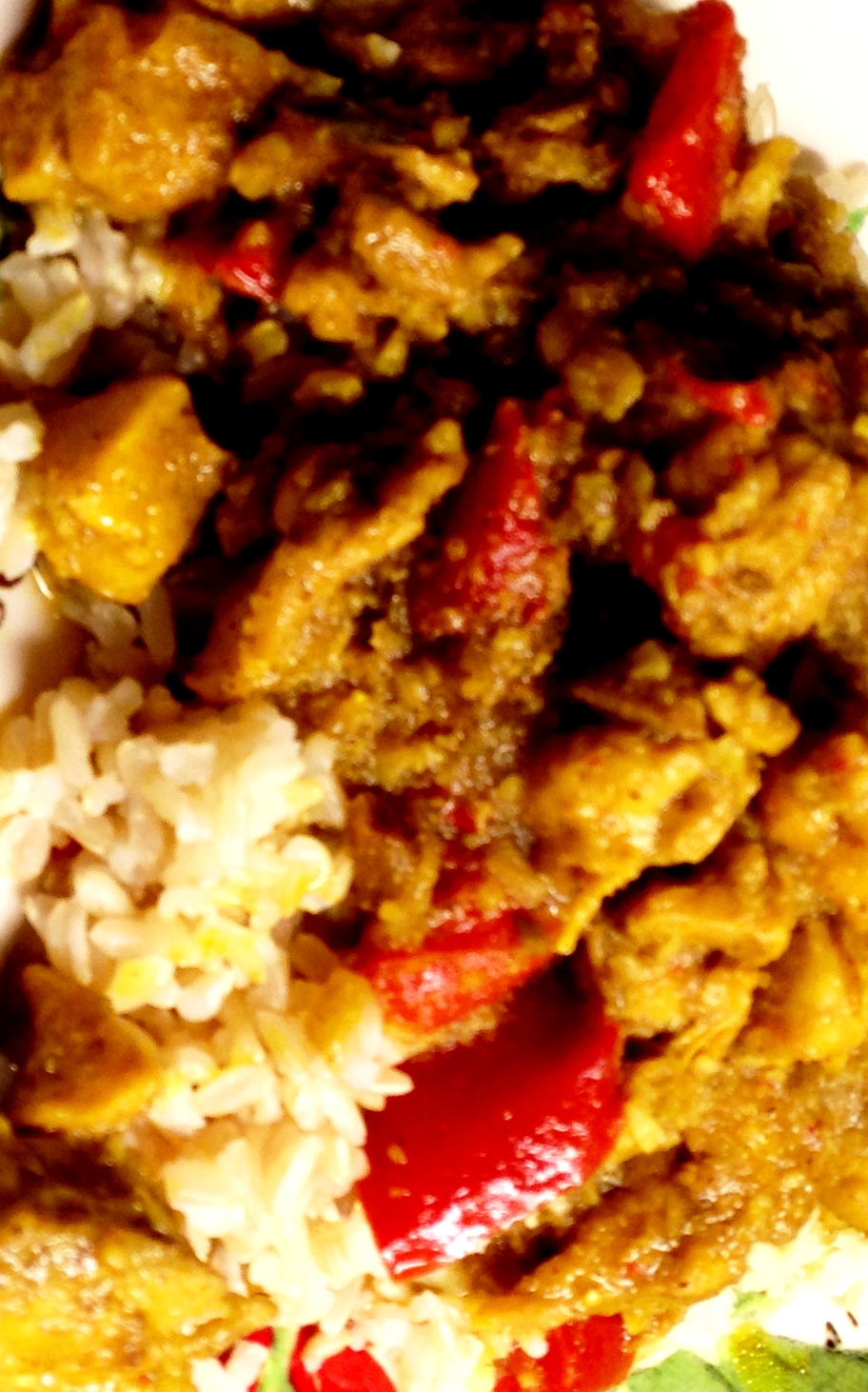
Curried Coconut Chicken

Curried coconut chicken2

Curried Coconut Chicken

Fragrant and packed with a hint of spiciness, this chicken recipe will satisfy on a cool evening. Serve over jasmine or Basmati rice and garnish with plain, nonfat yogurt or chutney.

Spice paste:

1 T. finely minced hot peppers or chilies

6 shallots, peeled and quartered

1 c. unsweetened flaked coconut

1/2  t. ground cloves

1 t. cinnamon

2 t. ground coriander

1/2 t. ground cardamom

2 t. fennel seeds

1 t. dried mustard

1 t. cumin seeds

1 t. turmeric

Chicken:

1/4 c. canola oil

2 cloves garlic, minced

2 T. peeled and minced fresh ginger root

1 large red onion, diced

1 large red bell pepper, diced

6-8 boneless, skinless chicken thighs, cut into bite-sized pieces

2 t. salt

2 T. apple cider vinegar

1 c. water

Directions:

Spice paste:  To toast coconut, place coconut flakes in a skillet over medium heat and stir until golden on the edges. Combine coconut and all other ingredients in a blender or food processor.  Add 4-5 T. of water and blend until a smooth paste forms.  Set aside.

Chicken:  Saute garlic, ginger root, onion and bell pepper in oil over medium heat until tender.  Add spice paste, chicken, salt, vinegar and water.  Bring chicken mixture to boil over medium high heat.  Cover and reduce heat to medium low.  Cook for 45 minutes until chicken is tender. Stir occasionally and add more water if necessary to keep it from sticking.   Serves 4-6.


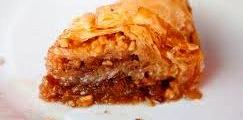
Greek Baklava


Baklava

Ingredients:

2 c. finely chopped almonds and walnuts

¾ c. sugar

3 T. cinnamon

1 lb. frozen phyllo pastry sheets

1 ½ c. plain bread crumbs

1 c. melted butter

2 c. water

4 c. sugar

1 cinnamon stick

Juice of one lemon


Directions:

Spread one sheet of phyllo in a buttered baking dish and brush with butter.  Sprinkle with bread crumbs.  Repeat with 7 more layers.  Add ½ of nut mixture.  Add 5 more layers brushing butter after each sheet of phyllo.  Add remaining nut mixture.  Add 7-8 more layers.  Brush top with melted butter and cut in long strips.  Then cut diagonally across the strips to make diamond shapes.  Bake at 350oF for 45 minutes.  Make syrup with butter, water, sugar, cinnamon stick and one lemon.  Remove baklava from oven and spoon syrup over while warm.  Serve at room temperature.

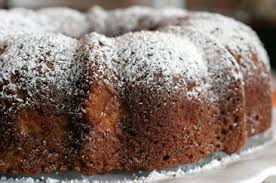
Apple Pecan Cake


apple cake

Ingredients:

3 c. chopped apples (core, but do not peel)

3 c. sifted flour

2 c. sugar

2 eggs

1 1/8 c. oil

1 t. baking soda

1 t. salt

1 t. cinnamon

2 t. vanilla

1 c. pecans

Confectioner’s sugar

Directions:

Preheat oven to 300oF. Cream sugar, eggs, oil and vanilla. Add flour, baking soda, salt and cinnamon. Fold in apples and pecans. Bake in 2 loaf pans or one bundt pan at 300o for 1 ½ hours. Sift confectioner’s sugar over cake when it has cooled.

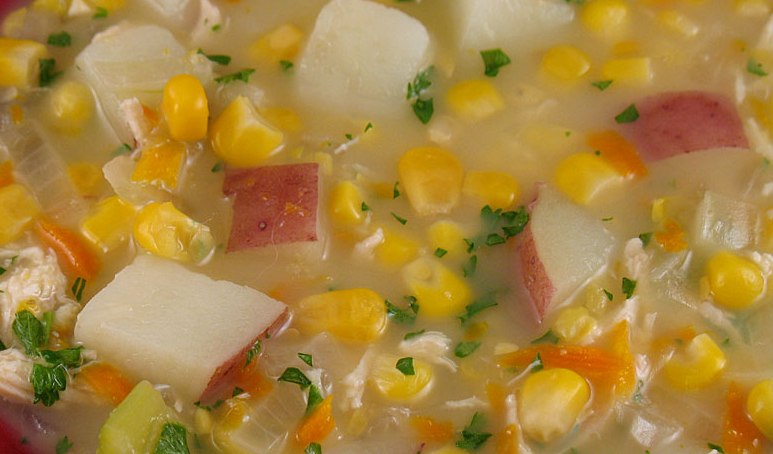
Red Potato, Leek & Corn Chowder

cornchowder

Ingredients:

3 c. diced red potatoes (do not peel)

1 stick butter

1 large onion, minced

2 cloves garlic, minced

1 leek (white part only) sliced

3 scallions, white and green parts, chopped

1/2 t. dry mustard

1/4 t. cayenne pepper

1 t. ground thyme

3 stalks celery, diced

4 cups fresh or frozen whole kernel corn

4 T. flour

4 cups (1 quart) half and half

¼ c. chopped parsley

2 t. honey

¼ t. black pepper

¼ t. salt

¼ t. nutmeg

1 bay leaf

2 cups vegetable stock

Directions:

Parboil potatoes in water for 7-8 minutes until they can be pierced with a fork. Drain and reserve. In a large saucepan, melt 1/2 stick of butter and sauté onions, garlic, leeks, and scallions in remaining 10-15 minutes over medium heat until they are transparent. Season with mustard, cayenne, and thyme. Raise the heat and add celery and corn. Saute for 3-4 more minutes. Add vegetable stock and cook until heated through. Cover and remove from heat.

To make white sauce, in a heavy saucepan, melt the remaining ½ stick butter. Add flour and a pinch of salt. Whisk over low flame for 5 minutes until it is well-blended and forms a paste. Slowly add half and half, stirring constantly for 10 minutes or until thickened.  Stir in parsley, honey, bay leaf, pepper and nutmeg. Add white sauce and potatoes to onion mixture and reheat, if necessary over medium low heat. Adjust seasoning. Makes 3 quarts.

Salad Nicoise

Salad Nicoise

Ingredients:

Salad

6 medium tomatoes sliced

1 ½ c. green beans, blanched

6 hard-boiled eggs, peeled and quartered

18 marinated artichoke hearts

12 large romaine lettuce leaves, washed

½ head chicory (or assorted salad greens)

1 ½ c. new potatoes, boiled, quartered and chilled

Three 4 oz. ahi tuna steaks or one 12 oz can tuna, packed in olive oil

½ c. Nicoise olives

2 T. extra virgin olive oil (for searing)

Dressing

¼ c. red wine vinegar

1 ½ c. extra virgin olive oil

Salt & Pepper to taste


Directions:

In a skillet over medium high heat, sear tuna steaks for 2 minutes on each side in olive oil. Remove from heat and slice each tuna steak into 1/4 inch slices. Line each cold plate with two romaine lettuce leaves and chicory, and then arrange the remaining ingredients on the lettuce. Overlap the tuna slices down the center of the plate and arrange the other vegetables on either side, using contrasting shapes, colors and textures to create an attractive presentation. (If you are using canned tuna – drain and divide tuna chunks among the plates.) Combine ingredients for dressing in small bowl and whisk until well-blended. Pour approximately ¼ c. of dressing over each salad. Serves 6.


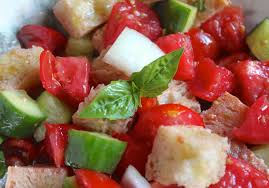
Panzanella (Tomato and Bread Salad)


Panzanella

This is a very popular country salad from the Florentine area of Italy.  It needs a firm, coarse-textured bread to be good.

Ingredients

2 c. coarse white bread, crusts removed

6 ripe tomatoes

1 red onion

1/2 cucumber

2 stalks of celery

6 sprigs of basil leaves, shredded

6 tablespoons olive oil

2 tablespoons balsamic vinegar

Salt and pepper to taste.

Directions

Cut the bread into small pieces (1/4 – 1/2 inch square)  Put the bread into a large salad bowl and sprinkle with cold water so it is well moistened but not soggy.  Add all the vegetables, cut into pieces or slices and the finely sliced basil.  Dress with oil, vinegar, salt and pepper.  Stir well and leave for 30 minutes so the bread can absorb the dressing before serving.


Perfect Eggs

Here are some tried and true methods for egg preparation.

scrambled eggs

Scrambled

Use 2 eggs and one egg yolk per person. Whisk until well blended and add a small amount of heavy cream.  Melt butter over medium low heat in a skillet.  When butter begins to foam, add eggs.  Using a wooden spatula, gently scrape eggs from bottom of pan until eggs begin to set. Cover pan and reduce heat to low for 1-2 minutes. If you want to add diced onion, mushrooms or green peppers to your scrambled eggs, sauté the vegetables in a separate skillet until onions are translucent and mushrooms and green peppers are tender. Add vegetables to egg and cream mixture before you transfer it to the saucepan for cooking.

Boiled

Place eggs in a saucepan and cover with water.  Bring to boil over high heat.  Once water begins to boil, time eggs for 8 minutes.  Remove from heat and drain off hot water.  Fill saucepan with cold water and allow eggs to cool.  Crack eggs under water for easy peeling.  Older eggs will peel easier than fresh ones.

Fried

A perfectly fried egg should not have crusty edges nor a browned bottom. Using a well-seasoned cast iron griddle or a nonstick skillet, melt butter over medium low heat until it begins to foam. Break eggs into skillet. Cook until white turns opaque. For over easy, turn with spatula and continue cooking for about 30 seconds or until egg white covering the yolk has turned opaque.  For over medium, cook slightly longer so yolk has begun to set.

Poached

Fresh eggs work better for poaching.  Crack and egg into a small dish.  Meanwhile, fill a skillet half full with water and bring to boil.  Reduce heat to medium low to keep water simmering.  Add 1/2 t. salt and 2 T. white vinegar to water.  Using a whisk, stir water in a circle until a vortex or depression forms in the center.  Carefully, pour egg from bowl into the vortex. Cook for 4 -5 minutes.  Remove with slotted spoon.  The salt and vinegar helps keep the egg white compact. Serve on toast, English muffins or fried corned beef hash.


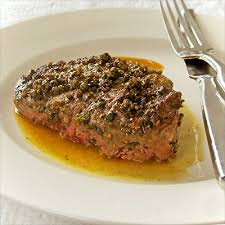
Steak au Poivre

Steak au Poivre

Ingredients:

2 T. peppercorns, coarsely crushed

4 New York strip steaks

2 T. butter

2 T. olive oil

2 T. brandy

¼ c. beef stock

½ t. Dijon mustard

¼ t. Worcestershire sauce

Salt

Directions:

Sprinkle both sides of steak with crushed peppercorns. Press into steaks using fingers.  Add the butter and olive oil to a skillet and brown the steaks on both sides.  Steaks will be rare.  Cook longer if you want them more done. Transfer to hot serving platter.  To the juices in skillet, add remaining ingredients and simmer until thick.  Serve over the steaks.

Week 27: Pepper

Pepper

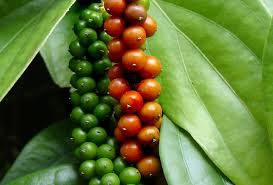
Pepper is a woody climbing vine that belongs to a genus of plants with the name Piper. The botanical name is Piper nigrum. They are grown on supporting trees, poles or trellises. The berries dandle in clusters from vines like dangling earrings. It takes several years for the vines to mature and they can reach 30 feet in length during that time. Pepper vines grow best in warm, humid tropic weather with well-drained soil. Pepper is native to Southeast Asia and Vietnam is currently the world’s largest producer and exporter, producing 34% of the world’s Piper nigrum crop.

Although nigrum means black, white pepper comes from the same plant. The difference depends on when the berries are picked. Black pepper is picked when the berries are still green, while white pepper is picked when the berries turn from green to red. The berries are placed in hot water to remove the tough, outer husk and then are dried. After drying, the green berries become black, wrinkly balls – the peppercorn with which we are familiar. The spiciness of black pepper is due to the chemical piperine, not capsaicin that gives fleshy peppers heat.

Pink peppercorns (French: baie rose, “pink berry”) are dried berries of the shrub Schinus molle, commonly known as the Peruvian peppertree. As they are members of the cashew family, they may cause allergic reactions including anaphylaxis for persons with a tree nut allergy.

History

Pepper has been used throughout antiquity. Black peppercorns were found stuffed in the nostrils of Ramses II, placed there as part of the mummification rituals shortly after his death in 1213 BCE. The Romans used pepper as an integral part of their meals, primarily for health reasons.  Pepper was considered today’s equivalent of aspirin and was consumed  as a cure-all for numerous aches and pains to include cough, fever, snake bite, constipation, diarrhea.

Pepper was known in Greece since 4 BCE and was used in Indian cooking as early as 2BCE. 

It is commonly believed that during the Middle Ages that pepper was used to disguise the flavor of rotting meat, but that may not be accurate. Meat and wild fowl was readily available to the wealthy who liked it seasoned with spicy sauces. Sugar was not widely available. Thus, pepper was combined with cinnamon and nutmeg to add fiery sweetness to the food.

English and Dutch vied for control of the port cities in India, Sumatra and Java to monopolize the pepper trade. It was more valuable than gold or silver and was used to pay taxes, customs duties and dowries. Land was even purchased with pepper! Members of the English East India Company, the first company in the world based on stock ownership, were called spicers, or pepperers, and imported an distributed spices.  These men formed guilds to protect their interests, the most important being the Pepperers’ Guild of London, which wielded considerable political power.

American pepper traders departing from Salem, Massachusetts in the 1800s made profits of 700 percent on the pepper trade and became the country’s first millionaires.  The Gardner Museum in Boston was founded by the daughter-in-law of John Lowell Gardner, a wealthy pepper merchant. Captain Jonathan Carnes, the son of a distinguished privateer during the Revolutionary War, returned from a trip to Sumatra and gave mementos of his journey (elephant’s tooth, golden boxes, assorted shells, pipes and other items) to the Salem East India Marine Society and inspired the Society to begin a “cabinet of curiosities” which was the foundation for the Peabody Essex Museum in Salem.

Uses

Pepper has been used throughout history as a seasoning for food and for its medicinal properties, particularly in Ayurvedic medicine, Hindu traditional or alternative medicine, which emphasizes plant-based treatments with exercise, yoga and meditation.

There are more than 300 studies citing pepper in PubMed, the database maintained by the National Library of Medicine in the US. Scientific studies in the US, Britain and Italy are also underway to test pepper’s potency as an anti-inflammatory and anti-microbial agent, an anti-cancer therapy, insecticide, preservative, anti-oxidant  and analgesic.

One tablespoon of ground black pepper contains moderate amounts of Vitamin K, iron, and manganese with trace amounts of other essential nutrients, protein and dietary fiber.

References

Shaffer, Marjorie: “Pepper: A History of the World’s Most Influential Spice”

Wikipedia