Garnishes

Snip. Snip. I was trimming glossy green lemon leaves to evenly shape them so they could be used as a garnish for lunch service.  The grill station chef at the restaurant by the pool would place a thick slice of fresh mozzarella di buffalo on the grill and as it warmed and began to melt, he would transfer it to a lemon leaf and serve it as a garnish with the grilled fish of the day.  I finished filling the rectangular stainless steel container with freshly trimmed leaves, covered it with wet paper towels and put it into the reach in refrigerator.

Alessandro put a stack of baby eggplants on the table in front of me.  He picked up the vegetable peeler and showed me how to slice off thin slivers of eggplant skin. Then he wrapped the eggplant skin inside out in a multi-layered circle around his fingers and showed me how to slice it very, very thin.

“You try,” he instructed.

I wound the slivers around my fingers and made very fine, almost transparent slices.

           “Piano, piano,” he kept saying. Was he trying to discuss music?   I have absolutely no musical talent.  He didn’t say anything more, so I didn’t try to respond. But that evening I checked the word in my Italian/English dictionary and discovered that it meant “slowly, carefully.”

When I finished slicing the eggplant peels, Alessandro placed them on a cookie sheet and roasted them very slowly until they were crunchy.  A little pile of toasted eggplant peels resembling a nest would also be used to garnish a plate. Alessandro told me later that Chef was very impressed with the very, very fine cuts of melanzana (eggplant) peels that I did for the garnish.  He said they perfetto!

Another garnish they used at the restaurant was a cheese “cone.”  Alessandro showed me how to put a square of Swiss cheese on a piece of parchment paper and add a sprinkle of minced parsley and a very, very thin slice of red pepper.  Then he microwaved it for 1 minute and the instant it finished, he quickly wrapped it around a cone-shaped piece of metal (one of the cooks said he made it from a tin can covered with foil, but I have seen metal “horns” or cones available where baking supplies are sold.  It cools right away and makes a fancy cone that they fill with pasta on a plate.

These tasks took me all morning, and then it was time for a break and the employee lunch.  Most of the time, the employee lunch consisted of meat, a vegetable and pasta.  Occasionally the vegetable was oven baked potatoes which, combined with the pasta, seemed like an awful lot of starch for one meal.  Today the “meat” or protein portion of the meal was a batch of whole, deep fried fish about 4-6 inches in length.  I thought they might be anchovies, because I knew they were larger than we’re used to seeing them in a can and they were eaten more regularly in Mediterranean countries.  I got in the lunch buffet line with my plate and watched the people in front of me heap piles of fish on their plates.  I wasn’t sure how you ate them (whole?) as they were really small. I decided to just serve myself the pasta, rigatoni in tomato sauce, and the vegetable, which thankfully was steamed green beans. I carried my plate out onto the porch and found a seat near Roberto. As I ate my lunch I watched the other chefs use their fingers to tear off the fish head and then pull it downward taking the backbone and tail off in one piece.  Then, yes, they opened their mouths and ate them whole!

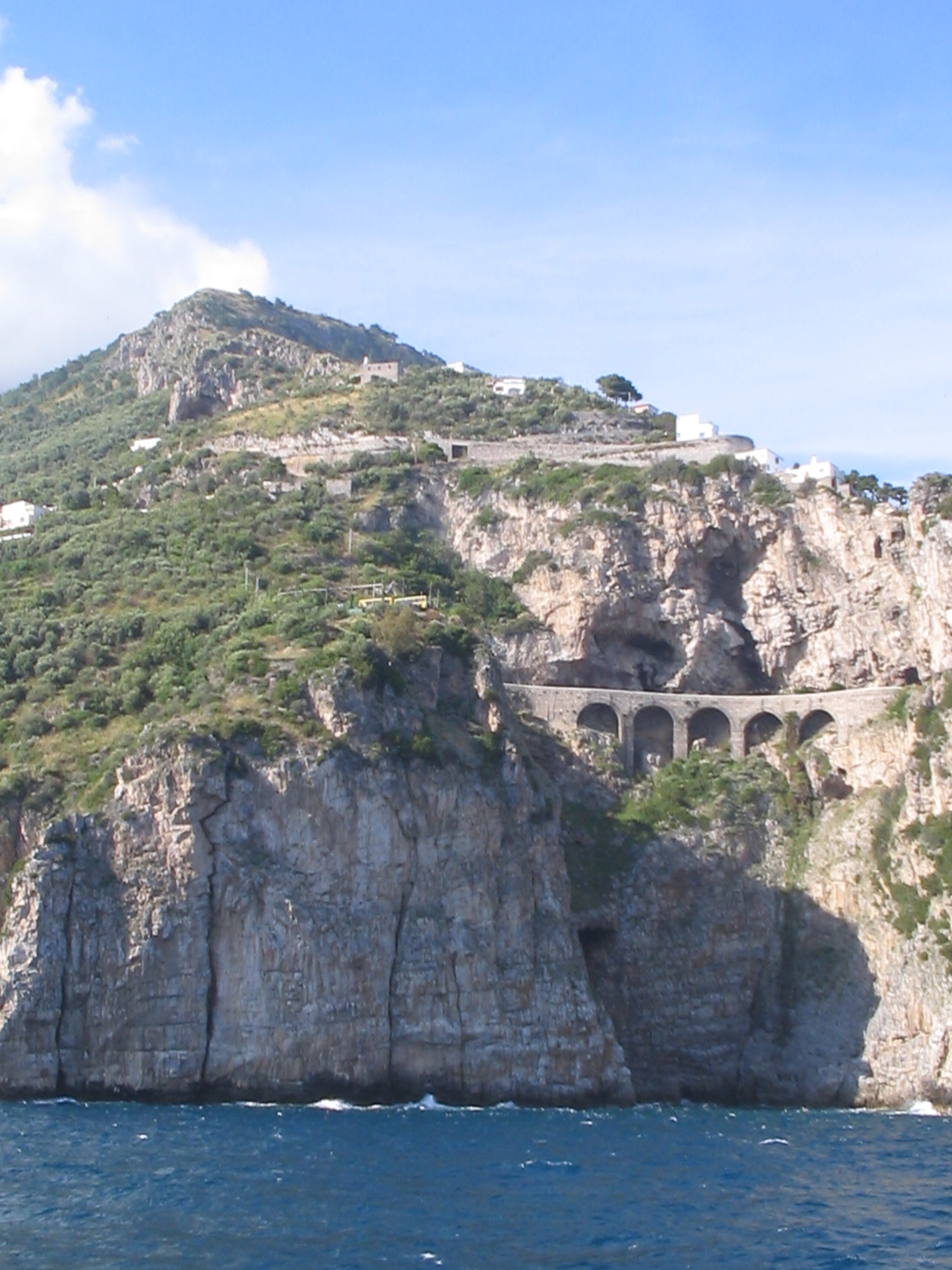
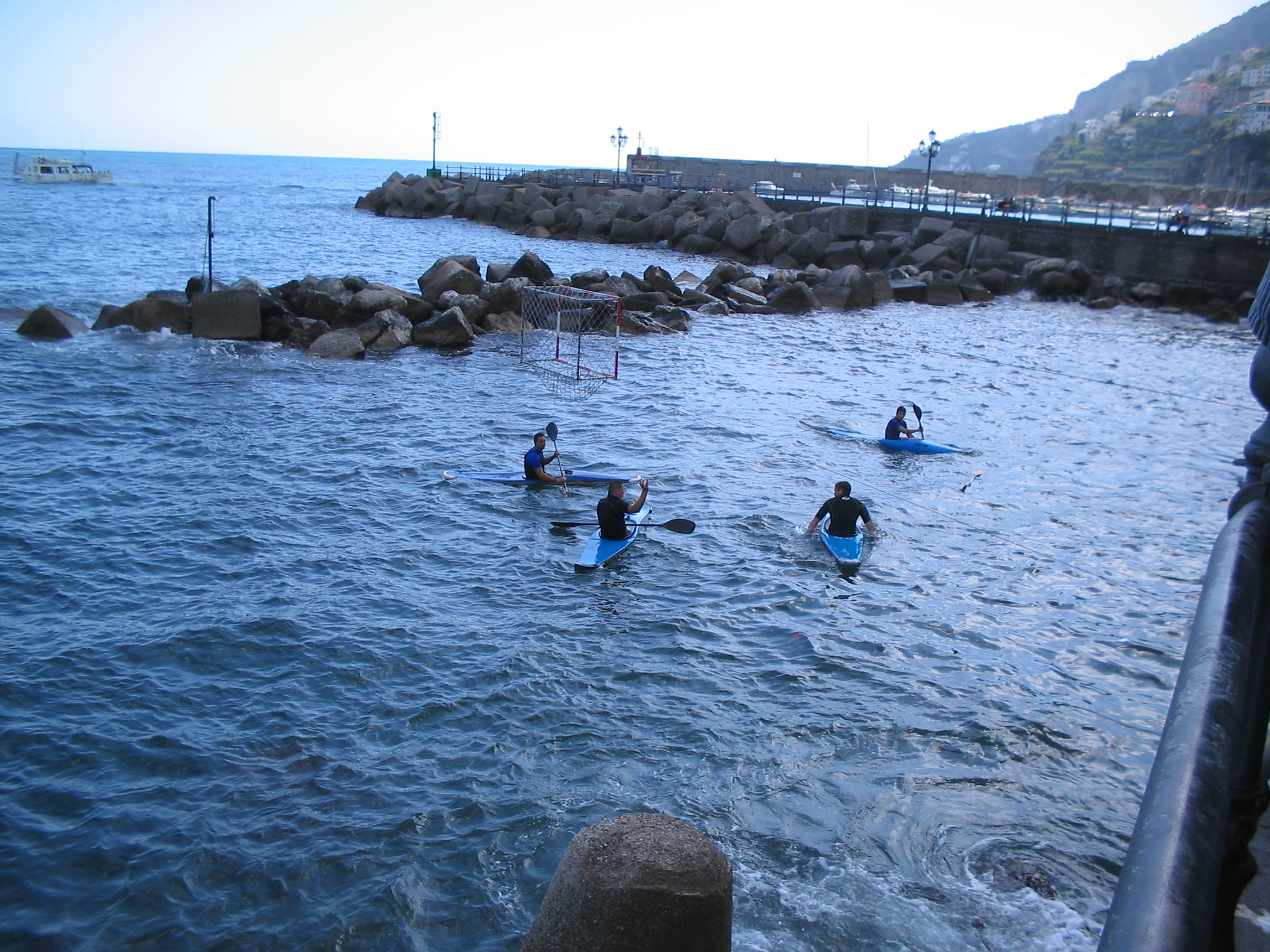
Various tasks filled the afternoon and I was tired by the end of the day. It was warm and clear outside when I emerged from the hotel, and I decided to take the ferry home rather than riding the bus. I walked down the hill from the hotel to Amalfi and bought my ticket at the tabacchi shop. I watched the kayakers play basketball as I waited for the ferry to arrive at the pier. Onboard the ferry, I selected a seat on one of the wooden benches on the top level which was open-aired. The gentle hum of the diesel engine combined with the rocking of the boat and the warm breeze almost lulled me to sleep.. I raised my hand to shield my eyes from the sun and scoured the rugged coast. Pastel-colored stucco houses and gardens cascaded down the hillsides connected by steep stone steps. I could see tiny inlets and coves where the colorful fishing boats were sheltered that hadn’t been visible from the winding roads above that I traveled on the bus. When we reached Positano, I disembarked and headed for the internet café to check email.

The view from the ferry

Then I headed back up the hill to the main piazza. (My legs were certainly getting a work out here!) Fresh tomatoes were displayed in crates outside the deli along with eggplant, zucchini, fennel, onions, garlic and a dazzling display of fresh flowers. I decided to stop and get something for a light dinner. The deli was narrow with shelves on one side stacked from floor to ceiling with paper products, pasta, olive oil, vinegar and canned goods. The refrigerated glass case on the other side held a vast array of meats and cheeses. I selected two ripe, red tomatoes, a fresh baguette, a bottle of olive oil and a wedge of soft provolone cheese. The old man behind the counter weighed and tabulated my purchases, placing them in a white plastic sack for me to carry back to the apartment.

At the apartment, I poured olive oil on a crusty slice of bread and layered it with slices of provolone and tomato. Then I topped it with fresh basil leaves. I watched television for a little while as I ate. The Italian news was followed by a soap opera that took place in a five-star hotel and restaurant in Italy. I think the bus boy had something going on with a laundry worker and “Mama” was running things in the kitchen. Only in Italy would a soap opera be centered on a kitchen!
Panna Cotta

This is the second of my favorite dessert recipes.  I also serve this one with the Port Raspberry Sauce that I use with the Chocolate Truffle Cakes.

Ingredients:

1 c. plus 3 T. heavy cream

½ c. sugar

1 envelope plain gelatin

½ pint sour cream

½  t. vanilla

1/2 pint raspberries

 Directions:

Mix together cream, sugar and gelatin in a saucepan and heat gently until the gelatin is thoroughly dissolved.  Cool until slightly thickened.  Fold in sour cream and flavor with vanilla.  Whisk until mixture is quite smooth. Pour mixture into 6 half-cup individual molds.  Cover with saran wrap and chill until set, at least 4 hours. To unmold, dip container in hot water until edges just begin to liquefy.  Invert mold onto a serving dish and return to refrigerator to chill until firm.  Drizzle Port Raspberry Sauce on the top and around the sides of the panna cotta and top with a few fresh raspberries.

Chocolate Truffle Cakes with Port Raspberry Sauce

This is one of my two favorite desserts.  I first had it at a waterfront restaurant in Mystic, CT and returned home to experiment with various recipes until I had it perfect! I like the way you can make them in advance and freeze them (so you always have a dessert on hand for unexpected guests).  They reheat quickly in the microwave.

Chocolate Truffle Cakes

 Ingredients:

12 oz semi-sweet chocolate chips

¾ c. (1 ½ sticks) butter

3 large eggs

3 large egg yolks

5 T. sugar

2 T. flour

cocoa

Directions:

Generously grease with butter eight ¾ cup soufflé dishes or custard cups.  Sprinkle inside of each dish with cocoa.

Stir chocolate and butter in heavy medium saucepan over low heat until smooth.  Remove from heat.  Using electric mixer, beat eggs, egg yolks, and  5 T. sugar in large bowl until thick and pale yellow, about 8 minutes.  Fold in chocolate.  Add flour  and mix well.  Divide batter among dishes.  (Can be made 1 day ahead.  Cover with plastic wrap & chill.  Bring to room temperature before continuing.)

Preheat oven to 375oF. Place Soufflé dishes on baking sheet.  Bake cakes  uncovered until edges are puffed and slightly cracked  (about 15 minutes).  Can be served immediately or frozen and reheated in microwave for 45 seconds.  Serve with a scoop of coffee ice cream or drizzle with port raspberry sauce and toss with a few fresh raspberries.

Port Raspberry Sauce

Directions:

3 pints fresh raspberries

¼ c. sugar

¼ c. ruby Port

 Directions:

Combine all ingredients in a small sauce pan and cook over medium heat until raspberries are softened and mixture begins to thicken.  Remove from heat and strain.


The Savory Side of the Kitchen

           The Italian meal is a time when family and friends connect. The big meal of the day is usually around 1 or 2 PM and can last a couple of hours. It is composed of several courses and begins with Antipasti (appetizers) and is followed by the Primi Piatti (first plate—usually a pasta dish), a Secondi Piati (second plate—meat and vegetables), Insalata (salad) and is finished with Dolci (dessert.) Occasionally fruit and cheese follow the dessert. Of course, wine is served with every course and the meal is always capped off with coffee (espresso).

           The Amalfi Coast is a wedding destination. My roommates and I often saw two or three wedding parties on the weekends having their photographs taken outside one of the churches in town or on the beach. Hotel Santa Caterina was one of the few hotels that had a dining room large enough to accommodate more than 75 people. Thus, we cooked for wedding receptions at least once a week and they encompassed all of these menu courses.

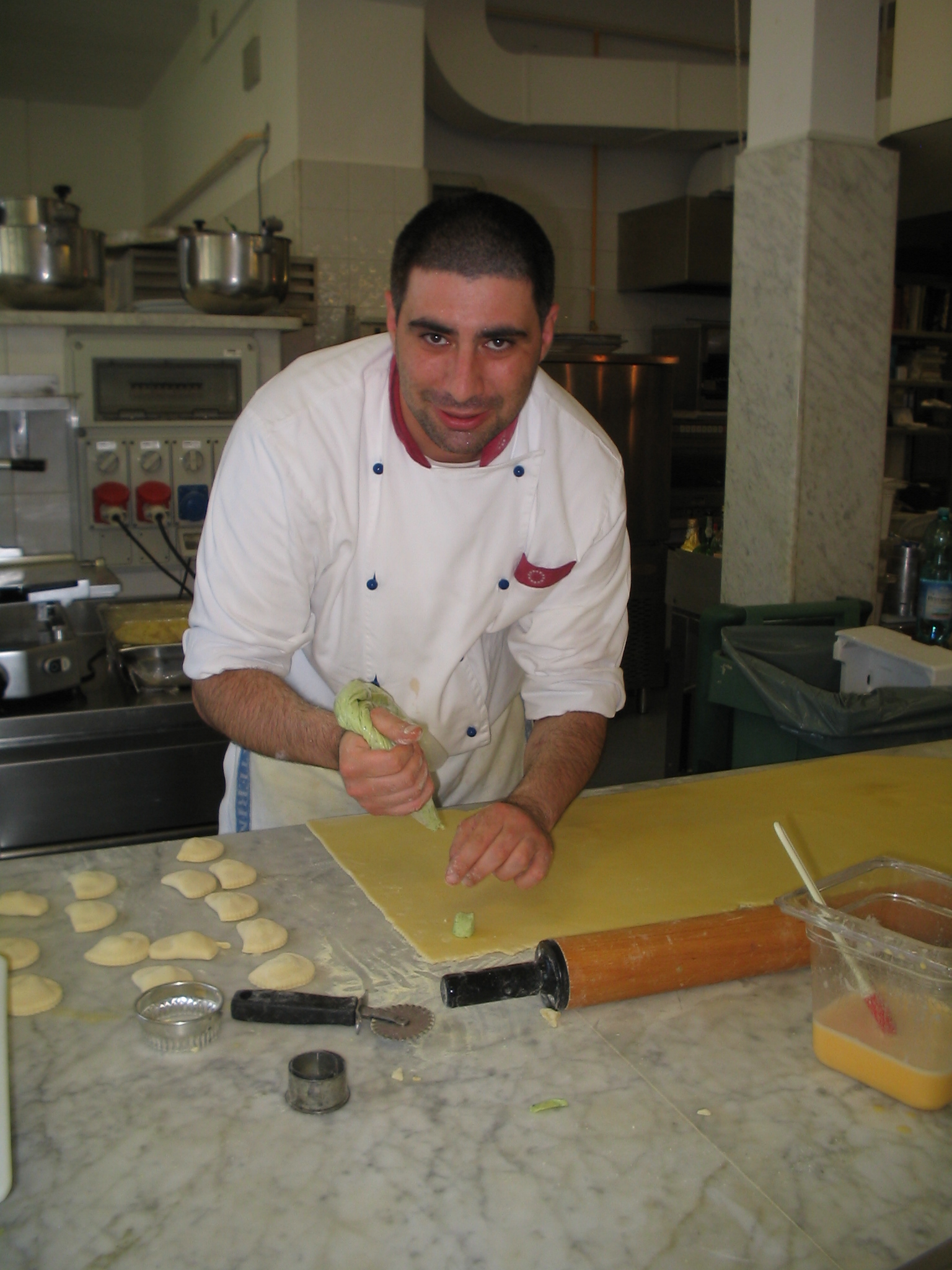
           After about two weeks working for Roberto, Chef Domenico moved me to the main kitchen where I started as a prep cook – the one who does all the chopping and cutting of ingredients for the recipes that would be prepared that day- and as the saucier’s assistant. Alessandro (the saucier) was the chef who prepared seafood and pasta.  He was about 6 ft. 4 in. and looked a lot like the American actor, Elliot Gould.


           Alessandro was busy making ravioli for the restaurant dinner menu. I watched him pipe the filling onto the dough.

           “You bring notebook and I give you recipes,” he told me. Then he assigned me some prep work for a wedding reception that was scheduled for that evening.

           The basil stems were covered with wet soil and I paused to wipe my hands on the hand towel tucked into my apron strings. I was separating the basil leaves from the stems and getting ready to wash them.  Placing the stopper in the stainless steel sink, I filled it with cool water and added the fragrant basil, swishing it around to clean off the dirt. Then I caught the floating basil with my fingers and placed it in a white plastic bin perforated with slots to allow any remaining water to drain off. I tore several sheets of paper towels off a roll on the shelf and folded them protectively over the basil before placing it in the refrigerator. 

           My next task was peeling and mincing garlic cloves. I separated the cloves and placed one on the cutting board. I laid the heavy chef’s knife on top of it and pressed downward to crush the garlic and release the skin. Then I peeled the layers of skin off, exposing the smooth, glossy garlic clove. I set it aside and picked up another one. When the peels were all removed, I collected them all on the cutting board and began cutting, using a fluid back and forth motion with the big knife, releasing the aroma of the garlic.  When I had it minced into a fine paste, I scooped it up and placed it in a plastic container, covered it with damp paper towels and put it in the refrigerator to join the basil.

           We purchased much of the fresh seafood that we used in the kitchen from local fishermen. That morning a fisherman had delivered a cardboard box with several huge sea bass, two lobsters and a large octopus. The women who washed the dishes and cleaned the kitchen during breaks and in the evening were also assigned to clean fish.  Two of them were at one of the sinks—one was scraping scales from a large fish and the other was gutting and cleaning the octopus. She wiped her hands on her blue uniform dress and took it to the Alessandro. (The dishwasher girls also bring everyone cappuccino and espresso on little trays at regular intervals and fruit punch in the afternoon. The “coffee break” takes about 20 seconds – just enough time to stir in a tiny spoonful of sugar and toss the espresso down.)


Conchetta the dishwasher


           After Alessandro finished the ravioli, he made octopus risotto for the wedding reception. Risotto is made from Arborio rice. Instead of steaming the rice in water, you slowly add broth to the rice and stir constantly until the liquid is absorbed and the rice has a creamy consistency.

            “Popoli (octopus), they are strong.” (I think he meant that they were tough.)

            He proceeded to show me how to beat the live octopus with a mallet until it was tender, although limp and mushy made a more apt description. I think it would have been easier to just drive one of those motor scooters over it a couple of times. Then he submerged it in a pot of boiling water. I didn’t know that octopus turned purple when cooked, and I was surprised that the boiling didn’t make it tough all over again. Alessandro set some aside to use for a cold seafood salad that they were serving for the wedding and sliced the remainder to sauté before adding to the risotto. 

            The whirr of the blender was added to the other sounds of the kitchen—water running, pots and pans clanging and the men laughing and chiding each other in Italian over some event I couldn’t understand.  I glanced up at the clock and realized that it was almost time to me to go home. When they are preparing for a wedding reception, the kitchen staff does not get its usual break from 3PM to 6PM.  Instead, they have to work all through the afternoon.

            They were busy frying veal and roasting huge fish for the Secondi Piati as I left at 4PM and the pastry chef, Roberto, was decorating the wedding cake.

Risotto Milanese

Another recipe that calls for saffron.  This risotto – short grained rice cooked in chicken stock – goes beautifully with the braised leg of lamb and a good Chianti Classico.  Buon apetito!

Ingredients:

1 1/2 c. Arborio rice

3 T. butter

1 T. olive oil

1 1/2 quarts chicken stock

1/4 t. saffron threads

1/2 c. pecorino romano cheese, grated

Salt and pepper to taste

Directions:

Melt butter and olive oil in a medium saucepan over medium heat.  Add rice and stir to coat rice granules with butter and olive oil. When rice just starts to turn golden (do not brown), begin adding chicken stock, about 1/2 cup at a time, and stir constantly until it is absorbed.  When half the stock has been absorbed, add the saffron. Continue adding chicken stock and stirring until rice is “al dente” – tender, but with a little “bite” or resistance.  Risotto should not be hard, nor mushy, and you have to keep checking it so it doesn’t overcook.  Add cheese and stir to mix it in.  Serves 4-6.


Braised Leg of Lamb

 Ingredients:

1 large leg of lamb

Flour for dusting

2 T. olive oil

1 lb. mushrooms, cut in half

½ lb. baby carrots

1 quart beef stock

1 bottle red wine

1 tablespoon Worcestershire sauce

2 bay leaves

1 teaspoon dried oregano leaves, crushed

1/2 teaspoon juniper berries

1/2 teaspoon ground allspice

 Directions:

Dust the leg of lamb with flour and sear in olive oil.  Transfer to large stock pot.  Add all other ingredients and bring to boil.  Reduce heat and braise for 2-3 hours or until tender.  Remove bones and any fat. Serves 4-6.


The Bus

           My schedule was primarily driven by the bus schedule between Amalfi and Positano. As there weren’t any evening buses running, I would be working from 9AM until 4PM each day and would work 9 straight days before I would have my first Monday off.  I would only be getting one day off per week, (which is normal in Italy).  The other students were able to walk to their respective restaurants and would be working a split shift (9 to 3 and then 6-11) and would have Sunday evenings and Mondays off. 

           As I climbed up the steps from our apartment in Posiitano, I headed for the bar to order a cup of cappuccino before I caught the 7:05 AM bus. Nuts! It didn’t open until 7:30 AM. The tabacchi shop next door was a tiny alcove that sold bus tickets, maps, postcards and various sundries and it was also closed. I had purchased my ticket to Amalfi the evening before, but what was I going to do without a return bus ticket? Monthly bus ticket holders only have to get their ticket punched the first time they board the bus. I was hoping that the driver thought I was a monthly patron. 

            “Buon Giorno,” I said to the bus driver as I boarded the big green and white  SITA bus. He smiled, nodded to me and didn’t seem to notice that I had not inserted a ticket into the machine to be validated.

            Because the villages along the Amalfi Coast are cut into the steep hillsides, the road connecting them is a series of hairpin turns along the cliffs. Most of the automobiles in Italy are small, probably due to the efficient use of high-priced fuel. 

            The buses, however, are full-sized and sometimes have difficulty navigating those tight turns. It’s especially hairy when faced with another oncoming bus. Who gets to go first? It appeared to be the first one to honk his horn repeatedly. The approaching bus would stop, back up and try to pull off the road so the other bus could pass. All the cars behind him would have to back up as well. Usually at that point a couple of motor scooters would speed around the stopped buses in a hurry to reach their destinations. Then the bus tango would continue.

            Once the bus I was on passed a bus filled with Japanese tourists. They were all out of their seats, nervously watching the progress of the buses as they attempted to fit by each other. One moved forward; the other moved backwards. One moved backwards; the other moved forward. When our bus finally passed theirs, with only an inch to spare, the Japanese tourists all stood up and applauded!

            The bus ride back to Positano took about 40 minutes. When I returned to the apartment, I turned on the television to discover that the Italian soccer team was playing a championship game on TV.  Our next door neighbor Paulo’s double doors were open so he could enjoy the colorful garden of flowers and vegetables in his tiny yard. He often has friends over to play the Italian card game, Scopa, and this evening there were 3 other men seated at his dining room table watching the soccer game on TV with him. They were very animated—shouting, jumping up and down and waving their hands around—helping the Italian soccer team, Gli Azzuri (which literally means “the light blues”) with each play. When the Italian team won later that evening, the town celebrated and fireworks lit up the sky. I walked up to the piazza in the center of town that night to call Craig from the pay phone with my international calling card. I was anxious to tell him about my first couple of  days at work. It was good to hear his voice, but there was so much noise from the town celebrating that he thought I was at a party!  I tried to reassure him that I was working hard and not having any fun without him.

Seafood Chowder

Ingredients:

4   lobster tails or 2 live lobsters, steamed

1 1/2 pounds shrimp, steamed, peeled and deveined

1 pound white fish fillets or imitation crabmeat, cut into 2-inch pieces

2 cans chopped clams, drained

2 medium potatoes, peeled and diced

1 medium onion, diced

½ c. chopped celery

2 c. frozen corn

2 c heavy cream

½ t. tarragon

1 t. salt

¼ t. pepper

Directions:

First, prepare seafood as directed.  Remove lobster meat from shells and cut into 2-inch pieces. In large sauce pan, combine potatoes, onion, celery, salt and ½ c. water.  Cover and cook 15 minutes or until tender.  Stir in corn, cream, tarragon, salt, and pepper.  Add seafood and heat through.  Serves 4-6.

Bouillabaisse

We traditionally have lobster and Caesar salad for New Year’s Eve but I made bouillabaisse this year.  It was such a hit with family and friends that I will do it from now on. Saffron is the world’s  most expensive spice, but it makes all the difference in this recipe so don’t skip it.  Enjoy!

 Ingredients:

 4 lobster tails or 3 whole lobsters, steamed

2 dozen cherrystone clams in shells

1 dozen mussels in shells

1 pound white fish fillet (cod, haddock or halibut)

2 pounds jumbo shrimp, peeled and deveined

1 ½ pounds large sea scallops

½ cup olive oil

1 cup onion, diced

½ cup celery, diced

3 cloves garlic, minced

2 -1 lb 12 oz cans of diced tomatoes with juice

1 bay leaf

¼ t. saffron threads

1 ½ t salt

1 t pepper

2 quarts of store-bought fish or chicken stock

Directions:

Prepare seafood. Remove cooked lobster meat from shells and cut into 2-inch pieces and set aside.  Scrub shells of clams and mussels to remove any dirt. Cut fish fillet into 2-inch pieces and set aside. Peel and devein shrimp.  Rinse scallops. Sauté the onion, celery and garlic in olive oil in a large stock pot over medium high heat.  Add tomatoes, bay leaf, saffron and salt and pepper.  Add stock and bring to a boil.  Reduce heat and simmer, uncovered for 20 minutes or until some of the liquid is reduced to concentrate the flavor.  Add seafood, cover and simmer for 5-10 minutes until fish and scallops are opaque, shrimp is pink, and the mussels and clams are opened wide. Serve with crusty garlic toast, Caesar salad and a crisp white wine, like Sauvignon Blanc or Chardonnay. Serves 6.

My First Day at Work

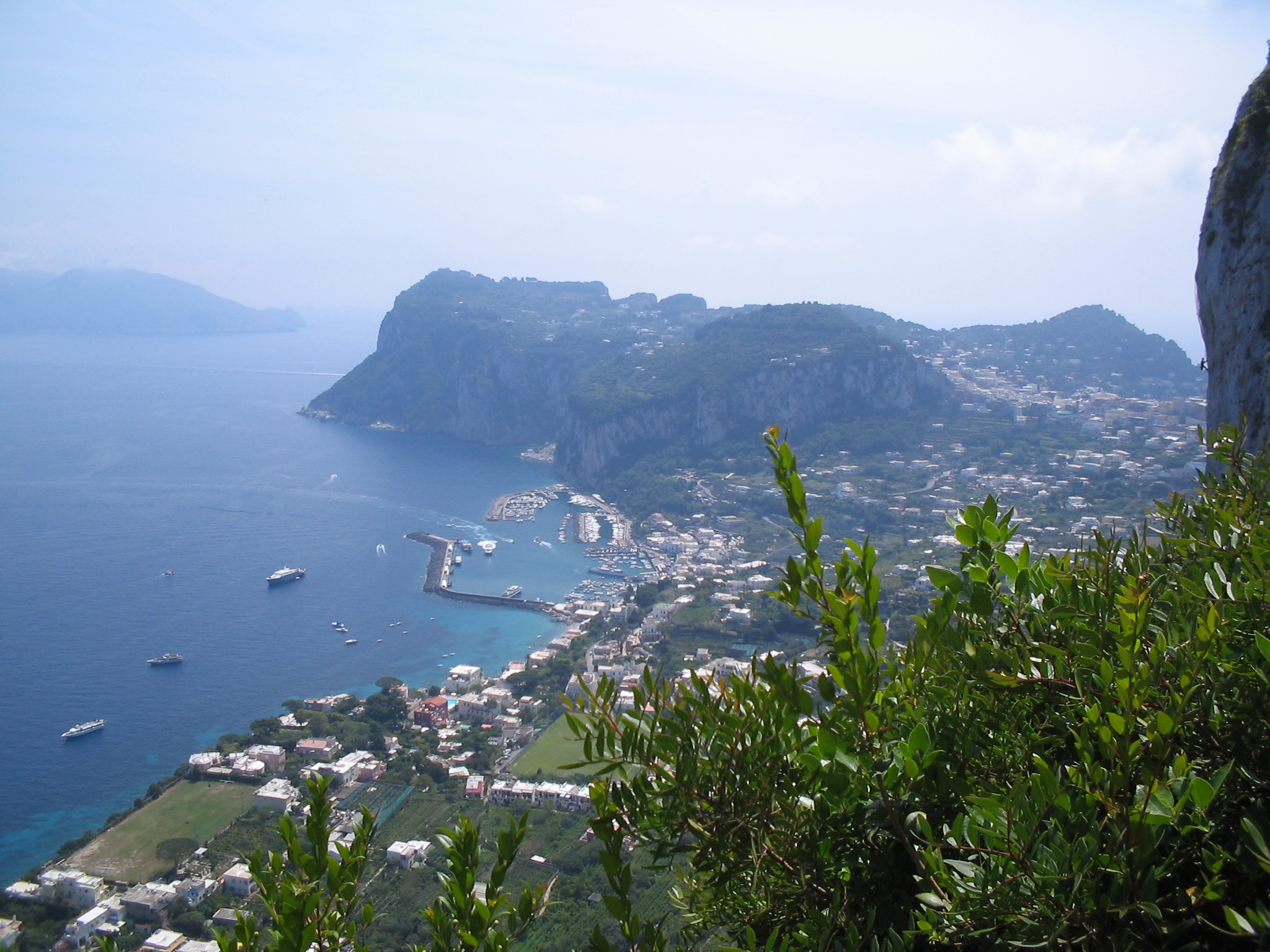
           The hotel where I would be working, Hotel Santa Caterina, was located along the road just before the center of Amalfi.  Amalfi is on the waterfront, but has no beach. The town of Amalfi used to rival Venice and Genoa as a substantial maritime republic and its maritime law, the Tavole Amalfitanae, was the ultimate authority in the Mediterranean for centuries. Amalfi was the home of Flavio Gioa, the inventor of the maritime compass. The main piazza is dominated by the Romanesque styled Duomo di Sant’Andrea, founded in the 9th century, the Piazza Duomo, and Museo della Carta, the 13th century paper museum. A tourist destination today, it features a cluster of cafes, souvenir and retail shops around a central piazza or square. 

           The piazza was bulk-headed with large, gray boulders and there was one long pier stretching out to meet ferries and the occasional cruise ship. Even though it was early when I arrived for my first day of work, people sat outside the cafés sipping their cappuccinos and eating croissants, delivery trucks were unloading their wares, kayakers were in the water playing basketball with a floating basket, and the ferry was boarding for Naples. I exited the SITA bus I had ridden from Positano and started the one-mile trek up the hill to the hotel. 

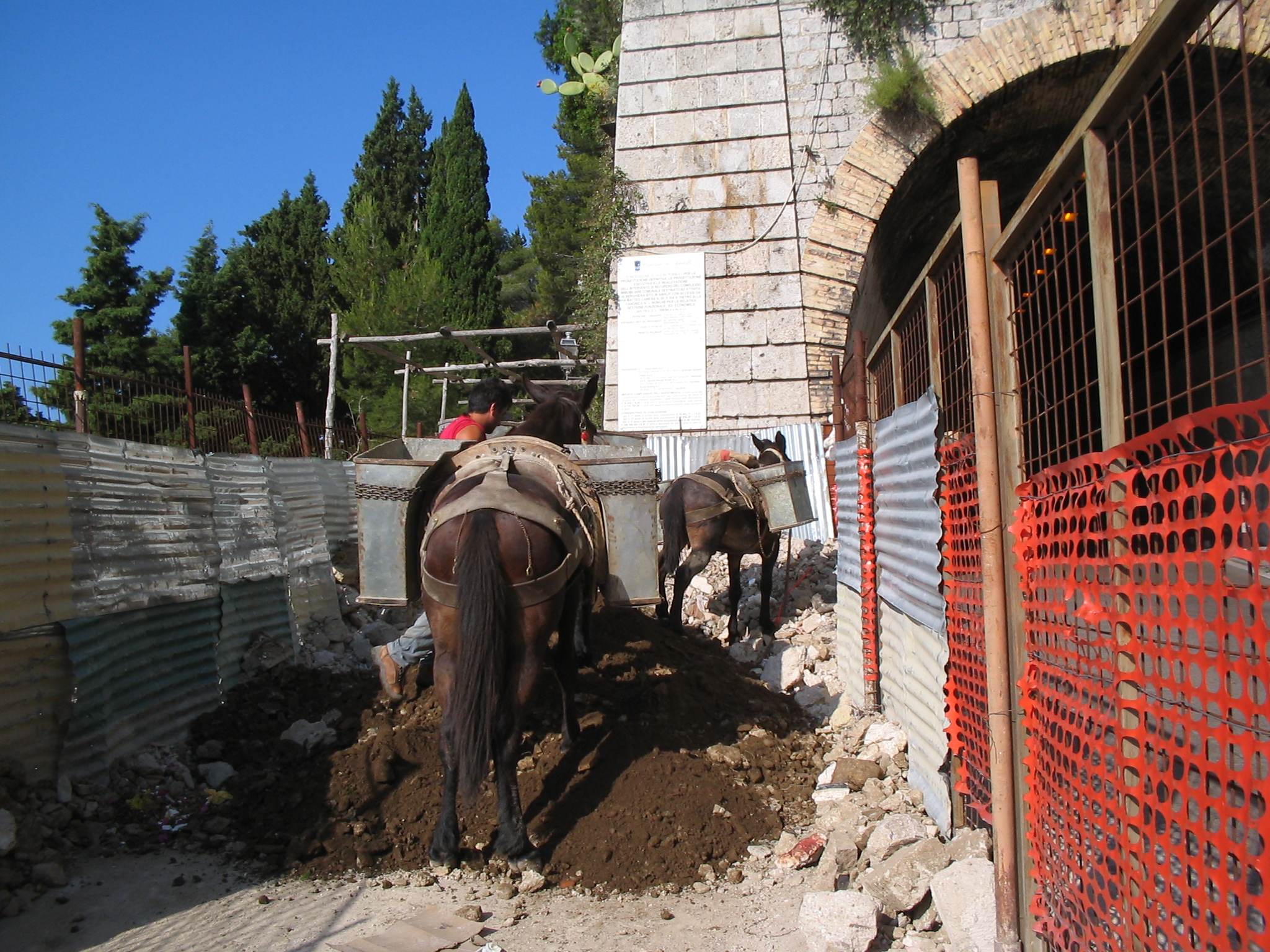
           The road was steep and passed through two tunnels cut into the rock. I stopped to catch my breath and watched a construction crew hollowing out the hillside to expand one of the tunnels. A man with a tan, weathered face led three donkeys down the road with panniers filled to the brim with heavy rocks. I watched as he unloaded them into a pile on the side of the road.  A small dump truck was parked nearby, which looked like it would take the rocks away later in the day. I wondered how many trips the workman made up the hill each day with his donkeys. It was hard enough walking up the steep road just once—without pulling three stubborn animals.

            Hotel Santa Caterina is curved to fit the road and clung to the hillside several stories down between the road and the sea. It was cream-colored stucco with dark green trim adorned with window boxes spilling with colorful flowers. A brass plaque to the left of the front door identified it as a “Five Star Hotel” and a “Member of the Small Leading Hotels of the World.” A valet in black pants and a gray long-sleeved jacket trimmed in burgundy opened the car door for an arriving guest. Another deftly removed luggage from the trunk and followed the guest into the front door. Red, yellow, silver, blue and white motor scooters were huddled by the employee entrance to the left of the main door. I was a little nervous as I entered the hotel and walked up the ramp to find the kitchen.

           The head chef, Domenico Cuomo, (we call him “Chef” and everyone else is called by their first names) welcomed me and told me that the laundry staff would wash and press my uniform for me. My Italian was sketchy, but we managed to understand each other. He had one of the girls who wash dishes show me where to take it. I noticed that there weren’t any men washing dishes either, although there was one man who was not a chef that furiously operated the espresso machine for the restaurant and staff throughout the day.

           He had one of the dishwashers, Conchetta, show me where the locker room was so I could change.  I had carried my chef’s uniform on a hanger that first day. Conchetta led me down three flights of stairs (Ugh! I’m going to have to walk back up) to the basement where she let me share her locker. The room was the size of a coat closet and I was sweaty from the walk uphill.  I started to wriggle my damp body into the freshly pressed uniform. Then I trudged up the stairs to start work.

           The hotel had two kitchens – the main one serves breakfast and dinner and the lower one, by the pool, serves lunch. The pastry chef, Roberto, spoke some English, so they decided to start me with him for the first couple of weeks and would gradually shift me to the savory side of the kitchen.  

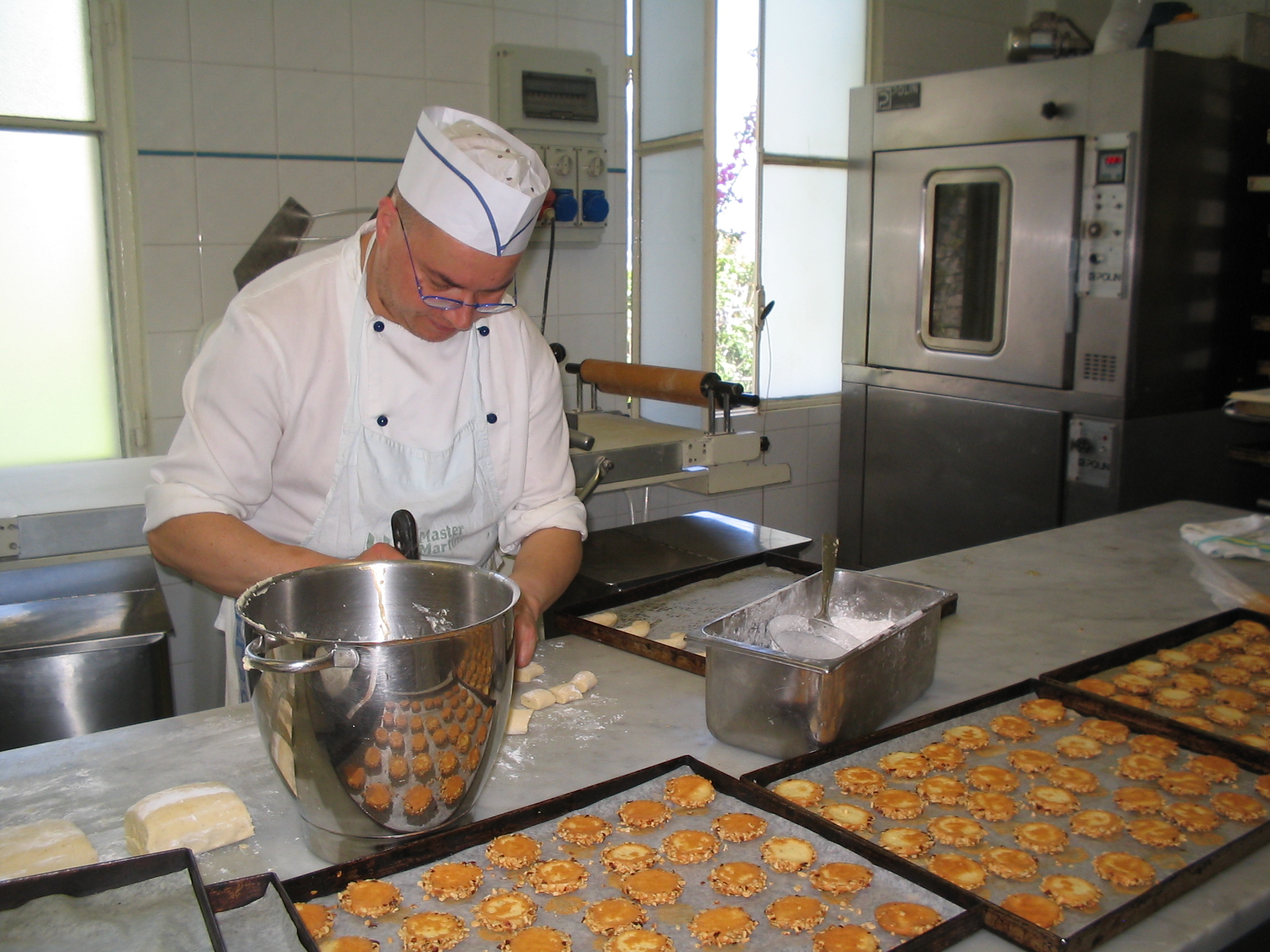
           Roberto, greeted me as he dusted flour from his hands with a dish towel.  He was short and stocky with a graying crew cut and smiling brown eyes framed with glasses.


 “Good morning, Mar-cha.”  (The Italian pronunciation for “ci” is “ch.”)

            “Buon giorno,” I replied.

                       Roberto beckoned me over to a quieter corner of the room where a long marble table was surrounded by a large double oven, three small refrigerators, a sink, a rack of wire shelves holding baking pans, and a bank of flour and sugar bins. This was his domain as pastry chef.

            He handed me a paring knife and showed me how he wanted me to cut strawberries, pineapple, apples and oranges for a fruit salad. I washed my hands and started slicing the fruit into large glass bowls. Roberto laid out 210 small plates on the marble counter and began arranging the fruit. It took us most of the morning. I helped Roberto transfer the plates to a wire holding rack.

            Then Roberto opened a huge can to expose what looked like a large transparent green pear

            “Che cosa è? What is it?” I asked.

            “Cedro,” he replied. “It is the fruit of the cedar tree,” he replied. 

I didn’t even know that cedar trees had fruit, but later learned that this was citron, which is primarily candied and used in many desserts like fruitcake in the US.

            “Is very bitter when fresh, “he continued. “ It must be canned with zucchero (sugar) for 3 or 4 months before you can eat it.”

             We cut the fruit into strips, rolled them in sugar & dipped them in chocolate. We also made Cantucci di Firenze – like small biscotti that you are supposed to dip in Vin Santo liqueur after dinner. Biscotti means “twice baked” in Italian and that is exactly how these are made. Unlike savory cooking which you do basically by the seat-of-your-pants method, baking is a science with ingredients that have to be weighed and measured very precisely.

           When Roberto told me it was time for lunch. I washed my hands and followed him to the buffet where we helped ourselves to grilled chicken breasts, penne with a plain tomato sauce and oven roasted potatoes.  He led me out on to the porch and indicated that I sit down at an empty seat next to him.  I was the only woman among 12 men at the chef’s table and I felt a little self-conscious. I don’t think they’d ever had a woman chef at Hotel Santa Caterina before.

            “Buon appetito. Enjoy your meal,” Roberto said to me.

            “Altrettanto. Thank you, the same to you,” I replied and cut a piece of the grilled chicken breast.  The chefs were conversing in very rapid Italian and I could only understand a few words.  Then I heard Chef’s staccato reply but only caught the words “signora finite” in them.  I knew they were talking about me and Chef had told someone to wait until I was finished. I ate as quickly as I could and excused myself.  Perhaps someone was not pleased to be eating lunch with a woman?

            After lunch I helped Roberto make dinner rolls for the hotel. He showed me how to pinch off a portion of the dough and roll it on the counter top to make it round and firm. We had filled several sheet pans of rolls to be baked after I left that afternoon to return to Positano. I was exhausted!