Just Desserts

The Pastry Chef is responsible for making all the breads and rolls that the hotel uses as well as the desserts and ice cream, or gelato.  Today we were making tiramisu.

Tiramisu’ means “pick-me-up” in Italian, for the high energetic content of cocoa and the caffeine of the strong espresso coffee. There are many different stories about the origin of Tiramisu, but there is no documented mention of the dessert before 1983. Some claim that it was first created in Northern Italy during the First World War. Women made these desserts for their men to take with them as they were being sent off to war. They might have believed the high caffeine and energy content of these desserts would give their men more energy to fight and help bring them home safely.

Another story regarding tiramisu, however, said that during the Renaissance women made Tiramisu to be shared with their men during the late hours because they believed it would give them the energy to make more vigorous love later. A different take on this story is that Venetian prostitutes, living above cafés, would order this as a late night pick-me-up.

A less glamorous theory explains that the dessert was a way of salvaging old cake and coffee that had gone cold by using the leftover coffee and perhaps some liqueur to moisten the dry cake. The dish was greatly improved by layering it with cream or mascarpone, Italian cream cheese.

Regardless of the origin, Tiramisu is one of the most popular desserts in the world today and is available in all kinds of restaurants, not just those specializing in Italian cuisine.

We placed the goblets of tiramisu in the refrigerator in the pastry chef’s corner of the kitchen.  Then Roberto gave handed me the recipe for a moist, chestnut cake and told me make it.  He opened a can of chestnuts for me and I took them to the stove to boil them until they were tender.

That afternoon, I rode the bus home and checked my email at the internet café.

Craig had written:

“Well, the lasagna is gone.  What do I do now?”

“Craig, you know how to bake a potato in the microwave.  Just fix a potato and a nice salad.  You can do that. Or you can go to Whole Foods and purchase something that is already prepared.”  I didn’t add that there were zillions of restaurants in Annapolis, but Craig isn’t the type to go out and eat alone unless he is away on a business trip. I was surprised when I received an instant response.  He must have been writing emails right that moment.

“How will I know when the potato is done?  Does it have a pop-up timer like a chicken?”  Silly man.  Maybe he does miss me.

When I left the internet café, there were some older men playing the Italian card game, scopa, at a table set up on the sidewalk outside the café.  I stopped to watch for a few minutes but didn’t understand the rules of the game.  I should ask Paulo to explain it to me.

As I passed the ceramics shop near the steps to our apartment in town, the blue fish bowl beckoned to me and I decided today was the day to purchase it.

Potete darmi uno Sconto? (Can you give me a discount?)” I queried always on the lookout for a bargain.

“You pay in cash?  I give 15% off,” he answered.  I opened my wallet and counted out the Euros as he gently wrapped the bowl in tissue and bubble wrap.

“Grazie,” I said with a wide smile as I carried my prize down the steps to the apartment.
 

Curried Seafood Salad

Ingredients:

Salad

4 hearts of romaine, torn (about 8 cups)

½ lb. cooked shrimp

½ lb. cooked sea scallops

½ lb. cooked lobster

½ lb. lump crab meat


Dressing

½ c. mayonnaise

¼ c. milk

2 T. golden raisins

1 T. sugar

1 t. curry powder

1 lemon juice

1 t. red wine vinegar

1 t. cocktail sauce


Directions:

In a small bowl, combine mayonnaise, milk, raisins, sugar, curry powder, lemon juice, vinegar, and cocktail sauce and blend well.  Chill.  Peel or shell seafood and steam.  Cut lobster into bite-sized pieces.  When ready to serve, toss dressing with romaine and seafood.

Hint:  Giant scallop shells are ideal serving bowls for this salad!

Baked Sea Bass Stuffed with Shrimp, Salmon and Vegetables

Ingredients:

1 sea bass or rockfish, butterflied

2 ounces salmon or lox

1/4 lb shrimp

1 carrot

1 zucchini

1 scallion

Fresh parsley

1 garlic clove

Fresh sage and rosemary

Extra virgin olive oil

1 c. vegetable broth

1 c. White wine

Salt and Pepper

A String

Directions:

Wash the sea bass.  If it has not already been cleaned, scale and remove head, tail, fins and intestines. Using a sharp filet knife, carefully remove the backbone but leave the skin in tact.  Chop the shrimp and fresh salmon, and set aside.  Chop the fresh parsley, sage, rosemary and garlic, and combine with the shrimp and salmon.  Julienne the scallion, carrot, and zucchini and sauté for 5 minutes. Add the scallion, carrot and zucchini to the shrimp, salmon and herbs.  Mix well and stuff the sea bass.  Tie a string around the fish, so that the stuffing does not come out.  Sauté the sea bass for 2 minutes on each side in a small amount of olive oil.  Bake in a 400 degree oven for 10 minutes, add white wine and vegetable  broth.  Loosely cover with aluminum foil. Bake for 30 more minutes.  Serves 4.

Capri

The water looks so serene and is dotted with fishing boats, a few pleasure yachts and today a four-masted cruise ship sits just offshore. A gull cries overhead as it swoops to catch a fish.  Our faces warmed by the sun, we are waiting at the pier by the beach in Positano to board a ferry for the 30-minute ride toCapri—an island off the coast.

Capri started occupying an important role in the political and military matters of the Roman Empire when Ottaviano, not yet Augustus, landed here in 29 BC and, struck by the incredible beauty of the island, took it from Naples, in exchange fo rIschia. After Ottaviano, the Emperor Tiberius resided on the island for a decade and it was from Capri that he managed the interests of the Empire. Ruins of Tiberius’ villa can still be seen.

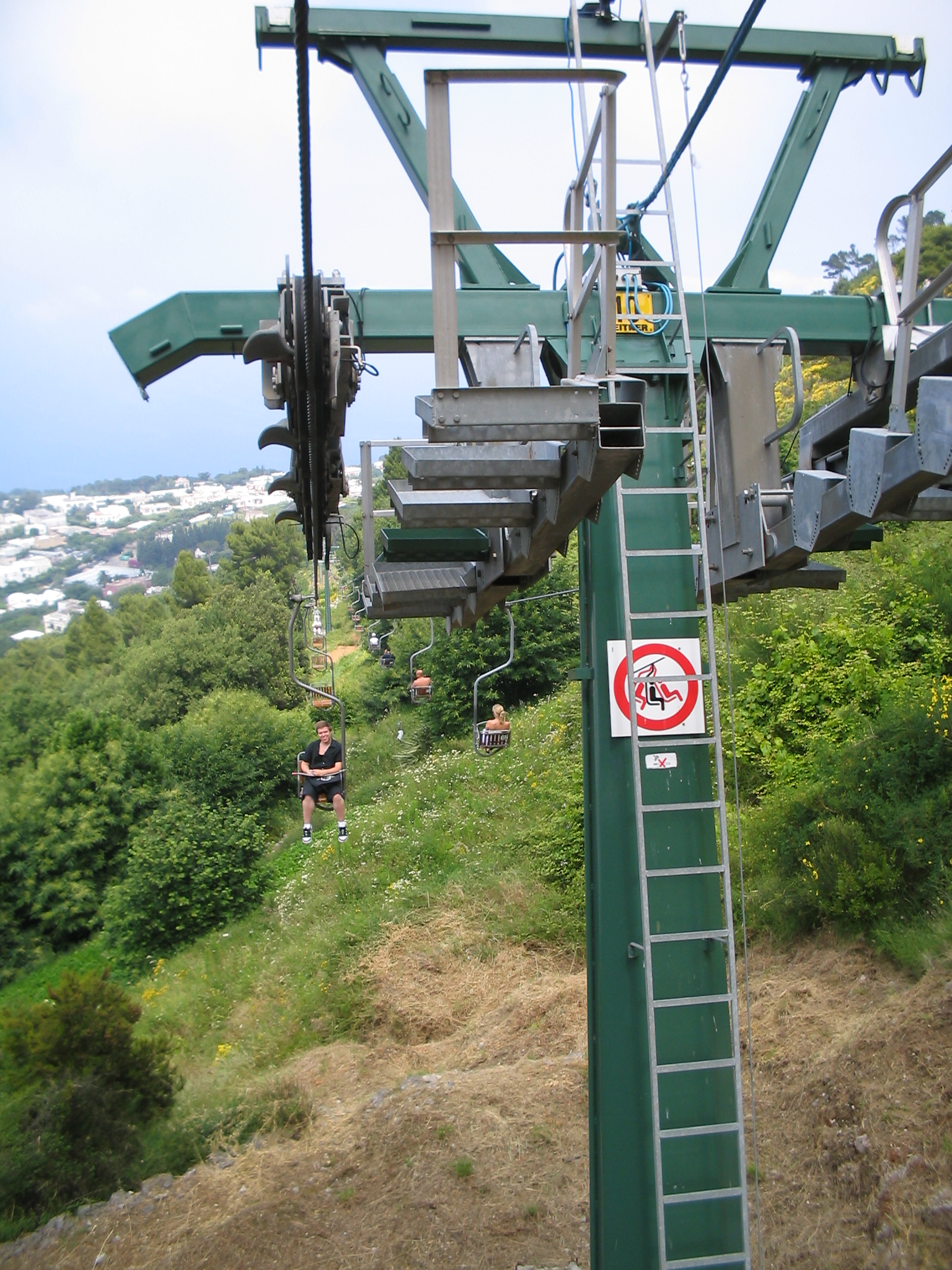
Marina Grande where the ferry docks is a colorful village on the waterfront clustered with souvenir shops and cafes.  It was so crowded with tourists, however, (were we beginning to think that we were the locals?) that we decided to take a taxi to the town of Anacapri on top of the island to explore the shops and have lunch.  After we finished our pizza margherita, David, Ben and I boarded the “funicular” (a one person chair lift) up to Mount Solaro, which is the highest point on the island.   The views of the village below and the deep turquoise sea were spectacular.

At the top we searched for the trail that we had heard you could hike back down to Anacapri.

Dove e la traccia a Anacapri? (Where is the trail to Anacapri?)” I asked one of the funicular operators?

He looked surprised as most tourists rode the funicular round trip.

Vada dietro il negozio (go behind the store)”, he explained waving his hand in the direction of a faded sign and worn path.

We started the trek down which took us about 45 minutes through a quiet forest, an old cemetery and numerous back yards.  Chickens, stray dogs and children playing gave us a look at the countryside where the local people lived and worked.  It was a hot day and we were perspiring by the time we got to the bottom of the trail.

We found Brandi and Kirsten enjoying cups of gelato while they waited for us.  We purchased bottles of water from the tabacchi shop and flagged a cab to take us back to Marina Grande.

Buona Sera,” greeted a wiry man with a wide smile as we exited the cab.  “Would you like to go on a boat trip around the island?” he asked in English.

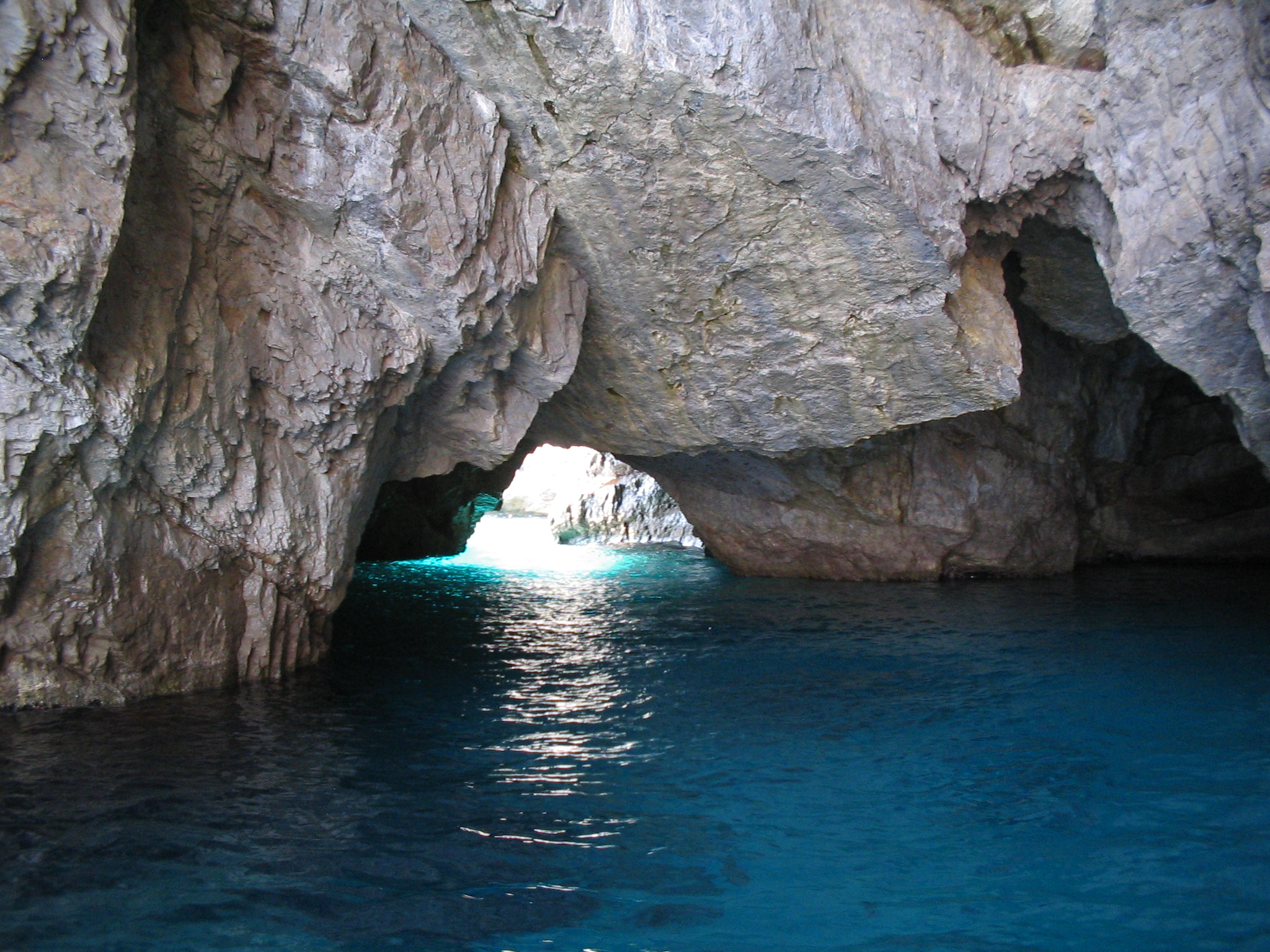
He explained that he would take us on a tour for less than the big tour boats charged.  We had been thinking of visiting the famed Grotta Azzurra, or Blue Grotto where if the tides are right, you can take a low boat through the shallow opening into a cave to see the water glowing a deep cobalt blue due to the light refraction. We decided to take him up on it.  He led us to a medium sized motor boat and led us onboard.

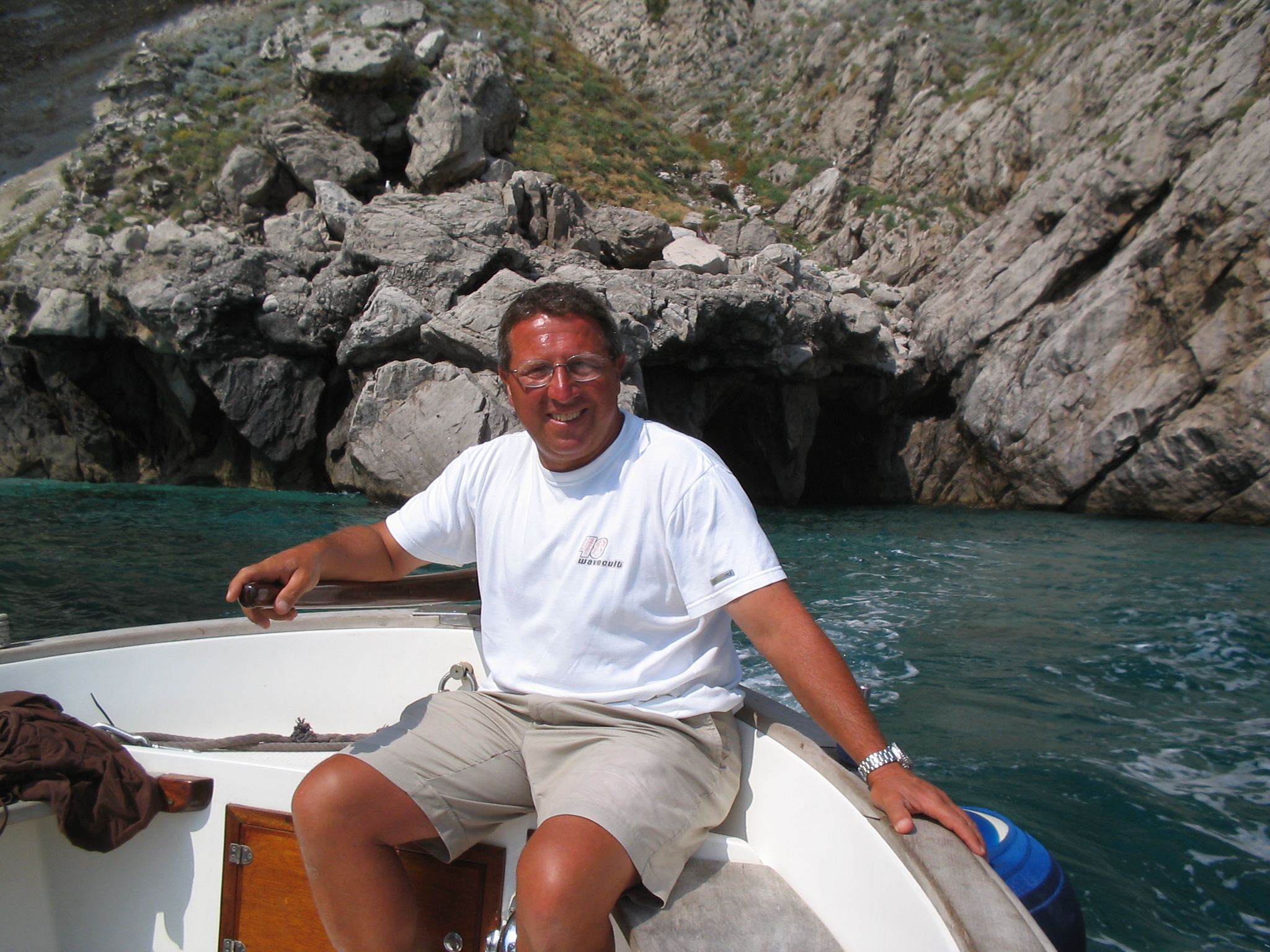
The salt spray felt good on our parched faces. We saw lots of natural rock formations and Mussolini’s house on a cliff.  Our boat driver, Alfonzo, showed us three other rocky grottos and asked us if we wanted to go swimming.

Little Blue Grotto

Brandi, Kirsten and I were wearing dresses and the boys were wearing Bermuda shorts.  None of us had thought to wear a bathing suit! The boys decided it sounded like a good idea, pulled off their t-shirts and jumped in the water in their Bermuda shorts. Kirsten wanted to go too and asked Ben if she could wear his t-shirt into the water. When he consented, she discreetly removed her bra and sundress and wearing only her bikini panties and one of the boy’s t-shirts, she dove in after them.  They splashed around in the cool water and swam to some jagged rocks protruding out near the rocky coastline.

David, Kirsten & Ben Swimming in Capri

After they got back on the boat, the driver couldn’t keep his eyes off Kirsten’s wet t-shirt which left little to the imagination.  She slipped her sundress on over the wet t-shirt, slid the t-shirt off without exposing herself and then put her bra on from underneath the sundress.  Alfonzo kept grinning through the whole process. By the time we were back to the marina, the boat driver had invited her for gelato later that afternoon and told her that if she ever wants to go around the island again, she could go for free as long as she goes swimming.

Courgette Blossoms (Zucchini Flowers) and Fresh Sage Leaves Fried in Batter

Ingredients:

150 g (5 oz) flour

Salt and Pepper

Pinch of nutmeg

2 T. olive oil

2 egg yolks

6 T. white wine

6 T. water

16 courgette blossoms

Oil for deep-frying (1/2 vegetable oil and ½ extra-virgin olive oil)


Stuffing (optional)

1 c. Ricotta cheese

1 T. fresh basil, minced

½ t. Marjoram

¼ t. Garlic salt

1 egg, beaten


Directions:


To make the batter, add flour, salt, pepper, nutmeg, oil and egg yolks in a bowl and beat well.  Add the wine and water gradually until the batter has a light, creamy consistency (you might need a little extra liquid).  Set aside to rest so the flour particles can swell for about 30 minutes.

Detach the green leaves from the blossoms, but leave the stems intact for holding.  Remove stamens.  To prepare stuffing, combine all ingredients in a bowl and blend with a spoon.  Gently open each blossom and stuff with 2-3 tablespoons of filling.  Close flower petals and dip the flowers in the batter. Fry in hot oil until golden.  Serve hot and crisp.


Green Bean, Mozzarella and Tomato Salad

Ingredients:

1 1/2 lbs. green beans

2 c. small fresh mozzarella balls

1 c. Grape tomatoes

1 can tuna, drained or ½ lb. small salad shrimp, steamed and peeled

2 T. extra virgin olive oil

2 T. fresh basil leaves, sliced

Salt and pepper to taste

Directions:

Steam green beans until tender. Remove from heat and plunge into an ice water bath to stop cooking and retain bright green color. Cut into 2 inch lengths. Combine in a large bowl with mozzarella, tomatoes, and chunks of tuna or steamed shrimp. Add basil and dress with extra virgin olive oil. Chill until ready to serve.

Il Mercado (The Market)

We have had a couple of weeks of cool, rainy weather and I am sympathetic towards all the tourists who are in town to enjoy the sun and sand.  I was glad that I had brought an umbrella with me, but wished I had also brought a sweater or fleece.  It was chilly on the way to and from the bus stop.  All the clothing boutiques in Positano sold sundresses, summer skirts and beautifully detailed blouses.  I saw a sign in a shop window that read “Sconto di sui vestitit di inverno” (50% discount on winter clothing) and decided to see if they had any sweaters.

Buona sera,” greeted the shopkeeper whose nametag read “Gabrielle.” She spoke English fluently so she could converse with all the foreign tourists who came into her shop.

Buona sera,” I replied.  “Do you have any sweaters?  I am so cold when the weather is rainy.”

Gabrielle rummaged through a pile of sweaters on one shelf, but all of them were either too large or too small for me.

“Are there any outdoor markets here?” I asked.  “Where I can buy a sweater for less money than the shops charge in Positano?”

“I really shouldn’t be telling you,” said Gabrielle.  “But there is an outdoor market at Piano di Sorrento.  It is the town that you come to right before you get toSorrento.  You can take the bus and ask anyone when you get off.  Everyone knows where the market is.  But it is only open on Mondays.”

“Oh, Monday is my day off!” I beamed.  I introduced myself to Gabrielle and told her why I was in Positano for the summer.  From then on, I never failed to stop in and see her on my way down the hill to the piazza in the center of the village.

The next Monday we were off work, Brandi and I took the 7:00 AM bus to Piano di Sorrento. She needed to find a few basic items and I was going in search of that sweater.  When we got off the bus, we went into a bar for coffee and a croissant. Brandi is a pastry chef and was always interested in seeing what type of pastries and desserts were on display.  I’m surprised that the Italians as a whole are not heavier than they are considering the pastries and pasta they consume, but I think it’s all the walking they do that offsets it.  We finished our cappuccino and left the bar to look for signs of the market.

Dove é il mercado?” we asked people on the street.

They would wave their hands around as they directed us to the local open-air market. We walked two or three blocks and then rounded a corner to see stalls set up along the sidewalk.

Brandi at the market in Sorrento

Most of the tables were littered with clothing—underwear, t-shirts, and children’s clothes. One booth was filled with shoes. Brandi bought sandals for €5 a pair that would have been €72 in Positano!  I purchased a cream colored cotton sweater that would be perfect for the cool evenings for only €1 (about $1.35). The last booth we came to offered olive oil, local cheeses and sausages.  I like the way the vendors will offer samples of anything that you might be interested in purchasing. We picked out some smoked provolone and fresh mozzarella to take back to the apartment. It was really enjoyable to spend a day with the locals and to use our limited Italian language skills.

Afterwards, we returned to Positano and had lunch at Tre Sorrelle (Three Sisters) Café by the beach.  We shared the fried zucchini blossoms and a green bean salad with mozzarella and grape tomatoes.

The zucchini squash have male and female flowers, and you are supposed to use the long male ones for this dish.  They should be fresh and firm.  The zucchini blossoms are fried in a light, thin batter much like the Japanese tempura batter.  You can also fry large fleshy sage leaves and serve them as an appetizer as well. They were delicious!


Borsa di Melanzana (Eggplant Bundles)

Ingredients:

2 medium eggplants, peeled and sliced lengthwise

½ c. extra virgin olive oil

1 ½ c. ricotta cheese

4 T. fresh parsley, minced

4 oz. proscuitto or thinly-sliced ham

4 oz. fresh mozzarella cheese

2 c. tomato Sauce

1 c. fresh parmesan cheese, shredded

Directions:

Fry thin slices of eggplant in olive oil until tender.  Drain.  Crisscross slices on counter top.  Blend ricotta and minced parsley in a small bowl.  Place a bead of cheese along each slice of eggplant.  In the center, where the two pieces of eggplant cross, place a slice of prosciutto and a chunk of mozzarella.  Fold over the eggplant “flaps” to form a small bundle.  Place seam side down side by side in a baking dish.  Top with tomato sauce and parmesan cheese.  Bake for 30 minutes at 350 degrees. Serves 6.


Peperonata alla Napoli (Peppers, Naples Style)

Ingredients:

12 oz. eggplant, cubed

Salt and pepper

4 T. olive oil

1 clove garlic, peeled

8 oz. small onions, peeled

3 large sweet yellow or green peppers, seeded and sliced

5 oz. white wine

5 tomatoes, peeled and chopped

Directions:

Sprinkle the eggplant with salt and leave for 1 hour to draw out the juices.  Wash and dry them.  Heat the oil in a sauté pan with the garlic (remove it as soon as it browns).  Add the onions, and cook over low heat until soft and golden, shaking the pan every so often.  Add the eggplant and the peppers.  Pour in the wine, cover and cook gently for 20 minutes, or until tender.  Uncover, add the tomatoes, turn up the heat and boil rapidly for 10 minutes, or until most of the liquid has evaporated.  Season to taste.  Serve cold or warm. Serves 4.

Vegetables Italian Style

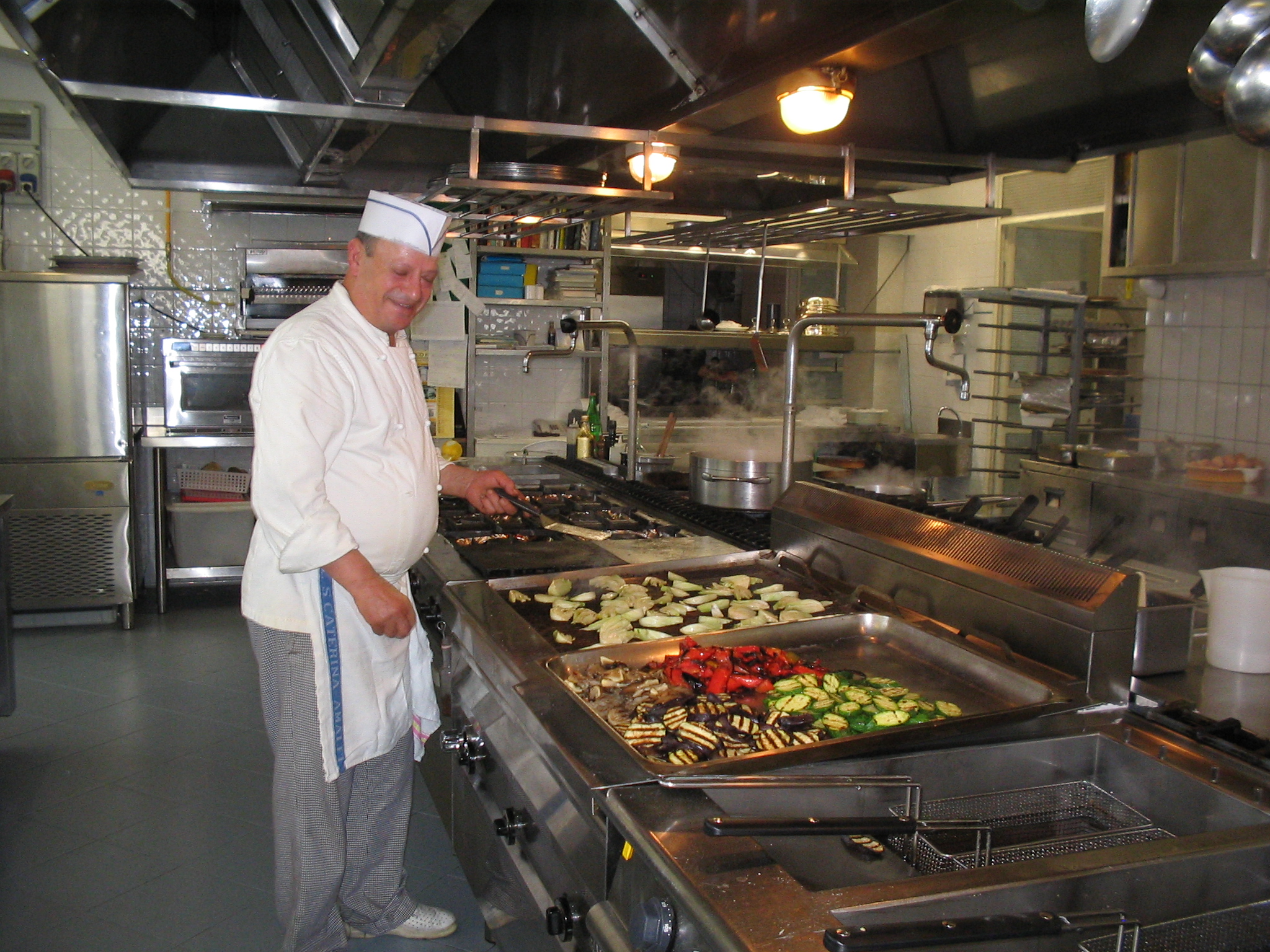
One of the chefs in the kitchen, Alberto, is a gruff old guy who is not comfortable with me in the kitchen because I am a woman. I decided to go to him directly and offer my help. Maybe I could break through that crust. “Che cosa posso aiutarlo oggi?” (What can I help you with today?) I asked. He looked rather surprised and didn’t say anything, but he directed me to slice eggplant, zucchini, fennel (called “anise” in our grocery stores in the states) and red peppers.

Alberto was grilling vegetables to be reheated as the contorno, or vegetable to accompany the evening meal. He brushed them with olive oil and used the indoor grill to put those black hash marks on them. Grigliata Mista di Verdure (Mixed Grilled Vegetables) Fennel (usually mislabeled anise in the produce section of the grocery store) Eggplant Zucchini Red, yellow and green bell peppers Slice, brush with olive oil and roast on the grill. I was glad when the time came to break came for lunch. I think it’s going to take awhile for Alberto to accept me.

In the afternoon I did not go down to the restaurant by the pool. Instead, I remained in the main kitchen and helped Alessandro make several eggplant dishes as we had received a very large delivery of small, Italian eggplants that morning. They would all be refrigerated for use for lunch and dinner services over the next couple of days. I shifted my weight from one foot to the other as I peeled eggplant. I was tired and began to have some doubts about owning my own restaurant some day. It would mean working seven days a week until well after midnight each night. Although I really enjoyed cooking and was certainly learning a lot, I wasn’t sure I liked the long hours and the hectic pace of a restaurant kitchen.

After chopping the eggplant, I tossed it with salt and set it aside in a colander so the moisture drawn out by the salt could drain. Then I took the colander of eggplant over to the deep fryer basket and cooked several batches until they were golden brown. Alessandro was mixing ricotta with very finely diced carrots that had been boiled. He had a worried look on his face as he said, “They do not pay us enough here. I have a baby coming and need bigger place to live, but I cannot afford. I used to be paid €1,800 a month but was not paid in winter when restaurant is closed.” I raised my eyebrows as if to ask why.

“No tourists.” Then he continued, “I told Chef I need to be paid every month and he said okay, but he reduce my salary to €1,200 a month! The rent for our apartment is €650. How can I manage on that?”

“If the restaurant is closed in the winter, what do you do?” I asked with genuine concern.

“Many chefs work on the big ships – how you say, cruise? Or they work on island in Caribbean. I don’t want to leave my wife and child, but I will have to.”

We placed the prepared eggplant casseroles in the refrigerator and began assembling the next dish which was eggplant parmigiano, although it was made differently from the way I always made it at home. Alessandro had me fry the eggplant slices in the deep fryer as he grated the cheeses using the buffalo chopper.

It was rainy and cool when I left the restaurant and I was glad that I had brought an umbrella in my backpack. I decided not to walk down the hill to Amalfi, but rather to try to catch the bus at the hotel bus stop. I knew that it would be crowded with standing room only, but I didn’t feel like walking down in the rain. I climbed up the steps, stamped my bus ticket in the validating machine and squeezed my way down the aisle. It was hard to hang on as we were going around all those hair pin turns. I wondered if the bus drivers drove Italian race cars on their days off. The rain certainly didn’t slow them down!