Tag Archives: asparagus

Spring Vegetables

Today is the third day of spring, although we’re having a late winter storm in New England and the ground is covered with a layer of snow. We are located in USDA Plant Hardiness Zone 6A and usually don’t plant our vegetable gardens or annuals until Memorial Day weekend to insure they survive. (The USDA Plant Hardiness map is based on 30-year averages of the lowest annual winter temperatures at specific locations.) But now (well, when the snow melts) is the time to start thinking about adding nutrition to the soil in your raised garden beds. The easiest way to do this is to add a few inches of composted manure or rich topsoil to the garden beds and rake it in. Once your soil is ready, you can begin planting vegetables that relish cool weather like arugula, lettuce, broccoli, cauliflower, and peas. These vegetables can be sowed directly into the soil and should be watered daily until they sprout.  If you don’t water them daily, they can dry out and shrivel up. Once they have grown their secondary leaves, you can add organic fertilizer to the garden. If you add this too soon, it can burn those new, delicate leaves. Vegetables like tomatoes, bell peppers, zucchini, eggplant, green beans, and beets can be started indoors or you can purchase starter plants from your local nursery. These vegetables can be transferred to the garden when all danger of frost has passed.  

The Food Pantry in the town where I live has a community garden that grows fresh produce for our shoppers. Occasionally some of the shoppers ask me how to prepare a certain vegetable or what dish they can make with the vegetables.

One of my favorite recipes for early spring vegetables is Pasta Primavera (“primavera” means spring in Italian). This may sound like an Italian dish, but it was actually created by New York restauranteur Sirio Maccioni’s restaurant Le Cirque. It was made famous in an article written for the New York Times by Craig Claiborne and Pierre Franey in 1977 which included a recipe for the dish.

I like to use a variety of tender spring vegetables with lots of different colors: peas, asparagus, broccoli, carrots, red and yellow bell peppers, zucchini and scallions. And although you could add them to your choice of pasta and dress with olive oil, I like a light cream sauce that clings to the pasta.

Pasta Primavera

Ingredients:

16 oz penne pasta (or shape of your choice)

Instructions:

1 teaspoon salt

1 tablespoon olive oil

8 oz asparagus, cut into I ½ inch pieces

1/2 yellow bell pepper, diced

1/2 red bell pepper, diced

2 cups small broccoli florets

1 small zucchini, sliced

8 cherry tomatoes, halved

2 scallions, sliced at a diagonal

1/2 teaspoon garlic salt

1 cup frozen peas

2 tablespoons butter

1 cup heavy cream

½ cup grated parmesan cheese

2 tablespoons lemon juice 

Salt and pepper to taste

Chopped fresh basil

Crushed red pepper flakes, optional

Instructions:

  1. Bring a large pot of water to a boil. Add 1 teaspoon salt and pasta to boiling water. Cook for 8-10 minutes or until tender, stirring occasionally. Drain well, reserving ½ cup of pasta water. Pour the pasta back into the pot and cover to keep warm.
  2. Meanwhile, in a large skillet, heat the olive oil over medium heat. Add the asparagus, peppers, zucchini and broccoli. Sprinkle vegetables with garlic salt and sauté for 2 to 3 minutes, stirring occasionally. Add the cherry tomatoes and scallions and cook for 1 to 2 minutes or until vegetables are tender, but still crisp. Transfer the vegetables to a large plate or bowl.
  3. Make the cream sauce. Place the skillet back on the stove. Melt the butter over medium heat. Stir in the heavy cream and ½ cup of Parmesan. Add 2 tablespoons of lemon juice. Cook until smooth. Add reserved pasta water If needed to thin the sauce.
  4. Pour the lemon cream sauce over the pasta. Add sauteed vegetables and peas and gently stir until well combined. Season with salt and black pepper, to taste. 
  5. To serve, garnish with chopped basil, extra Parmesan cheese, and crushed red pepper flakes. Serve warm.
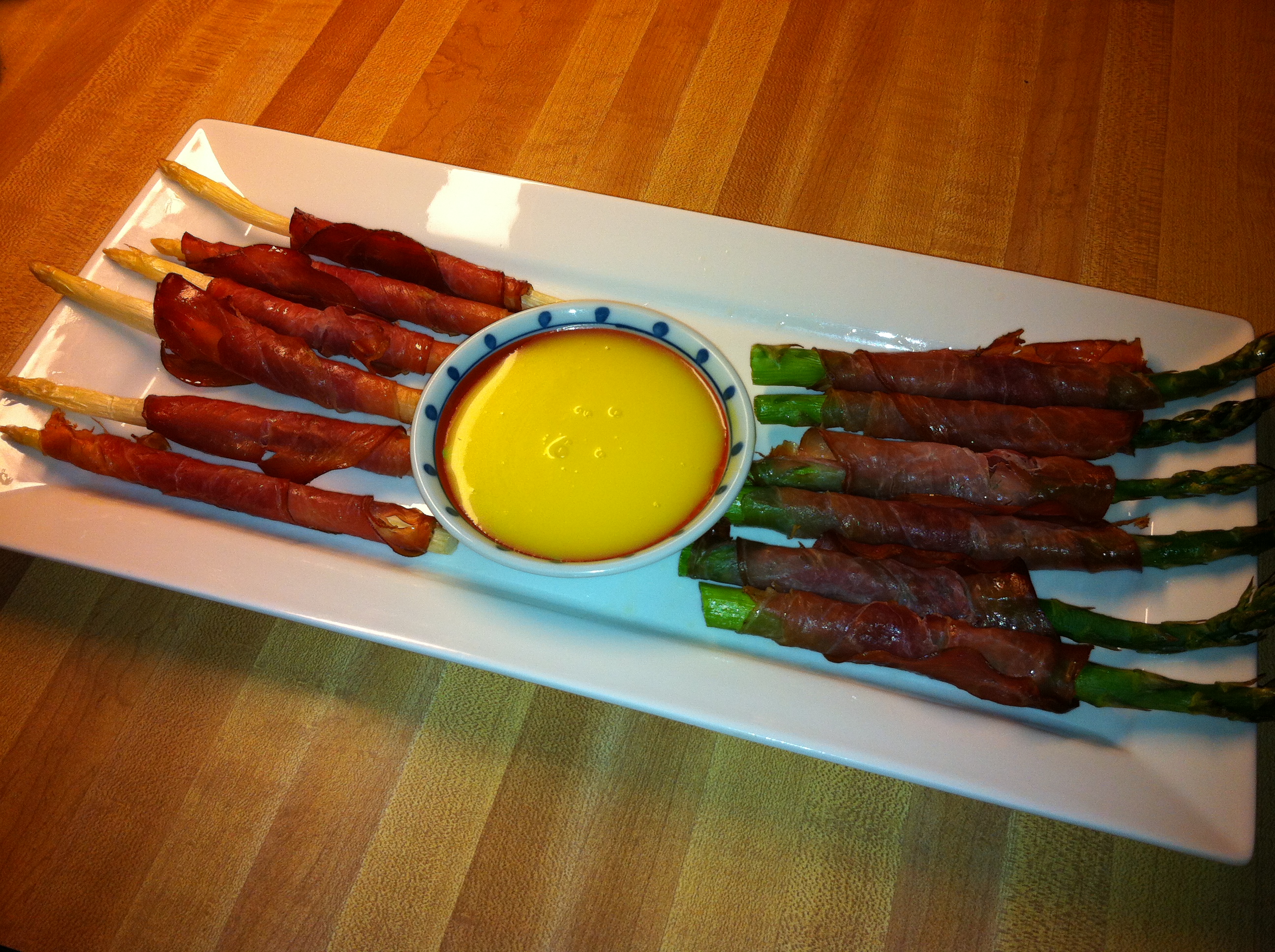
Proscuitto Wrapped Asparagus

The prosciutto adds saltiness and the asparagus spears are still a little crunchy.

IMG_1639

Ingredients:

20 spears of asparagus

20 slices of prosciutto

Hollandaise Sauce

2 egg yolks

1 T. lemon juice

4 T. butter

Directions:

Spray a baking sheet with non-stick baking spray or mist with olive oil.  Wrap each spear of asparagus with prosciutto, spiraling the prosciutto up the spear.  Arrange the asparagus on the baking sheet and bake in a preheated 400o F oven for 15 minutes.  Using tongs, carefully turn the asparagus spears over and return to oven for an additional 5 minutes.  For hollandaise sauce: Combine egg yolks, lemon juice and salt in blender on medium speed.  Place butter in a microwavable container and heat on high for 1 minute until melted and bubbling. Drizzle the melted butter a little at a time into the egg yolk mixture with the blender still on medium speed.  If the sauce should separate, reduce blender speed, add a little bit of lemon juice and continue mixing until it is creamy.  Serve prosciutto wrapped asparagus spears warm with hollandaise sauce for dipping.

Week 16: Asparagus

My husband and I visited Vienna, Austria a few years ago during the “Spargel Festival.” Spargel is the German word for asparagus. Spargelfests, celebrated from mid-April to mid-June, include peeling contests and even the crowning of an asparagus queen! We stayed at the Hotel im Palais Schwarzenburg surrounded by spectacular flower gardens in the center of Vienna. It is a real palace, a part of which was converted to a five-star hotel to help support its maintenance costs. One afternoon we rented bicycles for a ride along the Danube. Every restaurant in Vienna was offering menu items using tender stalks of white asparagus and we stopped at a riverside cafe for lunch. I enjoyed a creamy asparagus soup while my husband opted for a plate of steamed asparagus.  It was delicious!

We normally associate asparagus with spring as it is one of the earliest vegetable to emerge from the soil. But it is now available in markets year round and makes hearty soups, risottos and strudels to warm chilly winter nights.

IMG_1600

History

Asparagus has been used both as a vegetable and medicine since ancient times.  A recipe for cooking asparagus was found in one of the oldest surviving cookbooks, Apicius’s third-century AD De re Coquinaria,  Book III.  It was also depicted as an offering in a 3000 AD Egyptian frieze. Although asparagus was cultivated in France during the 16th century, it didn’t reach the United States until 1850.

Cultivation and Purchase

Asparagus is a perennial garden plant and member of the lily family.  Its spears from a crown that is planted about a foot deep in sandy soil, although it is usually not harvested until three years after planting.  A well cared for asparagus plant can live for 15 years, producing spears for about 6-7 weeks during the spring and summer. Asparagus spears can grow up to 10 inches in a 24-hour period and must be picked often.

There are three varieties of asparagus: the green asparagus we see most often in the supermarket, white asparagus (soil is heaped on the spears as they emerge which inhibits the development of chlorophyll content, therefore creating its distinctive white coloring), and purple asparagus (only 2-3 inches tall and fruitier in flavor).

When purchasing asparagus, look for straight spears that are not wrinkled or dried out. Although some people think the thinner stalks are more tender, that is not always true. White asparagus is very tender, although it must be peeled with a vegetable peeler, as the outside is fibrous and even woody at times.  Wrap asparagus spears in a damp paper towel or cloth and refrigerate until ready to cook. Do not keep asparagus for more than a day or two after purchase as it will dry out and become tough.

Health Benefits

Asparagus is a nutrient-dense food which in high in Folic Acid and is a good source of potassium, fiber, vitamin B6, vitamins A and C, and thiamin. Asparagus has no fat, contains no cholesterol and is low in sodium. It also contains saponins which are known to have anti-inflammatory and anti-cancer properties.

Resources

Wikipedia

World’s Healthiest Foods (www.whfoods.com)