Week 27: Pepper

Pepper

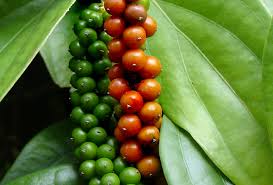
Pepper is a woody climbing vine that belongs to a genus of plants with the name Piper. The botanical name is Piper nigrum. They are grown on supporting trees, poles or trellises. The berries dandle in clusters from vines like dangling earrings. It takes several years for the vines to mature and they can reach 30 feet in length during that time. Pepper vines grow best in warm, humid tropic weather with well-drained soil. Pepper is native to Southeast Asia and Vietnam is currently the world’s largest producer and exporter, producing 34% of the world’s Piper nigrum crop.

Although nigrum means black, white pepper comes from the same plant. The difference depends on when the berries are picked. Black pepper is picked when the berries are still green, while white pepper is picked when the berries turn from green to red. The berries are placed in hot water to remove the tough, outer husk and then are dried. After drying, the green berries become black, wrinkly balls – the peppercorn with which we are familiar. The spiciness of black pepper is due to the chemical piperine, not capsaicin that gives fleshy peppers heat.

Pink peppercorns (French: baie rose, “pink berry”) are dried berries of the shrub Schinus molle, commonly known as the Peruvian peppertree. As they are members of the cashew family, they may cause allergic reactions including anaphylaxis for persons with a tree nut allergy.

History

Pepper has been used throughout antiquity. Black peppercorns were found stuffed in the nostrils of Ramses II, placed there as part of the mummification rituals shortly after his death in 1213 BCE. The Romans used pepper as an integral part of their meals, primarily for health reasons.  Pepper was considered today’s equivalent of aspirin and was consumed  as a cure-all for numerous aches and pains to include cough, fever, snake bite, constipation, diarrhea.

Pepper was known in Greece since 4 BCE and was used in Indian cooking as early as 2BCE. 

It is commonly believed that during the Middle Ages that pepper was used to disguise the flavor of rotting meat, but that may not be accurate. Meat and wild fowl was readily available to the wealthy who liked it seasoned with spicy sauces. Sugar was not widely available. Thus, pepper was combined with cinnamon and nutmeg to add fiery sweetness to the food.

English and Dutch vied for control of the port cities in India, Sumatra and Java to monopolize the pepper trade. It was more valuable than gold or silver and was used to pay taxes, customs duties and dowries. Land was even purchased with pepper! Members of the English East India Company, the first company in the world based on stock ownership, were called spicers, or pepperers, and imported an distributed spices.  These men formed guilds to protect their interests, the most important being the Pepperers’ Guild of London, which wielded considerable political power.

American pepper traders departing from Salem, Massachusetts in the 1800s made profits of 700 percent on the pepper trade and became the country’s first millionaires.  The Gardner Museum in Boston was founded by the daughter-in-law of John Lowell Gardner, a wealthy pepper merchant. Captain Jonathan Carnes, the son of a distinguished privateer during the Revolutionary War, returned from a trip to Sumatra and gave mementos of his journey (elephant’s tooth, golden boxes, assorted shells, pipes and other items) to the Salem East India Marine Society and inspired the Society to begin a “cabinet of curiosities” which was the foundation for the Peabody Essex Museum in Salem.

Uses

Pepper has been used throughout history as a seasoning for food and for its medicinal properties, particularly in Ayurvedic medicine, Hindu traditional or alternative medicine, which emphasizes plant-based treatments with exercise, yoga and meditation.

There are more than 300 studies citing pepper in PubMed, the database maintained by the National Library of Medicine in the US. Scientific studies in the US, Britain and Italy are also underway to test pepper’s potency as an anti-inflammatory and anti-microbial agent, an anti-cancer therapy, insecticide, preservative, anti-oxidant  and analgesic.

One tablespoon of ground black pepper contains moderate amounts of Vitamin K, iron, and manganese with trace amounts of other essential nutrients, protein and dietary fiber.

References

Shaffer, Marjorie: “Pepper: A History of the World’s Most Influential Spice”

Wikipedia

Week 26: Salt


salt

Salt is the most common seasoning used in cooking. It adds essential minerals and enhances the flavor of food. As our palates have become more refined, the variety of available salts has increased.

Salt is a mineral substance composed primarily of sodium chloride. Salt is present in vast quantities in the sea where it is the main mineral constituent, with the open ocean having a salinity of 3.5%. Salt is essential for human and animal life, and saltiness is one of the basic human tastes. Salt is produced from the evaporation of seawater or mineral-rich spring water in shallow pools or is extracted from salt mines.

History

Some of the earliest evidence of salt processing dates to around 6,000 years ago, when people living in Romania boiled spring water to extract the salts. A saltworks in China has been found which dates to the same period. Salt was prized by the ancient Hebrews, the Greeks, the Romans, the Byzantines, the Hittites and the Egyptians. Salt became an important article of trade and was transported by boat across the Mediterranean Sea, along specially built salt roads, and across the Sahara in camel caravans. Salt has been used for barter and for currency. Moorish merchants in the 6th century even traded salt for gold, weight for weight. The scarcity and universal need for salt has led nations to go to war over salt and use it to raise tax revenues. Salt is also used in religious ceremonies and has other cultural significance. Various governments have at different times imposed salt taxes on their peoples.

Types of Salt

Sea Salt – Sea salt and table salt usually contain an anti-caking agent and may be iodized to prevent iodine deficiency. Unrefined sea salt contains small amounts of magnesium, calcium, sulphates, traces of algae, salt-resistant bacteria and sediment particles. Sea salt may have a more complex flavor than pure sodium chloride when sprinkled on top of food. Fleur de sel is a natural sea salt from the surface of evaporating brine in salt pans in France.

Flaked Sea Salt – This salt has soft, sheer, pyramid-like flakes and will add a hint of briny flavor. It comes from England’s Essex coast is where the most popular brand, Maldon, is harvested. It is the fastest dissolving salt.

Kosher Salt – Kosher salt, though refined, contains no iodine and has coarse crystals. This can give it different properties when used in cooking. Some kosher salt has been certified to meet kosher requirements by a hechsher, but this is not true for all products labeled as kosher salt.

 Rock Salt – Rock salt has large, chunky unevenly shaped crystals. It is used primarily for making ice cream. You can also use it to deice your sidewalks and driveway in the winter months.

Pickling Salt – Like table salt, pickling salt may come from the earth or the sea. But unlike table salt, it isn’t fortified with iodine and doesn’t contain anti-caking chemicals, both of which would turn pickles an unappetizing color. Virtually 100 percent sodium chloride, it’s the purest of salts. and is far more concentrated than the common salt.

Himalayan Pink Salt – This salt originates from Pakistan where it is hand mined, hand washed and sun dried. It is light pink with variations of white and red. About 200 million years ago, there were crystallized sea salt beds that were covered with lava. Being kept in this untouched, pristine environment that has been surrounded with snow and ice for so many years means that the salt has been protected from modern day pollution. Many people believe that this pink salt from the Himalayas is the purest salt that can be found on the planet.

Smoked salt – Smoked salt is an aromatic salt that has been smoked with any number of select bark free woods for up to 14 days. The type of wood used for smoking impacts the flavor, whether it be subtle, bold or even sweet. The most common choices are alder wood, apple wood, hickory, mesquite, and oak. Infused smoked salts like smoked bacon chipotle sea salt are very popular because of the dynamic flavor profiles.

Hawaiian Black Lava Salt – Hawaiian sea salt is harvested from salt farms on the tiny island of Molokai. Hawaiian ocean water is drawn into complex array of filters and is evaporated through a sophisticated solar evaporation method leaving behind the finished salt product which is hand collected and further infused or “bathed” in activated Coconut shell charcoal. Premium Hawaiian natural sea salts have a unique combination of taste, color, and mineral content. It is coarse in grain size, but brittle, for an interesting crunchy texture. Black Lava salt should not be used during the actual cooking process as it will dissolve and the added black elements will simply settle to the bottom as a residue. It should be used as a finishing salt after the fact, where its bold taste can be savored and fully enjoyed. It goes well with all types of seafood, salads, vegetables, and even some deserts. Black Lava salt has incredible detoxifying qualities and is used in salt scrubs, exfoliates, scrubs, and masks by many spas across the country

Health Notes

 Too much sodium in the diet raises blood pressure and may increase the risk of heart attacks and strokes. The World Health Organization recommends that adults should consume less than 2,000 mg of sodium which is equivalent to 5 grams of salt per day.

Industrial Uses

Only about 6% of the salt manufactured in the world is used in food. Of the remainder, 12% is used in water conditioning processes, 8% goes for de-icing highways and 6% is used in agriculture. The rest (68%) is used for manufacturing and other industrial processes, such as in the manufacture of PVC, plastics and paper pulp. Salt is also used in the production of aluminum, soap, glycerine and synthetic rubber.

Resources

Wikipedia

http://www.collective-evolution.com

http://www.mountainroseherbs.com

http://www.saltworks.us

http://www.thespicehouse.com

Week 25: Artificial Sweeteners and Sugar Substitutes

Artificial Sweeteners


Sugar (sucrose) has 16 calories per teaspoon and is found naturally in fruit. Americans eat approximately165 pounds of sugar per person per year.  It offers no nutritional benefits. The consumption of sugar leads to obesity and tooth decay and contributes to diabetes. Sugar substitutes include both natural and artificial sweeteners.

Among the natural sweeteners that the FDA recognizes as being generally safe for consumption are fruit juices and agave nectar, honey, molasses, and maple syrup.

Artificial sweeteners are synthetic sugar substitutes but may be derived from naturally occurring substances, including herbs or sugar itself. Artificial sweeteners are also known as intense sweeteners because they are many times sweeter than regular sugar. Artificial sweeteners are found in products marked “sugar free” or “diet” and are preferred by those who are diabetic or who want to reduce their caloric intake. Artificial sweeteners are widely used in processed foods, including baked goods, soft drinks, powdered drink mixes, candy, puddings, canned foods, jams and jellies, dairy products, and scores of other foods and beverages.

Artificial sweeteners are regulated by the Food and Drug Administration (FDA) as food additives. They must be reviewed and approved by the FDA before being made available for sale.

Agave nectar

Agave nectar is derived from the agave cactus and has a taste and texture similar to honey. It is sweeter than sugar as it contains more fructose.

Aspartame (Equal, Nutrasweet) This sweetener contains the sugars fructose and glucose from processed corn syrup. It contains 17 calories per teaspoon. Aspartame was discovered in 1965 by James M. Schlatter at the G.D. Searle company (later purchased by Monsanto). He was working on an anti-ulcer drug and accidentally spilled some aspartame on his hand. When he licked his finger, he noticed that it had a sweet taste. It is an odorless, white crystalline powder that is about 200 times as sweet as sugar and can be used as a tabletop sweetener or in frozen desserts, gelatins, beverages, and chewing gum. When cooked or stored at high temperatures, aspartame breaks down into its constituent amino acids. This makes aspartame undesirable as a baking sweetener.

Honey

Honey is made by bees using nectar from flowers. Honey bees transform nectar into honey by a process of regurgitation and evaporation. They store it as a primary food source in wax honeycombs inside a beehive. According to a cave painting from Valencia, Spain, hunters began collecting honey from wild bees nests over 8,000 years ago. Honey contains trace amounts of vitamins and minerals, and studies suggest it may not raise blood sugar as fast as other sweet products. It contains 21 calories per teaspoon. Honey is rich in antioxidants and includes vitamins B6, thiamin, niacin, riboflavin, and certain amino acids.. The minerals found in honey include calcium, copper, iron, magnesium, manganese, phosphorus, potassium, sodium and zinc.

Honey can contain small amounts of bacterial spores that can produce botulism toxin. Because of that, honey shouldn’t be given to children less than 1 year old.

Maple Syrup

Maple syrup is made from the sap of the Sugar Maple tree, although it can also be made from other maple species as well. In cold climates, these trees store starch in their trunks and roots before the winter; the starch is then converted to sugar that rises in the sap in the spring. Maple trees can be tapped by boring holes into their trunks and collecting the exuded sap. The sap is processed by heating to evaporate much of the water, leaving the concentrated syrup. Maple syrup was first collected and used by the indigenous peoples of North America. The practice was adopted by European settlers, who gradually refined production methods. Technological improvements in the 1970s further refined syrup processing. Maple syrup is similar to sugar with respect to calorie content, but is a source of manganese, zinc, calcium and sodium. It contains 52 calories per teaspoon.

Molasses

Molasses, or black treacle, is a viscous by-product of the refining of sugar cane or sugar beets into sugar. Molasses is used in making rum, stout and porter, in dark rye breads and is a supplement in livestock feeds. It is a good source of calcium, magnesium and iron. It contains 58 calories per teaspoon.

Rebiana (Nuvia)

Rebiana is derived from the leaves of the stevia plant, a shrub that grows in South and Central America. Rebiana is deemed the natural alternative to artificial sweeteners. It has 0 calories. Stevia has been widely used as a natural sweetener in South America for centuries and in Japan since 1970, due to its unique characteristics of zero calories and the fact that it does not raise blood sugar levels.

Saccharin (Sweet ‘N Low)

Saccharin was the first artificial sweetener and was originally synthesized in 1879 by Remsen and Fahlberg. Its sweet taste was discovered by accident. It has 0 calories. In a 1960 study saccharin showed that high levels of saccharin may cause bladder cancer in laboratory rats. In 1977, Canada banned saccharin due to the animal research. In the United States, the FDA considered banning saccharin in 1977, but Congress stepped in and placed a moratorium on such a ban.

Sucralose (Splenda)

Sucralose is a chlorinated sugar that is about 600 times as sweet as sugar, although it has 0 calories. It is used in beverages, frozen desserts, chewing gum, baked goods, and other foods. Unlike other artificial sweeteners, it is stable when heated and can therefore be used in baked and fried goods.

Sugar Alcohols (Sorbitol, Xylitol)

Sugar alcohols (polyols) are carbohydrates that occur naturally in certain fruits and vegetables, but they also can be manufactured. They’re often used in sugar-free foods marketed to diabetics, because they contain fewer carbohydrates than table sugar. Sugar alcohols have 10 calories per teaspoon, and they don’t cause tooth decay like table sugar.


Resources

Harvard School of Public Health

http://www.health.com

http://www.mayoclinic.org

Wikipedia


Week 24: Concord Grapes

IMG_2350

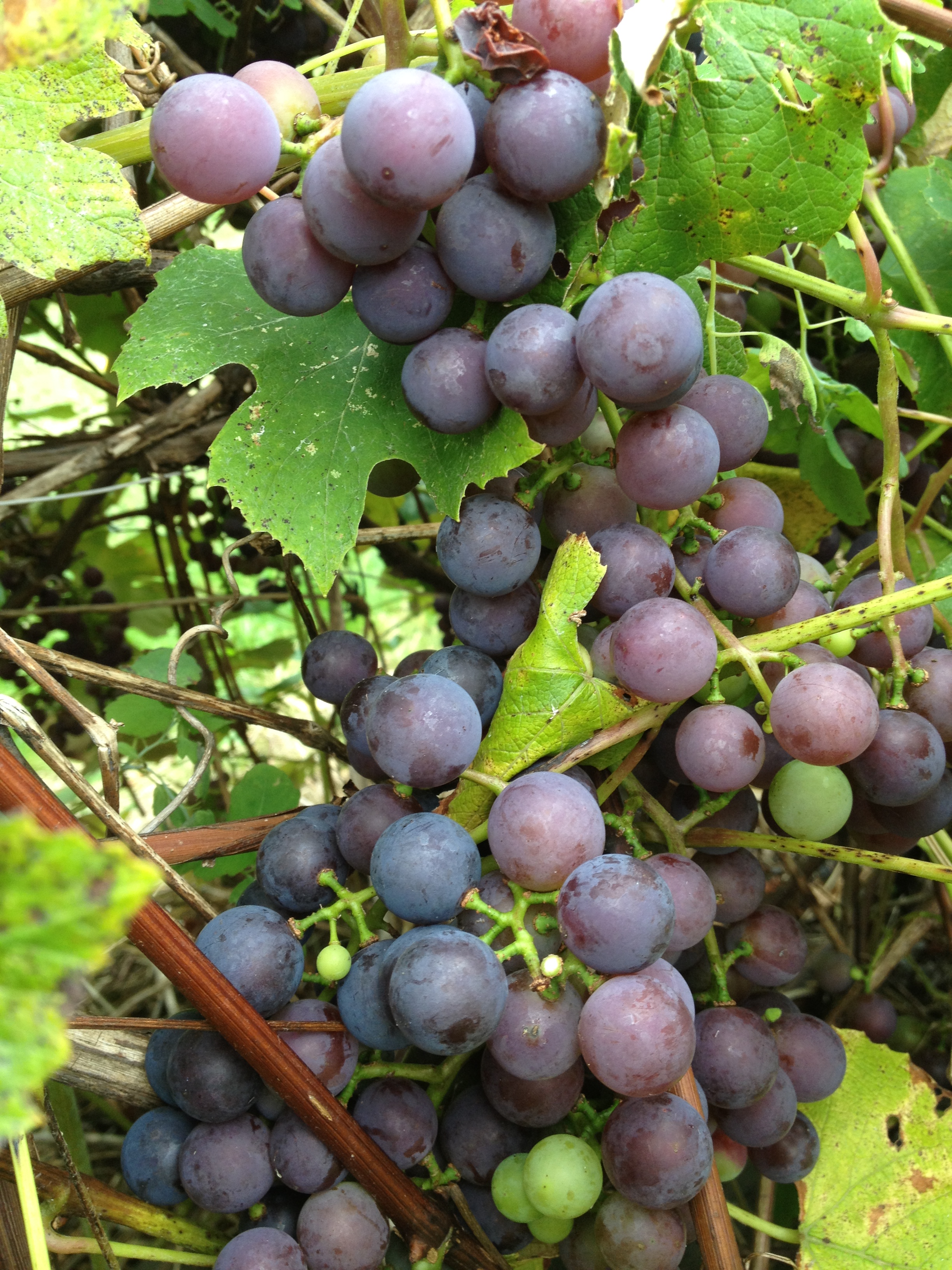
My husband and I have submitted a contract on an historic home built in 1680 in Maine. It is a lovely old farmhouse on a river with beautiful wood floors, plenty of fireplaces to ward off the winter chill, a detached barn for his woodworking shop, an orchard and Concord grape vines. We’ve grown apples, cherries and pears before, but we’ve never had grape vines.  I wasn’t sure about how to harvest them or what I could make with them and decided to do a little research.

The Concord grape is derived from the grape species Vitis labrusca (also called fox grape). The skin is typically dark blue or purple, and  is sometimes covered with a lighter-colored “bloom” that can be rubbed off. Concord grapes have large seeds and are highly aromatic. They are a slip-skin grape variety, meaning that the skin is easily separated from the fruit.

Cultivation

Concord grapes produce fruit in the first year they are planted and can grow as much as 20 feet per year. If they are not pruned heavily during the dormant season, the vine will be forced to support long sections of non-fruiting wood with shorter sections of fruiting wood at the end and productivity will be limited.

Concord grapes need a special climate to grow – specifically, chilly areas near large bodies of water like the Great Lakes, the Finger Lakes Region of New York, Southwestern Michigan and the Yakima Valley in Washington. In the United States over 400,000 tons of Concord Grapes are harvested each year in September and October.

History

Though American Indians had long enjoyed Concord grapes, they were not considered particularly enjoyable by early colonists.  It wasn’t until the 1850s, when American grapes began to be hybridized with European varieties, that they became more widely grown and consumed.

Legend has it that amateur farmer Ephraim Wales Bull planted 22,000 wild grape seedlings in 1849. After six years he finally selected a single vine he thought worth keeping and named it after his hometown. In 1853, Bull’s grape won first place at the Boston Horticultural Society Exhibition and was then introduced to the market in 1854. It quickly spread throughout the country and became one of the most popular variety of grapes due to its hardiness and ability to withstand cold climates.  The grape is now widely grown in Washington, New York, and what has become known as the “Concord Grape Belt” of  eastern Lake Erie.  Bull’s original vine still exists today in Concord and its descendants have produced the most commonly-used grape in American commercial production.

Dr. Thomas Bramwell Welch developed the first Concord grape juice in 1869. Fermentation was inhibited through the process of pasteurization. Welch originally introduced the grape juice to his church, to be used for communion.

Uses

Concord grapes are still used to make Kosher wine and Sacramental wine. The oldest sacramental winery in America, O-Neh-Da Vineyard, still produces a concord wine for the altar. However, they are primarily used for jelly and grape juice, soft drinks and candy.

Health Benefits

Concord grape juice has been shown to provide many of the same heart-health benefits of red wine, without alcohol consumption. They contain plant nutrients called polyphenols which act as antioxidants. Concord grapes also support the immune system and cognitive health and are an excellent source of manganese, vitamin K, and thiamin (vitamin B1).

Resources

American Indian Health and Diet Project

Concord Grape Association

Wikipedia

http://www.grapescience.com

http://www.welchs.com

Week 23: Mustard


mustard plant


Mustard is a condiment made from the seeds of a mustard plant. The term “mustard” is derived from the the French words moust (must) and ardens, which means “burning.”  A moustarde was originally made from unfermented juice pressed from grapes and mustard seed and made into a pungent table relish.

The mustard plant is biennial which means that their life cycle lasts two years, although only annuals are cultivated today. They are known as cruciferous plants because of their four-petaled flowers that resemble a cross. Cruciferous plants (radishes, horseradish, turnips, and cress) are very high in sulfur which adds to their pungency. There are three types of mustard seeds: white, brown and black.

History

Mustard has been cultivated for thousands of years – the ancient Chinese grew several species in their gardens.  One of the earliest written references to mustard was found on a 4,300 year old clay Sumerian tablet. Mustard seed was prescribed medicinally by Hippocrates (460-370 BC) who is considered to be the father of medicine. Wild mustard plants were described by the Roman naturalist Pliny the Elder (A.D. 23-79) as growing wild everywhere in Italy without cultivation. Pope John XII was so fond of mustard that he created a new Vatican position – grand moutardier du pape (mustard-maker to the pope) – and promptly filled the post with his nephew.

Mustard seeds contain 30-35 percent oil. At one time, the oil was used as a lubricant, in soap-making and was burned in crude oil lamps.  Mustard is also used as a cover crop to hold soil in place and when plowed under, it nourishes the soil.

Mustard is available in three forms:  mustard seed, ground mustard or cream, a blend containing vinegar or wine and various spices. Ground mustard seeds develop their pungency when cold water is added. which causes a chemical reaction between an enzyme in the seed and a substance called gycoside.  The reaction takes about 15 minutes to reach its peak. 

Culinary Uses 

Mustard is high in calcium, folic acid, vitamin C and potassium. Dijon-style mustards are made from brown or black mustard seeds.  The exact formula for Grey Poupon dates back 200 years and is a closely guarded secret.

 Grey Poupon

The most commonly used mustard in the United States and Canada is American Mustard sold as “Yellow mustard,” a very mild prepared mustard colored bright-yellow by turmeric. The R.T. French Company first introduced it on a hot dog at the 1904 St. Louis World’s Fair.

 French's mustard

Medicinal Uses

In Biblical times, mustard seeds were used for their laxative properties and to treat indigestion.  In the Middle Ages, mustard was used for asthma, coughs and chest congestion. In China today, mustard seeds are used to treat colds, stomach problems, abscesses, rheumatism, lower back pain and ulcers.  The leaves of the mustard plant are used to treat bladder inflammation. Mustard helps cleanse the entire respiratory tract by breaking up nasal and lung congestion and by clearing the sinuses. Medicinally, the most common use of mustard is in a plaster applied topically to warm the area and to relieve pain, ease sore muscles and loosen stiff joints.


Resources

Wikipedia

Antol, Marie. The Incredible Secrets of Mustard.

http://homecooking.about.com


Week 22: Artificial Food Color

Why is some cheddar cheese orange when it is made from white milk?

English farmers first began dyeing cheeses in the 16th century (originally using marigold petals or carrot juice) because the dye made low-fat cheese look more like high-fat cheese, which commanded higher prices. When U.S. commercial cheese production took off in the second half of the 19th century, dyeing with annatto, a yellow orange vegetable dye which is made from the seeds of the achiote tree, to achieve consistency in cheese color. Cheese made from spring and summer milk tended to be naturally yellower than cheese made from fall and winter milk, since grass is more abundant and nutritious in spring and summer. Today, many supermarket cheddars are still colored to satisfy consumer’s expectations of what cheese should look like – but they are colored with artificial food colors. And cheese is not the only product which contains Artificial Food Color (AFC).

We are exposed to artificial food colors on a daily basis from food products that include beverages, cheese, cereal, pickles, pudding, popsicles and nearly all processed foods in addition to nonfood items like toothpaste, shampoo, laundry soap and cosmetics.

For centuries, people and companies used dyes derived from natural ingredients to color food. But many of these natural colors contained toxins such as mercury, copper and arsenic.

  • Red lead (Pb3O4) and vermillion (HgS) were routinely used to color cheese and confectionery.
  • Copper arsenate (Cu3(AsO4)2) was used to recolor used tea leaves for resale. It also caused two deaths when used to color a dessert in 1860.

Around the turn of the 20th century, scientists began creating synthetic colors, derived from coal tar (a petroleum product) to replace the natural ones that were toxic. In 1856, mauveine, the first synthetic color,  was developed by Sir William Henry Perkin.

In 1906, the Pure Food and Drugs Act (a.k.a. the “Wiley Act”) instituted the first restrictions on color additives in the United States. In general terms, the law banned artificial colors that proved “injurious to health,” and the government hired chemist Dr. Bernard Hesse to investigate which of the existing 80 dyes being used in foods were safe enough to keep legal. The next three decades saw a process of eliminating colors that caused recurrent adverse health effects in the public. By 1938, only 15 synthetic colors were still legal, and those were subsequently divided into three categories: those suitable for foods, drugs, and cosmetics; those suitable only for drugs and cosmetics; and those suitable only for cosmetics.

Today only seven colors remain on the FDA’s approved list.

  • Blue No. 1 – Blue
  • Blue No. 2 – Indigo
  • Green No. 3 – Turquoise
  • Red No. 3 – Pink
  • Red No. 40 – Red
  • Yellow No. 5 – Yellow
  • Yellow No. 6 – Orange

The most commonly used AFC is Red #40 (82 foods and candies), with Yellow #5 (69 foods/candies) and Yellow #6 (62 foods/candies) next.

food colors

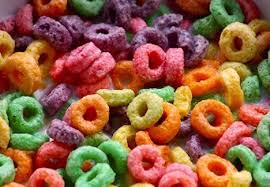
In a recent study published in Clinical Pediatrics, Purdue University researchers found the products with the greatest amount of AFCs were Cap’n Crunch’s Oops All Berries (the No. 1 worst cereal, with 41 mg of AFCs and 15 g of sugar per serving), Fruity Pebbles, Trix and Fruity Cheerios. Among candies, those highest in AFCs included M&Ms, Reese’s Pieces, Strawberry Twizzlers and Skittles. Also ranking high were candy corn, jelly beans and Peeps.

The authors quote several behavioral studies that have shown that AFCs “caused significant hyperactivity-type changes in children both with and without ADHD.” A study in 2007 at the University of Southampton, six dyes that came to be known as the “Southampton Six“ were linked to hyperactivity in children, and now require warning labels in the E.U. The FDA, however, is not so convinced that such measures are necessary. FDA scientists have theorized that bad reactions to artificial colorings in certain individuals may be like a food allergy, affecting only a small number of people rather than the entire public.

The Grocers Manufacturing Association which represents Coca Cola, Nestle and General Mills and is not in favor of labeling. The companies rely on coal tar colors for visually-appealing products and the cost of finding replacement ingredients, changing recipes, and possibly losing sales could put them out of business.

A recent petition by the Center for Science in the Public Interest, a consumer advocacy group, has called for a ban on the use of artificial dyes in food.  The group has targeted its petition at the U.S. Food and Drug Administration, seeking the phasing out of artificial food dyes linked to serious health risks.

More and more companies are voluntarily making changes as the desire for natural products increases. The cheese industry is making a shift toward using annatto color to replace Yellow #5. Naturally colored and flavored alternatives to gummies, lollipops, cereals, yogurts and gum are now readily available. Look for the label that states:  “Contains no artificial colors, flavors or preservatives.”

Cooking at home?  The best way to avoid artificial food coloring is to fill your plate with fresh fruits and vegetables. To enhance the foods you prepare, you can use the juices from the following foods to add color to your culinary creations:

  • Green: spinach juice
  • Orange: pumpkin or carrot juice
  • Pink: raspberries or beetroot
  • Blue: blueberries
  • Purple: red cabbage or grapes
  • Yellow: yellow carrots, turmeric powder, saffron flowers

Using natural food colors will produce more of a pastel color than the commercially produced dyes so you may need to experiment if you seeking a very specific end result. However, the taste will be better, you won’t experience allergic reactions or side effects and your body will thank you!


Resources

http://foodmatters.tv

http://www.laweekly.com

http://www.forbes.com

http://www.slate.com

http://www.wikipedia.com


Linguine with Fiddleheads, Tomatoes and Pesto

Ingredients:

1 pound fiddlehead ferns

1 pound linguine pasta

4 oz. prepared pesto

3 tablespoons olive oil

1 c. grape tomatoes, sliced in half

1 c. yellow cherry tomatoes, sliced in half

2 scallions, thinly sliced

1/4 t. cayenne pepper

Fresh parmesan cheese, grated


Directions:

In a large pot of boiling salted water, blanch the fiddleheads until they are crisp-tender, about 3 to 5 minutes. Remove the fiddleheads from the water and shock them in a bowl of ice water (unless you are going to use them immediately).

Drop linguine into the same pot of boiling water used for fiddleheads. Boil for 3 to 5 minutes or until al dente.

Meanwhile, in a large skillet, heat olive oil over medium high heat. Saute fiddlehead ferns, green onions, and tomatoes for 2 minutes. Add pasta and pesto to skillet. Season with cayenne pepper and salt to taste. Stir gently to heat through and to coat pasta with sauce.  Garnish with parmesan cheese.  Serves 4.


Week 21: Fiddleheads


It is finally spring on the New Hampshire Seacoast!  The snow has melted.  Crocuses, hyacinths and daffodils are blooming. And the local farmers markets will begin soon – with an abundant selection of organic meats and cheeses, farm fresh eggs, breads, and early produce – lettuce, spinach, peas and fiddleheads.

fiddleheads

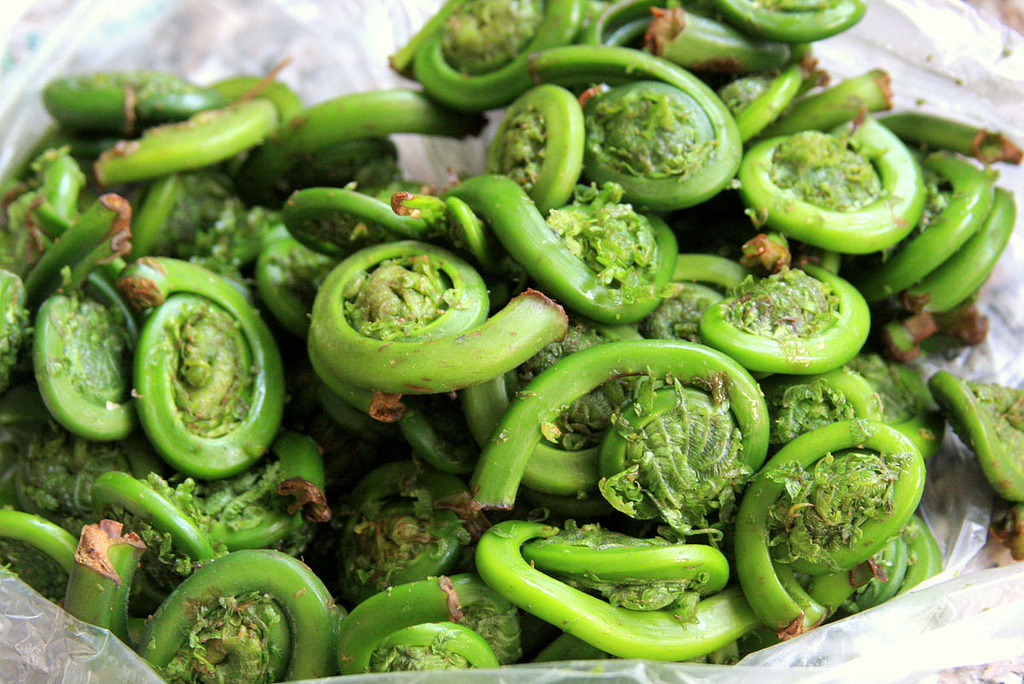
“What is a fiddlehead?”   Fiddleheads are the furled fronds of an ostrich fern. They get their name from their resemblance to the head of a fiddle or violin. Fiddleheads are harvested early in the season before the frond has opened and reached its full height. Bright green specimens are best with only an inch or two of the stem.

A number of fiddlehead festivals are held in New England to celebrate the arrival of spring. Maine celebrated its 3rd Annual Fiddlehead Festival in early may and Vermont is celebrating their First Annual Fiddlehead Festival at Mount Snow Valley this weekend,  May  23-26,  with music, cooking classes and contests, children’s games and fiddling contests. Vintners, artists, distillers, publishers, cheese makers, weavers, potters, jewelers, chefs, photographers, farmers, and artisan chocolatiers will be showcasing their products.  For more information, visit http://vermontfiddleheadfestival.com.

Culinary Uses

Fiddleheads taste somewhat like asparagus or young spinach, freeze well and are easy to prepare. Do not eat fiddleheads raw as they can be the source of food-borne illnesses.  Rinse in cold water, steam or sauté with butter. They can be added to salads, omelets or grains.

Health Benefits

Fiddleheads have antioxidant activity, are a source of Omega-3 and Omega-6 fatty acids, and are high in iron and fiber. Certain varieties of fiddleheads have been shown to be carcinogenic.

Resources

http://localfoods.about.com

http://www.vermontfiddleheadfestival.com

Wikipedia


Mushroom Risotto

Ingredients:

2 c. Arborio rice
4-6 c. vegetable stock
1/4 c. extra virgin olive oil

4 T. butter

1 ½  pounds mushrooms (Use any combination of mushroom varieties you like –  porcini, crimini, shitake, oyster & button -but if you use dried porcini mushrooms, rehydrate in hot water & use the mushroom water in addition to the vegetable stock for cooking the risotto)
2 cloves garlic, minced
3/4 cup onion, minced
Salt and pepper to taste

1 ½ c. parmesan cheese, freshly grated

Directions:

In a large skillet, sauté mushrooms in 2 T. olive oil until tender.  Set aside. In a Dutch oven or stock pot over medium heat, pour remaining olive oil and 1 1/2 T of butter. Once the butter begins to melt, sauté the onions and garlic until tender and translucent.  Add the rice to this mixture and sauté until the rice becomes opaque and white.  At this point you can add about a cup of vegetable stock and stir until completely absorbed, repeat this process adding about a cup of stock at a time until the rice becomes creamy and starchy. Once the rice has reached desired consistency add the sautéed mushrooms, the remaining butter, and the parmesan cheese. Stir butter and cheese are completely melted.  Serves 6-8.

Week 20: Mushrooms

“Edible” mushrooms are the fungi with no poisonous nor adverse affects when consumed by humans. They grow both above and below ground and may be wild harvested or cultivated.

Edible mushroom species have been found in association with 13,000 year old ruins in Chile, but the first reliable evidence of mushroom consumption dates to several hundred years BC in China. The Chinese value mushrooms for medicinal properties as well as for food. Ancient Romans and Greeks used mushrooms for culinary purposes.

No one has yet developed a simple test to tell if a mushroom is edible or not. Roman Emperors used “food tasters” to make sure that mushrooms were safe to eat.The old myths of cooking with a silver coin or spoon, and the Laotian belief that harmful mushrooms make rice turn red have not been substantiated.

Over 20 species of mushrooms are commercially cultivated.  The most common are:


enoki  mushrooms

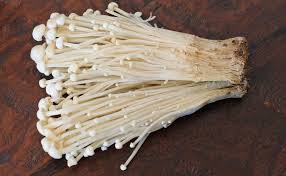
Enoki  (enokitaki or golden needle mushrooms) –  long, thin mushrooms grown in clusters on the stumps of the Chinese Hackberry tree and also on mulberry and persimmon trees. They exist in the wild and are also cultivated in a carbon dioxide-rich environment which ensures longer stems and a white color, as opposed to those found in the wild which are usually a darker brown. They are used in Asian cuisine, particularly in soups.

oyster mushrooms

Oyster mushrooms – scalloped-shaped mushrooms that grow like “shelves” on the bark of dead hardwood trees.  They have an anise-like aroma and can be gray, blue, pink, yellow or white. Occasionally tan caps can be found that grow up to 18 inches in diameter.  Generally, oyster mushrooms can be harvested two or three times from the same bark during the growing season. Oyster mushrooms are used in stir-fry recipes since they have a thin cap which cooks quickly.

button mushroom

White mushrooms (“button”) – most commercially available mushroom.  Freshest specimens have closed caps. Considered a universal mushroom, it has a mild, fresh flavor and may be cooked or eaten raw.

Portobello mushrooms

Portobellos (also baby bellas) – A cousin of the white mushroom, portobellos resemble an umbrella with thick, meaty flesh. The larger portobellos are often substituted for meat in sandwiches and vegetarian recipes.

Shitake mushrooms

Shitake – the second most widely cultivated mushroom in the world. The shiitake has a medium-sized, umbrella-shaped, tan to brown cap. The edges of the cap roll inwards. The underside and stem are white.

The Chinese were the first to cultivate this mildly fragrant mushroom more than six hundred years ago. Yield and quality varied from year to year until scientific techniques were developed. Japanese scientists developed a method of inserting pencil-shaped plugs of mycelial spawn grown from specially selected varieties into holes bored in oak logs. Today shitake mushrooms are grown in the United States as well as in Asian countries on a variety of materials containing cellulose, such as sawdust enriched with rice bran.

The following species are commonly harvested from the wild:

Porcini mushroom

Porcini (Pig mushroom) – sold fresh in Europe but is only available dried in the U.S. Known in Germany as “stone mushrooms”, in Russia as “white mushrooms”, in Albanian as “wolf mushrooms”, and in France as the “cèpe”.

changerelle mushrooms

Chanterelle – The yellow chanterelle is one of the best and most easily recognizable mushrooms, and can be found in Asia, Europe, North America and Australia. The cap is fleshy, with wavy, rounded cap margins tapering downward to meet the stem. The gills are not the usual thin straight panels hanging from the lower surface of the cap, as we see in the common store mushroom. Instead, the ridges are rounded, blunt, shallow, and widely spaced. At the edge of the cap they are forked and interconnected. The chanterelle’s aroma is variously described as apricot- or peachlike. The European and Asian varieties are about the size of a thumb, while North American varieties can weigh up to two pounds.

Morel mushroom

Morels – usually found in open scrub, woodland or open ground in early spring as the snow melts. They resemble tall pointed hats pitted with hollow spaces. Because of it’s appearance, it is sometimes referred to as the “sponge mushroom.”  Avoid morels whose caps are soft or mushy, or become granular when rubbed, as they old and wormy.

Maitake mushroom

Maitake (also “hen of the woods” or “sheep’s head”) – a large, hearty mushroom commonly found on or near stumps and bases of oak trees.

Matsutake mushroom

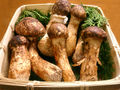
Matsutake (“pine mushroom”) – highly prized in Japanese cuisine, this mushroom grows most abundantly along the coast of the state of Washington. The cap is dark brown, scaled, and bell-shaped, and perches atop a massive round stem that looks like the cut section of a ripe sugar-cane stalk.With age, the cap and stem develop rusty stains where bruised. It is distinguished by a clean, spicy odor.

Buying and cleaning mushrooms

When buying mushrooms, look for firm caps and wholesome odors. If the mushrooms are beginning to decay, brown, slimy, smelly soft spots will appear on their surface. Avoid fragmenting gills or pore surfaces, and worm holes.

Do not clean mushrooms until you are ready to use them as they will deteriorate rapidly when wet. Cut off the lower portion of the stems, and brush gently with a nylon mushroom brush or wipe off with a damp cloth to remove any soil or growing medium. Rinse the gills, if exposed, as they can harbor insects. Dried mushrooms will keep in the refrigerator or freezer for several months and can be rehydrated in hot water when you are ready to prepare them.

Drying mushrooms

After cleaning the mushrooms, using as little water as possible, cut into slices about 3/8 inch thick. The slices should be of uniform width so that they will dry at the same speed. Plan to work on your mushrooms as soon as you bring them home. Do not leave them lying around to deteriorate. Avoid overlapping the slices on trays so that they will dry evenly.

If you do not have a commercial food dehydrator, you can dry your mushrooms in flats of wire screen doors, or plastic mesh above ovens, fireplaces, or heating units. One mushroom enthusiast used an abandoned refrigerator with a fan and a 75-watt light bulb.

When slices are completely dry, place them in metal cans or glass jars. If you are uncertain about their state of dryness, transfer them into paper bags, and hang in a dry, warm place over an oven or fireplace for a few days. Then put them into containers, adding a few dried bay leaves or a handful of whole black peppers to discourage insect pests. Be sure to label containers with the date and the species identification.

Health Benefits

Mushrooms, when exposed to UV light, convert ergosterol, a chemical found in large concentrations in many mushrooms, to Vitamin D2.

In Japan and China the chemicals found in shiitakes have been analyzed for medicinal properties, although some of their medicinal claims have not been proven. Extracts have been used in treating cancer, and claims have been made that they reduce cholesterol, enhance sexual power, prolong life, kill viruses, and improve circulation.

 Resources

http://www.mssf.org

Wikipedia