Category Archives: Food

Week 35: Nuts

mixed nuts

The word “nut” refers to any fruit which is a hard-shelled, edible kernel.  Nuts used for culinary purposes, however, also include “seeds” which are not botanically true nuts, and are described as “large, oily kernels found within a shell.”  I’ll discuss other seeds, like pumpkin seeds, sunflower seeds and sesame seeds in a future post.

History

Nuts, including the wild almond, prickly water lily, acorns, pistachio and water chestnuts were a major part of the human diet 780,000 years ago. There is evidence that prehistoric humans developed an assortment of tools to crack open nuts during the Pleistocene period.

Nutrition

Nuts have been linked to lower cholesterol, better heart health, weight control and lower cancer risk. They do contain a relatively large quantity of calories, however. But they offer unsaturated and monounsaturated fats, vitamins, and essential amino acids. Many nuts are good sources of vitamin E, vitamin B2, folate, fiber, and the essential minerals magnesium, phosphorus, potassium, copper, and selenium.  They are most healthy in their raw unroasted form, as up to 15% of the fats are destroyed during the roasting process. Unroasted walnuts have twice as many antioxidants as other nuts or seeds. Nuts used for food, whether true nut or not, are among the most common food allergens.

almonds

Almonds – At traditional Italian weddings, five almonds signify five wishes for the bride and groom: health, wealth, happiness, fertility, and longevity. Almonds, which are edible seeds of drupe (or stone) fruits contain the most fiber and are richest in vitamin E. Twenty years of dietary data collected on over 80,000 women from the Nurses’ Health Study shows that women who eat least 1 ounce of nuts, peanuts or peanut butter each week have a 25% lower risk of developing gallstones. One ounce is only 28.6 nuts or about 2 tablespoons of nut butter. High almond consumption of almonds, however, can interfere with calcium absorption.

brazil nuts

Brazil nuts – Did you know that in Brazil, it is illegal to cut down a Brazil nut tree? Botanically, it is actually a seed. The Journal of Medicinal Food suggests that brazil nuts combined with soy can inhibit prostate cancer by inhibiting the growth of cancer cells. Just one Brazil nut contains 100% of the recommended daily amount of the mineral selenium, which may also help prevent bone cancer and breast cancer. High levels of selenium can be harmful, however, so stick to one serving a day.
cashews

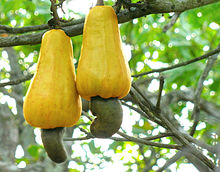
Cashews – A few years ago when my husband and I were hiking in a rain forest in Belize, we saw cashews growing. They are actually seeds of a fruit, the cashew apple, and hang from the bottom of the fruit! Cashews are particularly rich in iron and zinc. Iron helps deliver oxygen to all of your cells, which can prevent anemia, and zinc is critical to immune health and healthy vision. Cashews are also a good source of magnesium: One ounce provides almost 25 percent of your daily need. Magnesium may help improve memory and protect against age-related memory loss, according to a study in the journal Neuron.  In Panama, the cashew fruit is cooked with water and sugar for a prolonged time to make a sweet, brown, paste-like dessert

chestnuts

Chestnuts – Chestnuts depart from the norm culinary nuts in that they have very little protein or fat, their calories coming chiefly from carbohydrates. They are the only nut which contains vitamin C, however. In Modena, Italy, they are soaked in wine before roasting and serving, and are traditionally eaten on Saint Simon’s Day in Tuscany. They are not to be confused with horse chestnuts which are inedible because they contain a toxic substance. How do you tell the difference? Horse chestnut trees have “palmate” leaves (multiple leaves on one stem that fan out like a palm), whereas edible sweet chestnut trees have individual alternate leaves. However, edible chestnuts always have a tassel or point on the nut—something that your finger can feel as a point, and the horse chestnut has no point—it is smooth and roundish all over.

hazelnuts

Hazelnuts – During World War II, an Italian chocolate-maker named Ferrero couldn’t get enough cocoa, so he mixed in some ground hazelnuts instead. Then he made a soft and creamy version and Nutella was born! Hazelnuts are noted for their high level of monounsaturated fats which can improve cardiovascular health and control type 2 diabetes. They are also rich in the antioxidant vitamin E which may prevent cataracts, macular degeneration, maintain healthy skin and reduce risk of dementia.
 macadamias

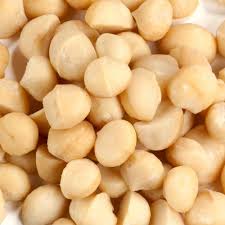
Macadamia nuts – The macadamia nut was discovered by British colonists in Australia in 1857.  William Herbert Purvis nurtured them and planted them as seedlings on the Big Island of Hawaii in 1882, where one of his original trees is still growing and producing fruit today. Macadamias are the white kernels of a follicle type fruit. A Pennsylvania State University study found that people who added macadamia nuts to their diets reduced their triglyceride, total cholesterol, and LDL cholesterol levels by 10%.
pecans

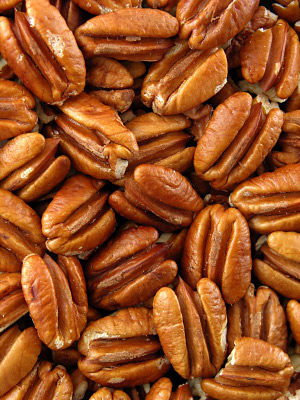
Pecans – The pecan is the only major nut tree that grows naturally in North America. The name “pecan” is a Native American word of Algonquin origin that was used to describe “all nuts requiring a stone to crack.” Early Native American tribes used to produce a fermented intoxicating drink from pecans called “Powcohicora” (where the word “hickory” comes from).  A Journal of Nutrition study found that consuming pecans can lower LDL cholesterol levels by as much as 33%. The vitamin E found in pecans may delay progression of degenerative neurological diseases like amyotrophic lateral sclerosis (ALS), also known as Lou Gehrig’s Disease.
peanuts

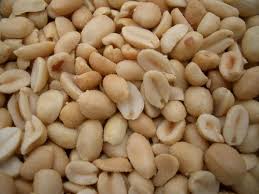
Peanuts – Eating peanuts at particularly nerve-wracking points during NASA missions is a long standing tradition at their Jet Propulsion Laboratory that dates back to the Ranger program in 1964. Now they eat peanuts on launch days for good luck! Botanically, these “nuts” are small sized, underground fruit pods and are actually legumes. Peanuts contain high levels of a antioxidant that is thought to reduce the risk of stomach cancer and resveratrol, which helps protect against cancers, heart disease, degenerative nerve disease, Alzheimer’s disease, and viral/fungal infections.

pine nuts

Pine nuts – The effects of pine nuts as an aphrodisiac were well known by the Greeks and Romans. Pliny mentioned them in his book The Loving Arts and a second-century medical practitioner recommended them mixed with honey to relieve “sexual woes.” We are most familiar with pine nuts as one of the ingredients in pesto, along with garlic, basil, and olive oil. Pine nuts are seeds from several varieties of coniferous trees. Pine nuts contain the essential omega-6 fatty acid which triggers the release of hunger-suppressant enzymes and recent research has shown its potential use in weight loss by curbing appetite.  They are the richest source of manganese, which helps the body develop resistance against infectious agents and scavenge harmful oxygen-free radicals. Furthermore, pine nuts are one of gluten free tree nuts, and therefore, are a popular ingredient in the preparation of gluten-free diets.

pistachios

Pistachios – Greece has a long-standing tradition of treating pistachios as exclusively royal food. The pistachio honey cake that is famous for its combination of the nut with honey, is said to have originated in the Greek island of Aegina. Greeks celebrate National Pistachio Day with a festival each year. Pistachios are the seeds from a drupe or stone fruit like the almond. The University of Texas M.D. Anderson Cancer Center researchers found that eating just two ounces of pistachios daily may reduce lung cancer risk because they contain an antioxidant that is a form of cancer-fighting vitamin E. They are rich in potassium, essential for healthy nervous system and muscles, and a good source of vitamin B6, which can improve your mood and fortify your immune system.

walnuts

Walnuts – Walnuts have been linked to love and fertility throughout history and their reputation as an aphrodisiac dates back to ancient Greece and Rome. In addition to containing the most antioxidants of all nuts which help protect your body from the cellular damage that contributes to heart disease, cancer, and premature aging, walnuts are the richest in omega-3 fatty acids which fight inflammation.

Resources
http://www.everydayhealth.com

http://www.health.com

http://www.mayoclinic.org

http://www.nutrition-and-you.com

http://www.worldshealthiestfoods.com

Week 34: Apples

apple tree

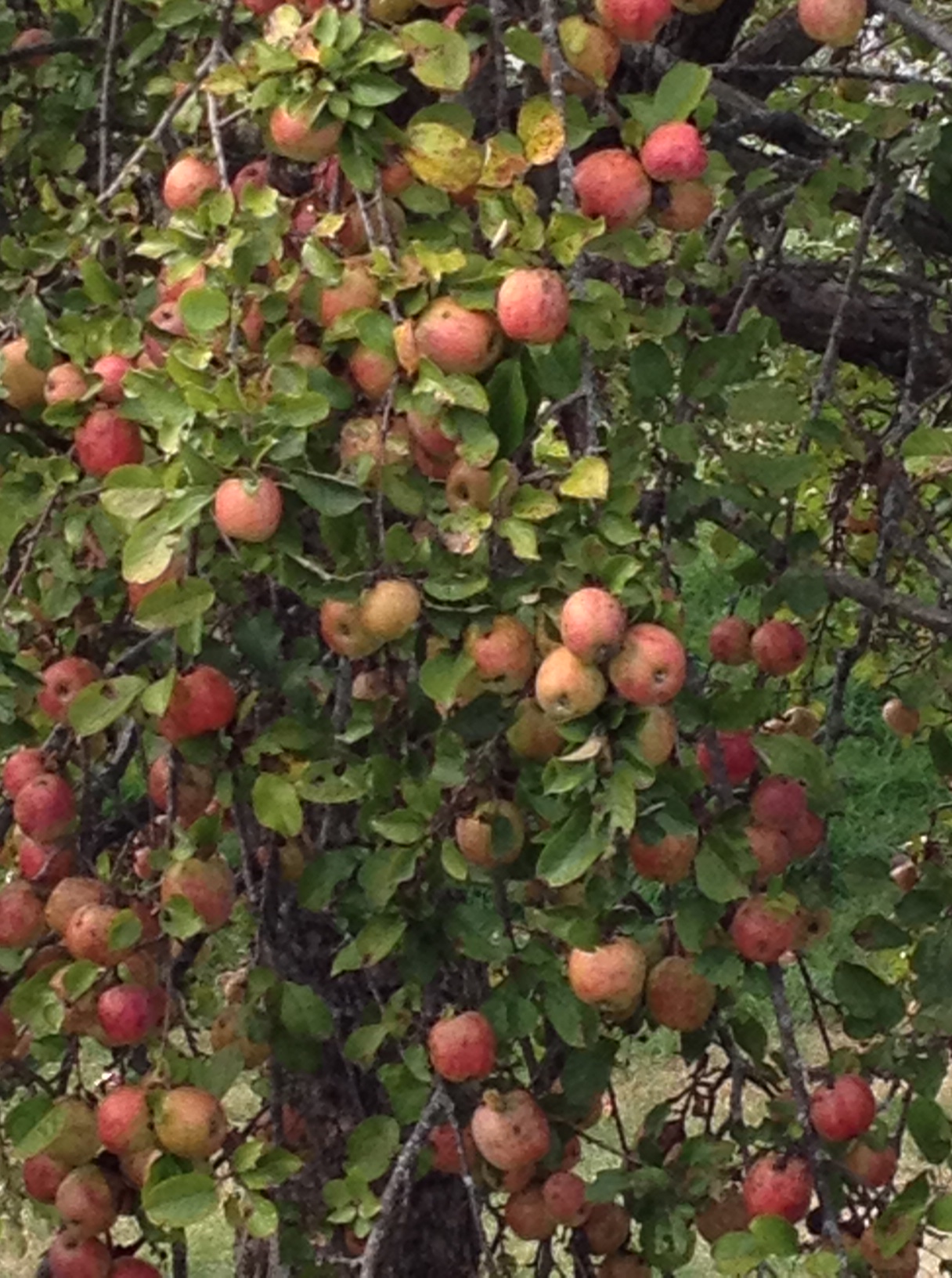
Apples are the fruit of the apple tree (Malus domestica) a deciduous tree which is a member of the rose family. Archeologists have found evidence that humans have been enjoying apples since at least 6500 B.C. The apple tree originated in Central Asia in southern Kazakhstan, Kyrgyzstan, Tajikistan, Xinjiang, China. Apples were brought to North America by Europeans, and the first apple orchard on the North American continent was planted in Boston by Reverend William Blaxton in 1625. In colonial times, apples were called “winter banana” or “melt-in-the-mouth.”

Mythology

Apples appear in many religious traditions, often as a mystical or forbidden fruit. For instance, in Greek mythology, the Greek hero Heracles, was required to travel to the Garden of the Hesperides and pick the golden apples off the Tree of Life growing at its center. The Greek goddess of discord, Eris, became disgruntled after she was excluded from the wedding of Peleus and Thetis. In retaliation, she tossed a golden apple inscribed with “Kaliste” meaning ‘For the most beautiful one’, into the wedding party. Three goddesses claimed the apple: Hera, Athena, and Aphrodite. Paris of Troy was appointed to select the recipient. After being bribed by both Hera and Athena, Aphrodite tempted him with the most beautiful woman in the world, Helen of Sparta. He awarded the apple to Aphrodite, thus indirectly causing the Trojan War. In Norse mythology, the apple is linked to eternal youthfulness. Though the forbidden fruit of Eden in the Book of Genesis is not identified, popular Christian tradition has held that it was an apple that Eve coaxed Adam to share with her. As a result, in the story of Adam and Eve, the apple became a symbol for knowledge, immortality, temptation, the fall of man into sin, and sin itself. The larynx in the human throat has been Adam’s apple because of a notion that it was caused by the forbidden fruit remaining in the throat of Adam.

Cultivation, Grading and Storage

There are more than 7,500 varieties of apples. The science of growing apples is called “pomology.” Because apples do not breed true when planted as seeds, grafting is generally used to produce new apple trees. The rootstock used for the bottom of the graft can be selected to produce trees of a large variety of sizes, as well as changing the winter hardiness, insect and disease resistance, and soil preference of the resulting tree. The skin of ripe apples is generally red, yellow, green, pink, or russetted although many bi- or tri-colored varieties may be found. Apple trees must cross-pollinate to develop fruit, and honey bees are most commonly used.

If you like the apples made by a particular tree, and you want to make more trees just like it, you have to clone it: Snip off a shoot from the original tree, graft it onto a living rootstock, and let it grow. This is how apple varieties come into existence. Every McIntosh is a graft of the original tree that John McIntosh discovered on his Ontario farm in 1811, or a graft of a graft. Every Granny Smith stems from the chance seedling spotted by Maria Ann Smith in her Australian compost pile in the mid-1800s.

About 63 million tons of apples were grown worldwide in 2012, with China producing almost half of this total. The United States is the second-leading producer, with more than 6% of world production. The apple variety ‘Red Delicious’ is the most widely grown in the United States with 62 million bushels harvested in 2005.

Commercially grown apples are packed in 40-pound fiberboard cartons (most packers put in at least 42 pounds to accommodate a little moisture loss in shipment). And they are designated by count — the number of apples in each carton. The largest packed size is 48, which means there are 48 apples in each box — a very large piece of fruit.

Until the 20th century, farmers stored apples in frost-proof cellars during the winter for their own use or for sale. Improved transportation of fresh apples by train and road replaced the necessity for storage. In the 21st century, long-term storage again came into popularity, as “controlled atmosphere” facilities were used to keep apples fresh year-round. Controlled atmosphere facilities use high humidity, low oxygen, and controlled carbon dioxide levels to maintain fruit freshness. For home storage, most varieties of apple can be held for approximately two weeks when kept at the coolest part of the refrigerator (i.e. below 5 °C). Some types, including Granny Smith and Fuji, can be stored up to a year without significant degradation.

Nutrition

According to the U.S. Department of Agriculture, a typical apple serving weighs 242 grams and contains 126 calories with significant dietary fiber and a modest amount of Vitamin C. Many beneficial health effects are thought to result from eating apples; however, two types of allergies are attributed to various proteins found in the fruit. One form of apple allergy, often found in northern Europe, is called birch-apple syndrome, and is found in people who are also allergic to birch pollen. In other areas, such as the Mediterranean, some individuals have adverse reactions to apples because of their similarity to peaches.

apple peeler

Culinary Uses

Apples are often eaten raw, but can also be found in many prepared foods (especially desserts) and drinks. Apples can be canned or juiced. They are often eaten baked or stewed, and they can also be dried and eaten or reconstituted (soaked in water, alcohol or some other liquid) for later use. Apples are cooked to make applesauce, apple butter and apple jelly. They are milled or pressed to produce apple juice, which may be drunk unfiltered (called apple cider in North America), or filtered. The juice can be fermented to make cider (called hard cider in North America), and vinegar. Through distillation, various alcoholic beverages can be produced, such as applejack, Calvados and apfelwein. McIntosh and Granny Smith apples are considered the best apples for baking.

Resources

Ellis Davidson, H. R. Gods And Myths Of Northern Europe,

Ellis Davidson, H. R. Gods And Myths Of Northern Europe,

Jules Janick, James N. Cummins, Susan K. Brown, and Minou Hemmat. “Chapter 1: Apples”. In Jules Janick and James N. Moore. Fruit Breeding, Volume I: Tree and Tropical Fruits, 1999.

http://www.bestapples.com (Washington State Apple COmmission)

http://www.eatingwell.com

http://www.illinois.edu

http://www.mothejrones.com

Week 33: Ginseng

American Ginseng

My daughter, Gretchen, and I were roaming around Chinatown in San Francisco recently and happened to enter Superior Trading Company. The store is filled with Chinese medicines and herbs – some in barrels, some in glass jars, and many inside glass front cabinets. Everything was fascinating to look at, but descriptions were written in Chinese characters and we had to ask questions about the products and their uses. Ginseng, in particular, was plentiful and was offered in many forms. We’d heard of ginseng before and of its magical restorative properties. But what was it really?

I have since learned that ginseng is a slow-growing perennial herb with fleshy roots, belonging to the genus Panax. The genus name Panax means “all heal” in Greek and refers to the herb as a panacea for many ailments. The aromatic root looks like a small parsnip that forks as it matures, resemblinga “Y” or the shape of a person. The plant grows 6″ to 18″  tall, usually bearing three leaves, each with three to five leaflets two to five inches long. The root of the plant is the part that is used. American ginseng (Panax quinquefolius) grows in North America (United States and Canada) and Asian ginseng (Panax ginseng) grows in Asia (primarily in South Korea and China). Currently, Wisconsin produces nearly 95% of American ginseng. (The owners of Superior Trading Company were the first to export American Ginseng from Wisconsin to China in 1959.)

Ginseng root is red, white or wild and is most often available dried, whole, or sliced. Red ginseng has been peeled, heated through steaming at standard boiling temperatures of 100 °C (212 °F), and then dried or sun-dried. White ginseng, native to America, is fresh ginseng which has been dried without being heated. It is peeled and dried to reduce the water content to 12% or less. White ginseng air-dried in the sun may contain less of the therapeutic constituents. It is thought by some that enzymes contained in the root break down these constituents in the process of drying. Drying in the sun bleaches the root to a yellowish-white color. Wild ginseng grows naturally and is relatively rare due to its high demand in recent years. Wild ginseng can be either Asian or American, and can be processed to be red ginseng. There are ginseng growing programs in a number of states, including in Maine, where the ginseng certification program facilitates the export of American ginseng while meeting the requirements of the Convention for International Trade of Endangered Species of Flora and Fauna (CITES).

History

Panax ginseng was discovered over 5000 years ago in the mountains of Manchuria, China. Although probably originally used as food, it quickly became revered for its strength-giving and rejuvenating powers and its human shape became a powerful symbol of divine harmony on earth. The benefits of ginseng were first documented during China’s Liang Dynasty (220 to 589 AD). Chinese legend has it that early emperors used to use it as a remedy for all illnesses and not only consumed it, but also used it in soaps, lotions and creams.

In 1716 a Jesuit priest, working among the Iroquois in Canada, heard of a root highly valued by the Chinese. Because he felt the environment of French Canada closely resembled that of Manchuria, he began searching for examples of this amazing herb growing in the Canadian hardwood forests and after three months of searching he discovered American ginseng growing near Montreal.

Medical Uses & Warnings

Ginseng root is used energy drinks and herbal tea as an aphrodisiac, stimulant, type II diabetes treatment, to boost energy, lower blood sugar and cholesterol levels, reduce stress and cure sexual dysfunction in men.

The optimal dose of ginseng is two to three grams per day, or a slice of root about the size of an almond sliver, or if using powder, a capsule of powder. The root can be brewed and taken as tea, simmered for one hour in chicken soup to make a healing broth, aged for three months in a quart of liquor and consumed as a nightcap or it may be simply chewed.

Doctors do not recommend taking ginseng along with antidepressants which are called monoamine oxidase inhibitors (MAOIs), because it can cause manic episodes and tremors. Ginseng should also never be taken along with blood pressure medication, heart medications or with drugs that affect blood clotting (such as warfarin or aspirin.)

Symptoms of gross overdose with Panax ginseng may include nausea, vomiting, restlessness, urinary and bowel incontinence, fever, increased blood pressure, increased respiration, decreased sensitivity and reaction to light, decreased heart rate, cyanotic (blue) facial complexion, red facial complexion, seizures, convulsions, and delirium.

Resources

“As ginseng prices soar, diggers take to the backcountry”. Fox News. 2012-09-28.

Chen, John K., and Tina T. Chen. Chinese Medical Herbology and Pharmacology.

http://www.csiginseng.com

http://www.maine.gov

http://www.medicalnewstoday.com

Week 32: Corn

corn

Summer’s harvest wouldn’t be complete without golden ears of corn. Whether roasted on the grill or steamed on the stove, each bite of corn is like a hot, buttered burst of sunshine!

Corn is classified as a grain and was domesticated around 9,000 BC in Central America. It takes its name “maize” from the Spanish word “maiz.” Corn grows on stalks 8-12 ft high as “ears” (cobs covered with individual kernels about the size of peas) which are protected by corn silk and husks. Native Americans first planted maize in raised rows and used the stalks to support beans, which supplied nitrogen and nutrients to the soil. Varieties of squash provided ground cover to stop weeds and inhibit evaporation by providing shade over the soil. Today, corn in North America is planted in rows to allow easier cultivation and with a two-crop rotation, often with alfalfa planted every other year.

U.S. farmers grow about 40% of all corn produced worldwide today. An important region of the U.S. is still identified as the “Corn Belt.” This region is typically defined as including Iowa, Illinois, the eastern parts of Nebraska and Kansas as well as North and South Dakota, the southern part of Minnesota, and parts of northern Missouri as well as Ohio and Indiana. Introduced into Africa by the Portuguese in the 16th century, maize has become Africa’s most important staple food crop.

Most of us are familiar with yellow or white corn, but did you know it can also be blue, black, red, pink or purple? Some varieties of corn are bred to produce the “baby corn” used in Asian cuisine. Corn flour lacks the “gluten” of wheat and produces baked goods which do not rise.

Corn is eaten in a variety of ways and is used to make tortillas, polenta, cornbread, hominy, grits, cereals such as corn flakes, popcorn and chips. Corn is also used to produce high fructose corn syrup (a sugar substitute used in processed foods), corn oil, in fermentation and distilleries for making Bourbon Whiskey, for animal feed, biofuels, home heating and plastics.

Ethanol is being used in concentrations of 10% or less as an additive in gasoline for motor fuels to increase the octane rating, lower pollutants, and reduce petroleum use. Home-heating furnaces have been developed which use corn kernels as fuel. They feature a large hopper that feeds the uniformly sized maize kernels (or wood pellets) into the fire.

The resin polylactic acid (PLA), derived from corn starch, is formed into containers and packaging for food and consumer goods. For a few years, natural foods purveyors such as Newman’s Own Organics and Wild Oats have been quietly using some PLA products, but the material got its biggest boost when Wal-Mart, the world’s largest retailer, announced in 2006 that it would sell some produce in PLA containers. Producing PLA uses 65 percent less energy than producing conventional plastics, it generates 68 percent fewer greenhouse gases, and contains no toxins.

Nutrition

Corn is high in antioxidants, but each variety of corn has a different combination of phytonutrients. Yellow corn has carotenoids and blue corn has anthocyanins. Corn is high in protein and is also a good source of fiber and contains vitamins B6, niacin, phosphorus and manganese. Corn supports the growth of healthy bacteria in our large intestines and helps lower the risk of colon cancer.

High Fructose Corn Syrup

Forty percent of all processed, pre-packaged foods sold in U.S. groceries currently contain some processed component of corn, although this component is most often high fructose corn syrup (HFCS). There is significant concern that high fructose corn syrup contributes to obesity, diabetes, liver disease and heart disease. It is also been shown to have contaminants such as mercury. Because it is less expensive to produce than conventional sugar, it is used extensively in food products today. Did you know there is the equivalent of 17 teaspoons in one 20 oz soft drink?

Genetically Engineered Corn

Over 70% of all corn found in U.S. grocery stores has been genetically modified in the form of herbicide-tolerant, or HT corn, or the form of insect-resistant, or Bt corn. (Bt corn gets its name from the transfer of a gene from the soil bacterium, Bacillus thuringiensis, into the corn. A protein toxin produced by this bacterium helps to kill certain insects that might otherwise eat the corn.) While there is no large scale human research on genetically engineered corn and its health impact, there is concern about the introduction of novel proteins into food and their potential for increasing risk of adverse reactions, including food allergies. One way to avoid these potential risks is to select certified organic corn, since GE modifications are not allowed in certified organic food.

Resources

Mann, Charles. Cotton (or Anchovies) and Maize.

“The casava transformation in Africa”. The Food and Agriculture Organization of the United Nations (FAO).

http://www.smithsonianmag.com

http://www.sweetsurprise.com

http://www.whfoods.com

Week 31: Olives

Olives

Olives have been eaten for food since ancient times. Olive trees. with their oblong, silvery leaves, have been cultivated by humans for more than 8,000 years. They are native to Syria and Asia Minor, although most of our domestic olives come from California today. The olive branch was often a symbol of abundance, glory and peace. The leafy branches of the olive tree were ritually offered to deities and powerful figures as emblems of benediction and purification, and they were used to crown the victors of friendly games and bloody wars. Olive oil has long been considered sacred. Today, it is still used in many religious ceremonies. Over the years, the olive has been the symbol of peace, wisdom, glory, fertility, power and purity. The humble olive was inspiration for the following poem:

Olives

by A. E. Stallings

Sometimes a craving comes for salt, not sweet,
For fruits that you can eat
Only if pickled in a vat of tears—
A rich and dark and indehiscent meat
Clinging tightly to the pit—on spears

Of toothpicks maybe, drowned beneath a tide
Of vodka and vermouth,
Rocking at the bottom of a wide,
Shallow, long-stemmed glass, and gentrified,
Or rustic, on a plate cracked like a tooth,

A miscellany of the humble hues
Eponymously drab—
Brown greens and purple browns, the blacks and blues
That chart the slow chromatics of a bruise—
Washed down with swigs of barrel wine that stab

The palate with pine-sharpness. They recall
The harvest and its toil,
The nets spread under silver trees that foil
The blue glass of the heavens in the fall—
Daylight packed in treasuries of oil,

Paradigmatic summers that decline
Like singular archaic nouns, the troops
Of hours in retreat. These fruits are mine—
Small bitter drupes
Full of the golden past and cured in brine.

Cultivation

Olive trees are grown not from seeds, but rather from cut roots or branches buried in the soil and allowed to root, or grafted onto other trees. The olives are the fruit of the olive tree with a single, large seed inside. Green olives are usually picked at the start of the harvest season, in September and October in the northern hemisphere. They have a firm texture and lovely, nutty flavor. Black olives are picked in November and December, sometimes as late as January, and they’re softer, richer, and meatier. Olives are full of the compound oleuropein, which give them an intense bitterness. It’s the curing process that turns that bitterness into the flavors with the sweet, salty, pungent flavor, depending on the variety, with which we are familiar.

Curing

Olive curing is a lot like fermentation—it’s the conversion of the olive’s natural sugars into lactic acid. Harsh-tasting oleuropein and phenols get leached from the fruit in one of five ways.

  • Brine-curing: Fully ripened, dark purple or black olives are gradually fermented in salt water brine which may take up to a year. Brine-cured olives are often sweet and full of depth, since the brine acts to intensify the fruit’s natural flavors.
  • Water-curing: Soaking, rinsing in plain water, and repeated many, many times is the slowest method of all, and is rarely done. The curing process occasionally begins in a water bath, and then is finished in a seasoned brine.
  • Dry-curing: These olives get packed in salt for a month or longer. The salt pulls the moisture and bitterness from the olives. The salt is then removed, and sometimes the olives get bathed in olive oil to keep them juicy and plump. Dry-cured olives have a deeply concentrated flavor, and a wrinkly, prune-like appearance.
  • Lye-curing: Large commercial olive producers use lye-curing because it is most time-conserving and cost-effective. The process, which was invented in Spain, calls for immersing raw olives in vats of alkaline lye solution. But the fast-acting lye often leaves a chemical aftertaste and a bland-flavored olive.
  • Sun/air curing: In some rare cases, olives can be fermented either on the branch or, once picked, by basking in the sunshine.

Varieties of Olives

Kalamata

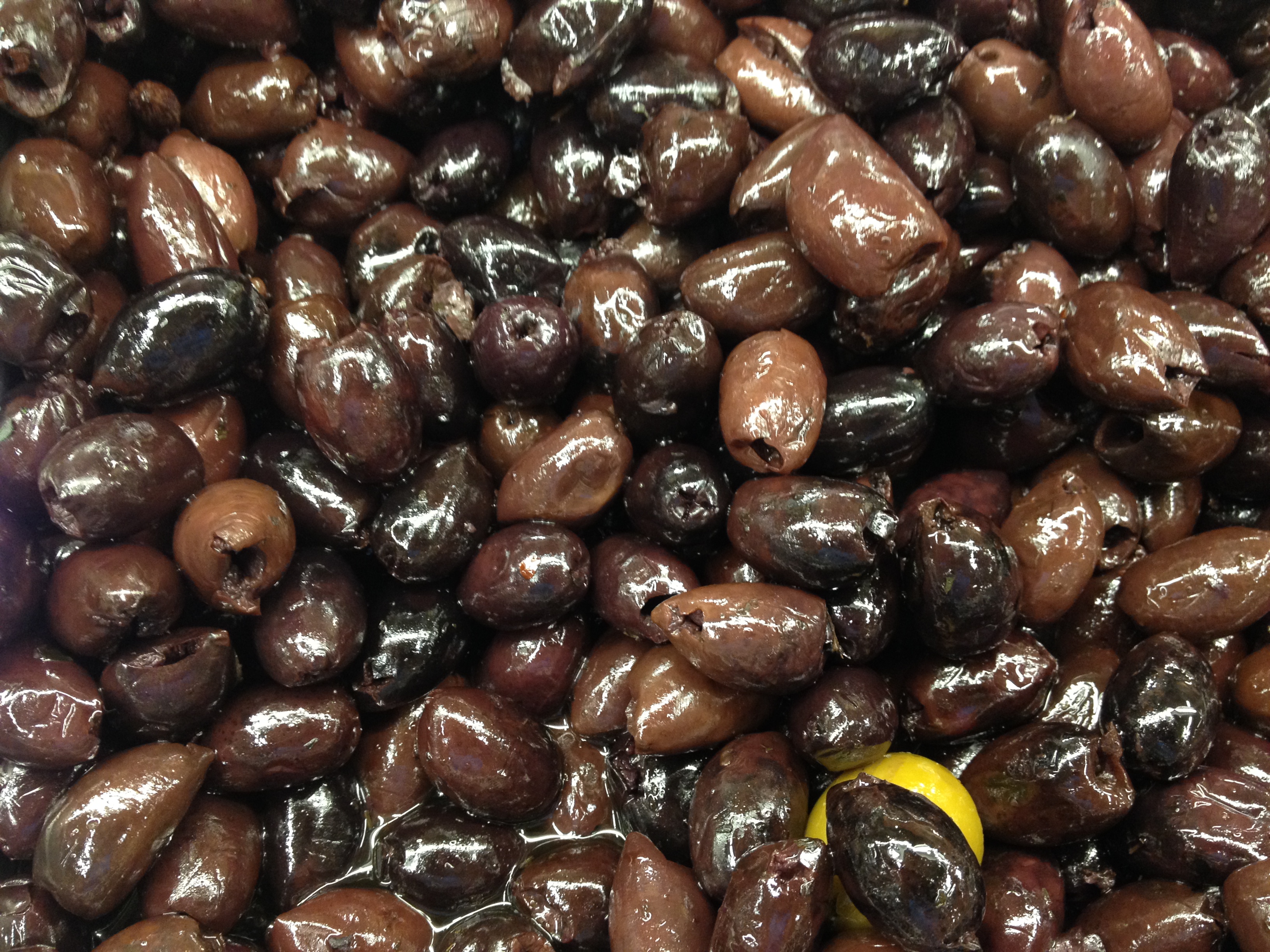
The king of Greek table olives, beloved and popular Kalamatas are deep purple, with tight, snappy, shiny skin, and a pretty almond shape. They’re typically preserved in red wine vinegar, red wine, and/or olive oil for a distinctive rich, smoky, fruity flavor.

Castelvetrano

Castelvetrano olives are Italy’s most popular snack olive. Bright green, they’re often referred to as dolce (sweet), and come from Castelvetrano, Sicily, from the olive variety nocerella del belice. They have a Kermit-green hue, meaty, buttery flesh, and a mild flavor.

Cerignola

These gigantic green olives are harvested in Cerignola, in Italy’s Puglia region, the heel of the boot. They are crisp and fantastically buttery. Their hefty size makes them easy to stuff with cheese.

Nyon

These petite, jet-black olives from the south of France dry cured, then aged in brine. They are plump, wrinkly olives, a little bitter, and loaded with aromatic flavor.

Nicoise

Grown on a variety of olive tree called “Le Cailletier,” small Niçoise olives are a crucial ingredient in classic dishes of the French Riviera—like Salad Niçoise and tapenade. The Niçoise has an enticingly herbal fragrance with faint notes of licorice.

Liguria

Also called Taggiasca olives, this petite variety is grown in Liguria, in Italy’s northwestern-most region, a few miles away from France’s Niçoise olive region, and the olives are indeed similar. They’re usually cured with an aromatic mixture of bay leaves, rosemary, and thyme.

Gaeta

These small, purplish-brown, wrinkled olives from Puglia have soft, tender flesh and a tart, citrusy taste. Gaetas can be either dry-cured (shrivelly, chewy) or brine-cured (plump, juicy).

Picholine

These torpedo-shaped French green olives are wonderfully crisp and crunchy, with a tart, nutty, anise flavor.

Gordal

Gordal means “fat one” in Spanish. These are big, fat olives, with plenty of firm, meaty richness. Grown in Andalucía, Spain, where tough Gordal trees thrive in the dry climate, these are beloved tapas olives.

Alfonso

While Alfonso olives are traditionally considered Chilean, the province of Tacna, in the foothills of the La Yarada mountains, where they originated, has been under Peruvian rule since 1929. These are huge, deep purple olives that are brine-cured, then macerated in red wine. They are supple, juicy and fleshy, with a hint of sour bitterness.

Mission

Although originating in Spain, Mission olive trees have flourished in California since the 1700’s. Most of the yield goes to make olive oil, but black oil-cured and green brine-cured table olives are both mild, grassy, and bright in flavor.

Manzanilla

This familiar, friendly, oval-shaped olive from Spain is brine-cured, with a crisp texture and a slightly smoky, nutty flavor. They’re often stuffed with pimientos, or cracked and dressed with olive oil and fresh garlic.

Beldi

Morocco produces hundreds of varieties of olives, but exports only a few. They are dry-cured and wildly, intensely flavorful.

Amfissa

From the hills by Delphi, the legendary home of the ancient Greek oracles, these hand-picked olives are harvested from their branches when very ripe. They are slowly brined to coax out a mild, fruity flavor and a melt-in-your-mouth softness.


Resources

http://www.seriouseats.com

http://www.foodsubs.com

http://www.pbs.org

Week 30: Tomatoes

Tomatoes

Spring is just around the corner and it’s time to plan your vegetable garden. Naturally, no garden is complete without tomatoes.  Which varieties should you plant?  Heirloom tomatoes have by far the best flavor. Before you purchase potted tomato plants from the hardware store, consider starting your plants from organic seeds. Seed Savers, (www.seedsavers.org) dedicated to protecting endangered food crops and agricultural heritage through its seed bank  has a wide variety of organic, heirloom tomato seeds that you can order.

History

Tomatoes, originally from South America and the Galapagos Islands,  were brought back to Europe in the form of seeds by Cortez in 1519.   The Italian name for the tomato is pomodoro, meaning “apple of love” or “golden apple,” because the first to reach Europe were yellow varieties.  Initially, they were planted as ornamental plants, but were not eaten because they were thought to be poison as the plant was a member of the deadly Solanaceae, or Nightshade family. The leaves of the tomato plant, but not its fruits, do contain toxic alkaloids.

There are thousands of varieties of tomatoes in a vast array of colors, shapes and sizes. The most common shapes are round (Beefsteak and globe), pear-shaped (Roma) and the tiny cherry-sized (Cherry and Grape).  There are also a number of heirloom varieties that are not only red, but also yellow, pink, orange, green, purple, or brown in color.

The San Marzano plum tomato, an heirloom variety grown in volcanic soil on the slopes of Mt.Vesuvius near the southern Italian city of Naples, is probably the most famous tomato grown in Italy.  It was supposedly a gift from the Kingdom of Peru to the Kingdom of Naples in 1770.  Thinner and more pointed than the Roma tomatoes we see in the U.S., it has a firm pulp, a stronger tart flavor and fewer seeds. The San Marzano, Roma, Napoli and Marena varieties are mostly used for canning or bottling. The “pomodorino” (cherry tomato or vine tomato) grown mainly in the south in Sicily, Puglia and Calabria are used in salads and quick pasta sauces.

Cultivation

Tomato  plants like a warm, sunny location with well-drained soil. They typically grow to 3–10 feet in height and have a weak stem that often sprawls over the ground and vines over other plants, if not staked.  It is a perennial  in its native habitat, although often grown outdoors in temperate climates as an annual.

About 161.8 million tons of tomatoes were produced in the world in 2012. China is the largest commercial producer of tomatoes followed by India and the United States. California accounts for 90% of U.S. production of  plum or processing tomatoes and 35% of world production.

At home, companion planting  in the garden can help enhance growth, flavor and protect plants from pests. Borage, with its fresh, cucumber-like flavor, is supposed to protect tomatoes from tomato hornworms. Chives, onions, garlic and marigolds produce a smell that repels pests,

Culinary Uses

Although it is botanically a fruit, the tomato  is considered a vegetable for culinary purposes. It is eaten  raw in salads or cooked as an ingredient in a variety of dishes, sauces, and beverages. Unripe green tomatoes can also be breaded and fried, used in salsas or pickled. The high acidic property of tomatoes makes them especially easy to preserve in home canning.  The fruit is also preserved by drying, often in the sun, and sold either in bags or in jars as “sun dried tomatoes” packed in oil.

Health

Tomatoes are good sources of Lycopene, one of nature’s most powerful antioxidants.  Tomatoes are an excellent source of vitamin C, vitamin A, and vitamin K, Vitamin E and numerous other vitamins and minerals.

Buying and Storing

When you select tomatoes for purchase, smell the blossom (not stem) end. The most flavorful ones will have a rich tomato aroma. If they are not yet ripe, keep them in a sunny window sill until they are ready to eat. Remember, too, that it is best not to refrigerate tomatoes or their texture becomes mushy and the flavor diminishes.

Resources

http://www.treehugger.com

http://www.food.com

http://www.whfoods.com

Week 29: Edible Flowers

Edible flowers2

Winter in New England has been long and cold this year, but warmer weather is just around the corner.  Nothing heralds spring so much as tender young blossoms emerging from the soil!  Many of these flowers are edible and add color, flavor, aroma and elegance to entrees, salads and desserts.  I recently ordered an Edible Flower Garden kit from http://www.bambeco.com and can hardly wait for it to arrive!

The concept of using flowers in cookery is not new. Cooking with flowers dates to Roman times, and to the cuisine of China, India, and the Middle East. The Victorians, who associated edible flowers with elegance, candied violets to decorate cakes and desserts. Italian and Hispanic cultures gave us stuffed zucchini blossoms. Chartreuse, a classic green liqueur developed in France in the 17th century, uses carnation petals as one of its secret ingredients.

It was common to dry the petals and include them in tea blends. Popular tea flowers were hibiscus, rose, jasmine and bee balm. Bee balm was used as a tea substitute when black tea became unavailable during the Boston Tea Party in 1773. To preserve violets, medieval monks made a sweet syrup from the petals.

The most common flowers used in cooking are:

Alliums (leeks, chives, garlic, garlic chives) – Known as “onion flowers,” they include the blossoms from onions, garlic, chives, ramps, and shallots. Their flavors range from mild onions and leeks right through to strong onion and garlic. All parts of the plants are edible.

Anise Hyssop (Agastache foeniculum) – Both flowers and leaves have a delicate anise or licorice flavor, which remind some people of root beer. The blossoms are excellent in salads and make attractive plate garnishes and are often used in Chinese cuisine.

Basil (Ocimum basilicum) – Blossoms are bright white, pale pink, or a delicate lavender. The flavor of the flower is milder, but similar to basil leaves.  Some varieties have different milder flavors like lemon and mint.

Bee Balm (Monarda didyma) – Also called Wild Bergamot, Wild Oswego Tea, or Horsemint, wild bee balm tastes like oregano, mint or citrus like lemon and orange. It is the main ingredient in Earl Gray Tea.

Begonias (Begonia X tuberosa) – Tuberous begonia petals are used in salads and as a garnish with have a citrus-sour taste. Stems, also, can be used in place of rhubarb. The flowers and stems contain oxalic acid and should not be consumed by individuals suffering from gout, kidney stones, or rheumatism.

Calendula (Calendula officinalis) – Also known as marigolds, the calendula had golden-range hued petals and flavors that range from spicy to bitter, tangy to peppery. Only the petals are edible and add a yellow tint to soups, spreads, and scrambled eggs. Sprinkle them on soups, pasta or rice dishes, herb butters, and salads. The sharp taste resembles saffron (also known as Poor Man’s Saffron).

Chrysanthemums (Chrysanthemum coronarium) – Tangy, slightly bitter, ranging in colors from red, white, yellow and orange, chrysanthemum petals range in taste from faint peppery to mild cauliflower. Blanche the petals first and then scatter them on a salad. Always remove the bitter flower base. Young leaves and stems of the Crown Daisy, also known as Chop Suey Greens or Shingiku in Japan, are widely used in oriental stir-fries and as salad seasoning.

Cilantro/Coriander (Coriander sativum) – Like the leaves and seeds, the flowers have a strong herbal flavor. Use leaves and flowers raw as the flavor fades quickly when cooked. Sprinkle to taste on salads, bean dishes, and cold vegetable dishes.

Dandelions (Taraxacum officinalis) Dandelions are members of the daisy family. Flowers are sweetest when picked young. They have a sweet, honey-like flavor. Mature flowers are bitter. Young leaves taste good steamed, or tossed in salads. When serving a rice dish use dandelion petals like confetti over the rice.

Fennel (Foeniculum vulgare) – Fennel has spiky yellow flowers that have a mild anise flavor. Use with desserts or cold soups, or as a garnish with your entrees.

Ginger (Zingiber officinale) – Petals from the white variety of ginger is very fragrant and has a gingery taste on the tongue. They may be eaten raw or the tender, young shoots can be cooked.

Impatiens (Impatiens wallerana) – Impatiens, which have a sweet flavor, can be used as a garnish in salads or floated in drinks.

Lavender (Lavandula angustifolia) – Lavender flowers look beautiful and have a sweet, floral flavor, with lemon and citrus notes. They can be added to a glass of champagne, served with chocolate cake, or used as a garnish for ice creams. Lavender lends itself to savory dishes also, from hearty stews to wine-reduced sauces. Diminutive blooms add a mysterious scent to custards, flans or sorbets. NOTE:  Do not purchase and consume lavender oil, as it may be poisonous.

Lemon Verbena (Aloysia triphylla) -\Lemon verbena sports diminutive cream-colored citrus-scented blossoms. Leaves and flowers can be steeped as an herbal tea, and used to flavor custards and flans.

Mint (Mentha spp) – The flavor of mint flowers are, as their name implies “minty,” but with different overtones depending variety. Mint flowers and leaves are great in Middle Eastern dishes.

Nasturtiums Tropaeolum majus) – Nasturtiums are my favorite edible flowers.  They come in brilliant sunset colors with peppery flavors. Blossoms have a sweet, spicy flavor similar to watercress. Stuff whole flowers with savory mousse. Leaves add peppery tang to salads. Pickled seed pods are less expensive substitute for capers. Use the entire flower to garnish platters, salads, open-faced sandwiches, and savory appetizers.

Pansy (Viola X wittrockiana) – Pansies have a slightly sweet green or grassy flavor. If you eat only the petals, the flavor is extremely mild, but if you eat the whole flower, there is a winter, green overtone. Use them as garnishes, in fruit salads, green salad, desserts or in soups.

Violets (Viola species) – Sweet, perfumed flavor. Related flowers, Johnny jump-ups or violas, and pansies now come in colorful purples and yellows to apricot and pastel hues. They are great in salads or as a garnish for desserts. They can also be crystallized. The heart-shaped leaves are edible, and tasty when cooked like spinach.

NOTE:  Do not use herbicides and pesticides on plants whose blossoms you want to use in the kitchen, and NEVER collect flowers from along the roadside or from the florist.  Not all flowers are edible and could make you sick if you digest the wrong ones. Remove pistils and stamens before using.  Only the blossom petals should be consumed.

Resources

homecooking.about.com

http://www.gardenguides.com

http://www.whatscookingamerica.net

http://www.wikipedia.org


Week 28: Eggs

Eggs

Eggs have been eaten by humans for thousands of years.  They can be cooked in a variety of ways and are commonly eaten for breakfast, are healthy additions to soups, salads, sandwiches, entrees, and are essential for baking.

Eggs are laid by females of many different species, including birds, amphibians, reptiles and fish. The most commonly consumed egg is from the chicken, although duck, goose and quail eggs are prominent as well. The largest bird eggs, from ostriches tend to be used only as special luxury food. Gull eggs are considered a delicacy in England and Norway and guinea fowl eggs are commonly seen in African marketplaces. Although pheasant and emu eggs are just as edible, they are not as widely available. Most laying hens in the U.S. are Single-Comb White Leghorns.

History

There is evidence of eggs eaten in Southeast Asia and India as far back as 7500 BCE and Egyptian and Chinese records show domesticated birds producing eggs for human consumption as in 1400 BC. In ancient Rome, meals often began with a preserved egg course. During the Middle Ages, eggs were forbidden during lent because of their richness. The word mayonnaise may have been derived from moyeu, the medieval French word for the yolk, meaning center or hub.

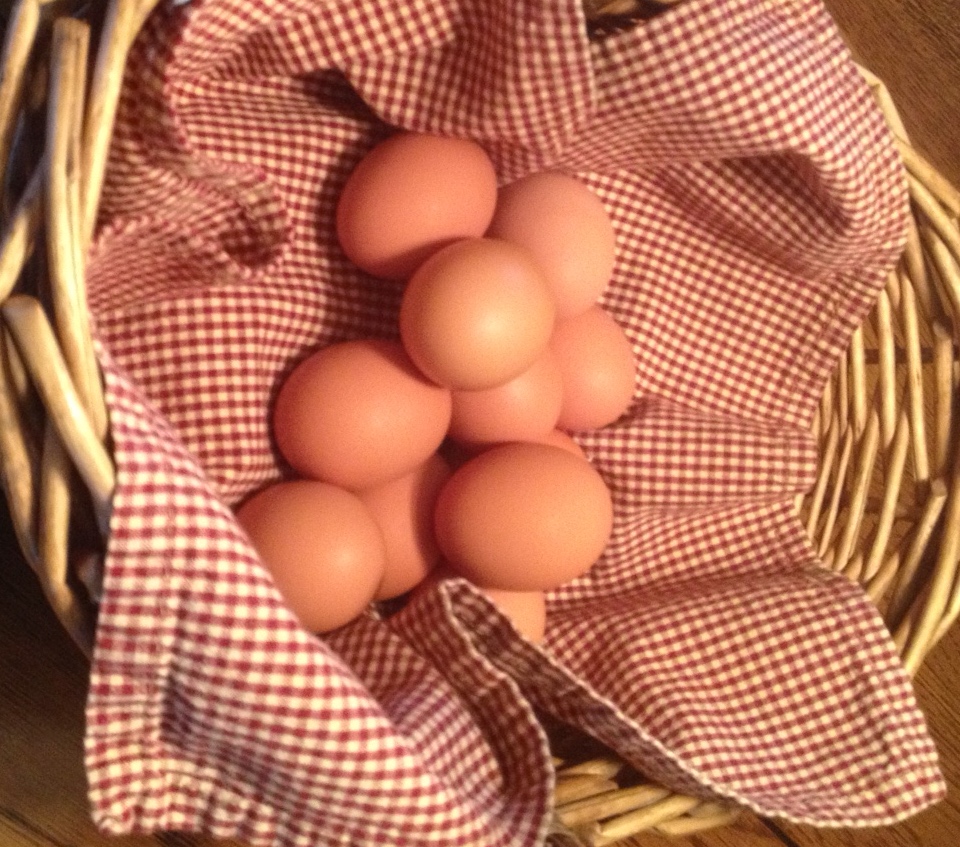
Before the invention of the egg carton, eggs were gathered and carried in egg baskets. A predecessor to the modern egg box was invented by Thomas Peter Bethell of Liverpool in 1906 and marketed as the Raylite Egg Box. He created frames of interlocking strips of cardboard. These frames were themselves packed in cardboard or wooden boxes for transport by road or rail. In 1911, the egg carton was invented by Joseph Coyle in British Columbia to solve a dispute about broken eggs between a farmer and the owner of a hotel that he supplied. Early egg cartons were made of paper.

Grading

Eggs are composed of the shell, albumin or white, and the yolk.  An egg is a prolate spheroid, with one end larger than the other. The air cell is on the larger end of the egg and its size is used in grading the eggs. A very fresh egg has a small air cell and receives a grade of AA. Its “spread” is compact, the albumen is clear, thick and firm, the yolk stands round and high. Grade A eggs have a slight spread, clear and reasonably firm albumen and a yolk that stands fairly high and practically free from defects.  A grade B egg spreads over a wide area, has a clear, weak or watery albumen and an flattened yolk. As an egg gets older, the larger end of the egg will rise to increasingly shallower depths when the egg is placed in a bowl of water. A very old egg will actually float in the water and should not be eaten. Eggs come in sizes of jumbo, extra large, large, medium, small and peewee.

Health

Eggs contain significant amounts of protein, vitamins, antioxidants and are about 70 calories each.   More than half the calories found in eggs come from the fat in the yolk. Thus, people on a low-cholesterol diet may need to reduce egg consumption. The egg white, however, consists primarily of water (87%) and protein (13%) and contains no cholesterol and little, if any, fat. Despite their nutritional value, however, there are health concerns involving allergy, storage and preparation. To prevent salmonella poisoning, always cook eggs thoroughly.

Culinary Uses

An egg can be boiled, scrambled, fried, poached, made into an omelet or pickled. It is used as an emulsifier (help suspend one liquid in another, as in salad dressings) and as a thickener. The proteins in egg white allow it to form foams and aerated dishes. Egg whites, which contain the protein and very little fat,  may be aerated or whipped to a light, fluffy consistency, and are often used in desserts such as meringues and mousse. Eggs can also be soaked in mixtures to absorb flavor. Tea eggs are steeped in a brew from a mixture of various spices, soy sauce, and black tea leaves to give flavor.

Pidan (also known as hundred year or thousand year eggs) is a Chinese method of preserving duck, chicken or quail eggs in a mixture of clay, ash, salt, lime and rice hulls for several weeks to several months. In the process, the yolk becomes dark green to gray in color and develops a creamy consistency with an odor of sulphur and ammonia.  The egg white becomes a dark brown, translucent jelly with a salty flavor. Century eggs are often eaten without further preparation, on their own or are used as a side dish, sometimes with ginger root or tofu.

A Balut is a developing duck embryo (fertilized duck egg) that is boiled and eaten in the shell. It is commonly sold in the Philippines, Laos, Cambodia and Vietnam. The broth surrounding the embryo is first sipped and then the undeveloped chick inside is eaten, often with salt and/or a chili, garlic and vinegar (white or coconut sap) mixture as seasoning.

Storage

Uncooked eggs can be kept refrigerated for up to 4-5 weeks, while hard-boiled eggs left in their shells should be used within a week.

Commercial Production vs. Cage Free

Commercial factory farm operations often involve raising the hens in small, crowded cages, preventing the chickens from engaging in natural behaviors, such as wing-flapping, dust-bathing, scratching, pecking, perching and nest-building. Many hens have their beaks removed to prevent harming each other and to prevent cannibalism. In the United States, increased public concern for animal welfare has resulted in the United Egg Producers program which includes guidelines regarding housing, food, water, air, living space, beak trimming, molting, handling, and transportation. However, some organizations such as the Humane Society, claim that the UEP certification is misleading. “Certified Organic” labeling, which requires hens to have outdoor access and be fed only organic vegetarian feed and so on, is considered the most humane.

Cultural Traditions

During Easter in many countries, eggs are dyed, decorated and hidden for children to find. Before the spring equinox in the Persian New Year tradition, each family member decorates a hard-boiled egg and sets them together in a bowl. The tradition of a dancing egg is held during the feast  Corpus Christi in Barcelona and other Catalan cities since the 16th century, which consists of an emptied egg, positioned over the water jet from a fountain, which starts turning without falling.

Resources

Labensky, Sarah R., and Alan M. Hause. On Cooking: A Textbook of Culinary Fundamentals.

Wikipedia

http://www.eggnutritioncenter.org

http://www.incredibleegg.org

Week 26: Salt


salt

Salt is the most common seasoning used in cooking. It adds essential minerals and enhances the flavor of food. As our palates have become more refined, the variety of available salts has increased.

Salt is a mineral substance composed primarily of sodium chloride. Salt is present in vast quantities in the sea where it is the main mineral constituent, with the open ocean having a salinity of 3.5%. Salt is essential for human and animal life, and saltiness is one of the basic human tastes. Salt is produced from the evaporation of seawater or mineral-rich spring water in shallow pools or is extracted from salt mines.

History

Some of the earliest evidence of salt processing dates to around 6,000 years ago, when people living in Romania boiled spring water to extract the salts. A saltworks in China has been found which dates to the same period. Salt was prized by the ancient Hebrews, the Greeks, the Romans, the Byzantines, the Hittites and the Egyptians. Salt became an important article of trade and was transported by boat across the Mediterranean Sea, along specially built salt roads, and across the Sahara in camel caravans. Salt has been used for barter and for currency. Moorish merchants in the 6th century even traded salt for gold, weight for weight. The scarcity and universal need for salt has led nations to go to war over salt and use it to raise tax revenues. Salt is also used in religious ceremonies and has other cultural significance. Various governments have at different times imposed salt taxes on their peoples.

Types of Salt

Sea Salt – Sea salt and table salt usually contain an anti-caking agent and may be iodized to prevent iodine deficiency. Unrefined sea salt contains small amounts of magnesium, calcium, sulphates, traces of algae, salt-resistant bacteria and sediment particles. Sea salt may have a more complex flavor than pure sodium chloride when sprinkled on top of food. Fleur de sel is a natural sea salt from the surface of evaporating brine in salt pans in France.

Flaked Sea Salt – This salt has soft, sheer, pyramid-like flakes and will add a hint of briny flavor. It comes from England’s Essex coast is where the most popular brand, Maldon, is harvested. It is the fastest dissolving salt.

Kosher Salt – Kosher salt, though refined, contains no iodine and has coarse crystals. This can give it different properties when used in cooking. Some kosher salt has been certified to meet kosher requirements by a hechsher, but this is not true for all products labeled as kosher salt.

 Rock Salt – Rock salt has large, chunky unevenly shaped crystals. It is used primarily for making ice cream. You can also use it to deice your sidewalks and driveway in the winter months.

Pickling Salt – Like table salt, pickling salt may come from the earth or the sea. But unlike table salt, it isn’t fortified with iodine and doesn’t contain anti-caking chemicals, both of which would turn pickles an unappetizing color. Virtually 100 percent sodium chloride, it’s the purest of salts. and is far more concentrated than the common salt.

Himalayan Pink Salt – This salt originates from Pakistan where it is hand mined, hand washed and sun dried. It is light pink with variations of white and red. About 200 million years ago, there were crystallized sea salt beds that were covered with lava. Being kept in this untouched, pristine environment that has been surrounded with snow and ice for so many years means that the salt has been protected from modern day pollution. Many people believe that this pink salt from the Himalayas is the purest salt that can be found on the planet.

Smoked salt – Smoked salt is an aromatic salt that has been smoked with any number of select bark free woods for up to 14 days. The type of wood used for smoking impacts the flavor, whether it be subtle, bold or even sweet. The most common choices are alder wood, apple wood, hickory, mesquite, and oak. Infused smoked salts like smoked bacon chipotle sea salt are very popular because of the dynamic flavor profiles.

Hawaiian Black Lava Salt – Hawaiian sea salt is harvested from salt farms on the tiny island of Molokai. Hawaiian ocean water is drawn into complex array of filters and is evaporated through a sophisticated solar evaporation method leaving behind the finished salt product which is hand collected and further infused or “bathed” in activated Coconut shell charcoal. Premium Hawaiian natural sea salts have a unique combination of taste, color, and mineral content. It is coarse in grain size, but brittle, for an interesting crunchy texture. Black Lava salt should not be used during the actual cooking process as it will dissolve and the added black elements will simply settle to the bottom as a residue. It should be used as a finishing salt after the fact, where its bold taste can be savored and fully enjoyed. It goes well with all types of seafood, salads, vegetables, and even some deserts. Black Lava salt has incredible detoxifying qualities and is used in salt scrubs, exfoliates, scrubs, and masks by many spas across the country

Health Notes

 Too much sodium in the diet raises blood pressure and may increase the risk of heart attacks and strokes. The World Health Organization recommends that adults should consume less than 2,000 mg of sodium which is equivalent to 5 grams of salt per day.

Industrial Uses

Only about 6% of the salt manufactured in the world is used in food. Of the remainder, 12% is used in water conditioning processes, 8% goes for de-icing highways and 6% is used in agriculture. The rest (68%) is used for manufacturing and other industrial processes, such as in the manufacture of PVC, plastics and paper pulp. Salt is also used in the production of aluminum, soap, glycerine and synthetic rubber.

Resources

Wikipedia

http://www.collective-evolution.com

http://www.mountainroseherbs.com

http://www.saltworks.us

http://www.thespicehouse.com

Week 25: Artificial Sweeteners and Sugar Substitutes

Artificial Sweeteners


Sugar (sucrose) has 16 calories per teaspoon and is found naturally in fruit. Americans eat approximately165 pounds of sugar per person per year.  It offers no nutritional benefits. The consumption of sugar leads to obesity and tooth decay and contributes to diabetes. Sugar substitutes include both natural and artificial sweeteners.

Among the natural sweeteners that the FDA recognizes as being generally safe for consumption are fruit juices and agave nectar, honey, molasses, and maple syrup.

Artificial sweeteners are synthetic sugar substitutes but may be derived from naturally occurring substances, including herbs or sugar itself. Artificial sweeteners are also known as intense sweeteners because they are many times sweeter than regular sugar. Artificial sweeteners are found in products marked “sugar free” or “diet” and are preferred by those who are diabetic or who want to reduce their caloric intake. Artificial sweeteners are widely used in processed foods, including baked goods, soft drinks, powdered drink mixes, candy, puddings, canned foods, jams and jellies, dairy products, and scores of other foods and beverages.

Artificial sweeteners are regulated by the Food and Drug Administration (FDA) as food additives. They must be reviewed and approved by the FDA before being made available for sale.

Agave nectar

Agave nectar is derived from the agave cactus and has a taste and texture similar to honey. It is sweeter than sugar as it contains more fructose.

Aspartame (Equal, Nutrasweet) This sweetener contains the sugars fructose and glucose from processed corn syrup. It contains 17 calories per teaspoon. Aspartame was discovered in 1965 by James M. Schlatter at the G.D. Searle company (later purchased by Monsanto). He was working on an anti-ulcer drug and accidentally spilled some aspartame on his hand. When he licked his finger, he noticed that it had a sweet taste. It is an odorless, white crystalline powder that is about 200 times as sweet as sugar and can be used as a tabletop sweetener or in frozen desserts, gelatins, beverages, and chewing gum. When cooked or stored at high temperatures, aspartame breaks down into its constituent amino acids. This makes aspartame undesirable as a baking sweetener.

Honey

Honey is made by bees using nectar from flowers. Honey bees transform nectar into honey by a process of regurgitation and evaporation. They store it as a primary food source in wax honeycombs inside a beehive. According to a cave painting from Valencia, Spain, hunters began collecting honey from wild bees nests over 8,000 years ago. Honey contains trace amounts of vitamins and minerals, and studies suggest it may not raise blood sugar as fast as other sweet products. It contains 21 calories per teaspoon. Honey is rich in antioxidants and includes vitamins B6, thiamin, niacin, riboflavin, and certain amino acids.. The minerals found in honey include calcium, copper, iron, magnesium, manganese, phosphorus, potassium, sodium and zinc.

Honey can contain small amounts of bacterial spores that can produce botulism toxin. Because of that, honey shouldn’t be given to children less than 1 year old.

Maple Syrup

Maple syrup is made from the sap of the Sugar Maple tree, although it can also be made from other maple species as well. In cold climates, these trees store starch in their trunks and roots before the winter; the starch is then converted to sugar that rises in the sap in the spring. Maple trees can be tapped by boring holes into their trunks and collecting the exuded sap. The sap is processed by heating to evaporate much of the water, leaving the concentrated syrup. Maple syrup was first collected and used by the indigenous peoples of North America. The practice was adopted by European settlers, who gradually refined production methods. Technological improvements in the 1970s further refined syrup processing. Maple syrup is similar to sugar with respect to calorie content, but is a source of manganese, zinc, calcium and sodium. It contains 52 calories per teaspoon.

Molasses

Molasses, or black treacle, is a viscous by-product of the refining of sugar cane or sugar beets into sugar. Molasses is used in making rum, stout and porter, in dark rye breads and is a supplement in livestock feeds. It is a good source of calcium, magnesium and iron. It contains 58 calories per teaspoon.

Rebiana (Nuvia)

Rebiana is derived from the leaves of the stevia plant, a shrub that grows in South and Central America. Rebiana is deemed the natural alternative to artificial sweeteners. It has 0 calories. Stevia has been widely used as a natural sweetener in South America for centuries and in Japan since 1970, due to its unique characteristics of zero calories and the fact that it does not raise blood sugar levels.

Saccharin (Sweet ‘N Low)

Saccharin was the first artificial sweetener and was originally synthesized in 1879 by Remsen and Fahlberg. Its sweet taste was discovered by accident. It has 0 calories. In a 1960 study saccharin showed that high levels of saccharin may cause bladder cancer in laboratory rats. In 1977, Canada banned saccharin due to the animal research. In the United States, the FDA considered banning saccharin in 1977, but Congress stepped in and placed a moratorium on such a ban.

Sucralose (Splenda)

Sucralose is a chlorinated sugar that is about 600 times as sweet as sugar, although it has 0 calories. It is used in beverages, frozen desserts, chewing gum, baked goods, and other foods. Unlike other artificial sweeteners, it is stable when heated and can therefore be used in baked and fried goods.

Sugar Alcohols (Sorbitol, Xylitol)

Sugar alcohols (polyols) are carbohydrates that occur naturally in certain fruits and vegetables, but they also can be manufactured. They’re often used in sugar-free foods marketed to diabetics, because they contain fewer carbohydrates than table sugar. Sugar alcohols have 10 calories per teaspoon, and they don’t cause tooth decay like table sugar.


Resources

Harvard School of Public Health

http://www.health.com

http://www.mayoclinic.org

Wikipedia