Category Archives: My Stories

Lotsa Pasta

The Chinese made noodles as far back as 3,000 B.C . An excavation of a fourth century B.C. Etruscan tomb shows drawings of natives making pasta. Pasta has been a staple for Italian families for generations.  Marco Polo is credited with bringing pasta to Italy after his exploration of the Far East in the 13th century.

A virtually fat free and salt free food, pasta is low on the Glycemic Index (GI). The Glycemic Index is a ranking of carbohydrates and the effect they have on our blood glucose levels. A low GI carbohydrate is digested more slowly and satisfies hunger longer without increasing blood sugar levels. Pasta is relatively inexpensive to purchase and prepare.

Dried pasta is made using semolina flour, which comes from grinding kernels of durum wheat. Sometimes the semolina is mixed with other flours. It is then mixed with water until it forms sticky dough. Additional ingredients are then added to the pasta, like eggs to make egg noodles, or spinach or tomato to make red or green colored pasta.
The dough is kneaded until it loses its stickiness and is pliable, but not stiff. Then it is fed through a dough sheeter to make flat pasta, like linguini, fettuccini or lasagna noodles.  Or, the pasta is pushed, or extruded, through a die, a metal disc with holes in it. The size and shape of the holes in the die determine what the shape of the pasta will be. For instance, dies with round or oval holes will produce solid, long shapes of pasta, such as spaghetti. Sharp blades rotate beneath the die and cut the pasta to the proper length. Afterwards, the pasta is dried for about 5 or 6 hours using large dryers which circulate hot, moist air and then it is packaged for distribution.

On the day that Brandi and I went to the market, we also stopped at a local grocery store so she could buy some baking supplies.  I noticed that most of the women in the checkout lines were purchasing several types of dried pasta for what appeared to be a week’s worth of groceries.

Most of the pasta we used in the restaurant kitchen was also dried, except for the ravioli, cannelloni, linguine and fettuccini which we made fresh.  One of the shelves above the counter where I usually worked was stacked with packages of the following types and shapes of pasta:

Alfabeto—tiny alphabet letter pasta

Agnolotti—shaped like half moons

Anellini– little rings

Anolini—ravioli in half-moon shape with ruffled edges

Bucatini—long, fat hollow strands like spaghetti

Capelli d’angelo—angel hair pasta; very fine long strands

Castellane—rigid shell shape

Conchigliette- little conch shells

Ditali—small tubes like “thimbles”

Farfalle—bow-tie or butterfly shapes

Fusilli– shaped like a corkscrew

Gnocchetti—small oval dumplings

Maccheroni—little elbows

Mezzi Tubetti—larger hollow tubes

Millerighe– large rigatoni with ribbed sides

Orecchiette—shaped like little “cups” or “ears”

Paccheri– very large tubes

Penne piccolo– small narrow tubes with ends cut on diagonal

Rigatoni—big hollow tubes

Rotelle—small wheels

Rotini– small corkscrews

Sedanini—thin, hollow tubes

Spaghetti—long strands

Spellete- little stars

Tagliarini– similar to linguine with a flat side, but thinner

Vermicelli– similar to spaghetti, but thinner


Generally, you should use thinner pastas with thin sauces and thicker shapes with thicker sauces as the sauce will coat the shape and cling to it better.  Always cook pasta in a large pot of boiling water to keep it from being sticky.  Never add oil to the water or you inhibit the ability of the sauce to cling to the pasta.  Also, it is not necessary to drain the pasta after cooking unless you are going to serve it cold in a pasta salad.  We never drained the pasta we cooked in the restaurant.

One classic pasta sauces is Bolognese (sometimes referred to as Ragù) which may have originated in Bologna, but has spread throughout much of Central and Northern Italy.  It is a rich pasta sauce made primarily from veal, beef, pork, or chicken cut into small pieces. Marinara sauce is made with tomatoes, garlic, onions, parsley and olives but doesn’t use any meat. Another classic sauce is Arrabbiata Sauce which is a spicier tomato sauce made with chile peppers.  Alfredo Sauce is composed of heavy cream or half and half mixed with butter, grated parmesan cheese, pepper, and occasionally nutmeg.

Carbonara Sauce is made with cream, eggs, Parmesan cheese, bacon and peas. Madeira sauce is made from Madeira wine and broth. Puttanesca Sauce is made with garlic, bits of dried chile peppers, capers, and anchovies as key ingredients, and Vodka Sauce typically contains tomatoes, cream, vodka, olive oil, garlic, onions, and pecorino or Romano cheese.

Leftover pasta can be tossed in pesto sauce, olive oil and garlic or can be used to make a frittata.
Olive Oil

Olives have been enjoyed in the Mediterranean for thousands of years and are thought to have originally come to Italy from Greece. Italy now produces nearly one-third of the world’s olive oil.  Benefits of consuming olive oil include reducing cholesterol, improving the functioning of the cardiovascular system and, because of its phenols, protecting the heart. Olives are also high in Vitamin E and have anti-oxidant and anti-inflammatory properties.

Olive oil varies like wine.  Its character is determined by the type of tree, the soil on which it grows, the position (on hill, plain or coast), the weather, when and how the olives are harvested and how quickly they are pressed and by what means.   Highly prized extra virgin olive oil, which tends to be more expensive, comes from hand-picking and under ripe olives It is dark green oil with a fruity aroma and full flavor.  More mature olives produce oil of a lighter color.  Great nets are sewn together and held up with stakes to catch falling olives. If the olives get bruised, they spoil quickly.

Traditionally, olive oil was made by crushing the olives and pits to form a paste and then placing the paste in sacceti (flat cloth bags) and squeezing it in a press to extract the oil.  There are still a few regions where stone crushing and mat pressing is still used, but most commercial olive oil production uses a centrifuge to spin the heavier flesh and pits to the side and to tap off the water and oil from the center.  The oil and water is put into tanks where they separate by gravity.

Cold-pressing produces a higher quality of olive oil which is naturally lower in acidity. When purchasing olive oil, it’s important to check labels for the percentage of acidity, grade of oil, volume, and country of origin. The level of acidity is a key factor in choosing fine olive oil, along with color, flavor, and aroma. These oils are best within a year of the harvest, since flavor slowly fades.

The production of olive oil in Italy is governed by standards established by the International Olive Oil Council. By law, olio extra vergine di oliva must come from the first pressing of olives by mechanical (not chemical) means and must contain less than 1 percent of oleic acid (the key measure: the lower the acidity the better). Olio vergine di oliva may have a maximum of 2 percent acidity; what is called simply olio di oliva may be rectified and de-acidified.

In the Campania region of Italy, the production zone includes 82 town districts from the AmalfiCoast to Cilento.  Olive oil from the Cilento and Sorrentine peninsulas as well as those from the hills of Salerno, east of Amalfi, carry the prized label Denominazione d’Origine Protetta (Protected Denomination of Origin or DOP)  This is a regulated and controlled qualification that verifies the characteristics and authenticity of the product. Another classification is Indicazione Geografica Protetta (Protected Geographical Indication or IGP) which denotes that the product comes from a specific geographical area but does not dictate how it is made. Some of the varieties of olives grown in the Campania region are Minucciola, Rotondella, Carpellese, Frantonio and Leccino.

Olive oil tastings are often available where oil is made at a tasting bar where little plastic cups and cubes of bread are supplied. Appreciating a good olive oil starts with looking at color and consistency. Then warm the cup of oil between your palms and breathe in its aroma. Next, quickly suck the oil over your palette with a lot of air, so it evenly coats your mouth and doesn’t settle on your tongue. This is easier to explain than to execute.  Terms describing the characteristic aroma and taste of olive oil include buttery, nutty and peppery (desirable) to burnt, metallic and moldy (undesirable).


Gnocchi

One morning as I got on the bus, there was an older Italian man standing in the bus doorway checking everyone’s bus tickets.  He was tall and tanned with a handsome face and a thick head of graying hair. I showed him my monthly pass and proceeded down the aisle to a seat on the right hand side of the bus so I could watch the sea while we traveled to Amalfi.

He followed me to my seat and sat down next to me.

Dovete riempirli destinazione ed il vostri nome e compleanno (You have to fill in you destination and your name and birthday)”, he explained.  No one had ever mentioned this to me before.  He removed a pen from the pocket of his blue shirt and handed it to me with a big smile. I dutifully did as he asked. Then he took the ticket out of my hand and examined it.

Siete cinquantotto (You are 58)!” he said with a nod of his head.  “Sono cinquantotto anche (I am 58 also),” he beamed.

I just sat there and smiled sheepishly.  I think he was trying to pick me up!

Alessandro was draining a huge pot of steaming potatoes when I entered the kitchen.

“Today I teach you to make gnocchi,” he said.  He loaded the potatoes into the ricer by the sink and instructed me on how to use the machine so I could take over.  The potatoes were strained through a sieve and looked like mashed potatoes (without any lumps) when they came out the other end.

We cleared off a section of the wooden counter top and dusted it with flour.  Then Alessandro looked at my hands and pulled two disposable gloves out of a box labeled “small” sitting on a shelf above the counter.

“Put on,” he instructed.  “Is very messy.”  Alessandro scooped potatoes onto the counter, sprinkled them with flour and punched a well into the top of the mound.  Then he separated eggs and put the egg yolks, salt and pepper into the well.  He let me mush it all together, adding more flour until the dough was stiff.  He kneaded the dough until it was smooth and then sectioned off a portion and rolled it into a long rope.  Using the bench scraper, he showed me how to cut the rope into little “pillows” to make the potato dumplings.  Then he told me to finish shaping the rest of the dough into the gnocchi for the restaurant.  It was going to be used that evening for a dish with onion, bacon and fava beans as the sauce.

Today, I got off early and there wasn’t a bus scheduled to leave for Positano for a couple of hours.  Alessandro was taking his break and offered to drive me, but he only took me as far as the bus stop at Priano – the town before Positano.  I didn’t know how to tell them that I’d still be stuck there until a bus came along, so I just thanked him and decided to walk the rest of the way.  I’d forgotten that the roads were sloped – what a workout! My face was sunburned, but I made the 11 km walk in only 1 hr 45 minutes!

Just Desserts

The Pastry Chef is responsible for making all the breads and rolls that the hotel uses as well as the desserts and ice cream, or gelato.  Today we were making tiramisu.

Tiramisu’ means “pick-me-up” in Italian, for the high energetic content of cocoa and the caffeine of the strong espresso coffee. There are many different stories about the origin of Tiramisu, but there is no documented mention of the dessert before 1983. Some claim that it was first created in Northern Italy during the First World War. Women made these desserts for their men to take with them as they were being sent off to war. They might have believed the high caffeine and energy content of these desserts would give their men more energy to fight and help bring them home safely.

Another story regarding tiramisu, however, said that during the Renaissance women made Tiramisu to be shared with their men during the late hours because they believed it would give them the energy to make more vigorous love later. A different take on this story is that Venetian prostitutes, living above cafés, would order this as a late night pick-me-up.

A less glamorous theory explains that the dessert was a way of salvaging old cake and coffee that had gone cold by using the leftover coffee and perhaps some liqueur to moisten the dry cake. The dish was greatly improved by layering it with cream or mascarpone, Italian cream cheese.

Regardless of the origin, Tiramisu is one of the most popular desserts in the world today and is available in all kinds of restaurants, not just those specializing in Italian cuisine.

We placed the goblets of tiramisu in the refrigerator in the pastry chef’s corner of the kitchen.  Then Roberto gave handed me the recipe for a moist, chestnut cake and told me make it.  He opened a can of chestnuts for me and I took them to the stove to boil them until they were tender.

That afternoon, I rode the bus home and checked my email at the internet café.

Craig had written:

“Well, the lasagna is gone.  What do I do now?”

“Craig, you know how to bake a potato in the microwave.  Just fix a potato and a nice salad.  You can do that. Or you can go to Whole Foods and purchase something that is already prepared.”  I didn’t add that there were zillions of restaurants in Annapolis, but Craig isn’t the type to go out and eat alone unless he is away on a business trip. I was surprised when I received an instant response.  He must have been writing emails right that moment.

“How will I know when the potato is done?  Does it have a pop-up timer like a chicken?”  Silly man.  Maybe he does miss me.

When I left the internet café, there were some older men playing the Italian card game, scopa, at a table set up on the sidewalk outside the café.  I stopped to watch for a few minutes but didn’t understand the rules of the game.  I should ask Paulo to explain it to me.

As I passed the ceramics shop near the steps to our apartment in town, the blue fish bowl beckoned to me and I decided today was the day to purchase it.

Potete darmi uno Sconto? (Can you give me a discount?)” I queried always on the lookout for a bargain.

“You pay in cash?  I give 15% off,” he answered.  I opened my wallet and counted out the Euros as he gently wrapped the bowl in tissue and bubble wrap.

“Grazie,” I said with a wide smile as I carried my prize down the steps to the apartment.


Capri

The water looks so serene and is dotted with fishing boats, a few pleasure yachts and today a four-masted cruise ship sits just offshore. A gull cries overhead as it swoops to catch a fish.  Our faces warmed by the sun, we are waiting at the pier by the beach in Positano to board a ferry for the 30-minute ride toCapri—an island off the coast.

Capri started occupying an important role in the political and military matters of the Roman Empire when Ottaviano, not yet Augustus, landed here in 29 BC and, struck by the incredible beauty of the island, took it from Naples, in exchange fo rIschia. After Ottaviano, the Emperor Tiberius resided on the island for a decade and it was from Capri that he managed the interests of the Empire. Ruins of Tiberius’ villa can still be seen.

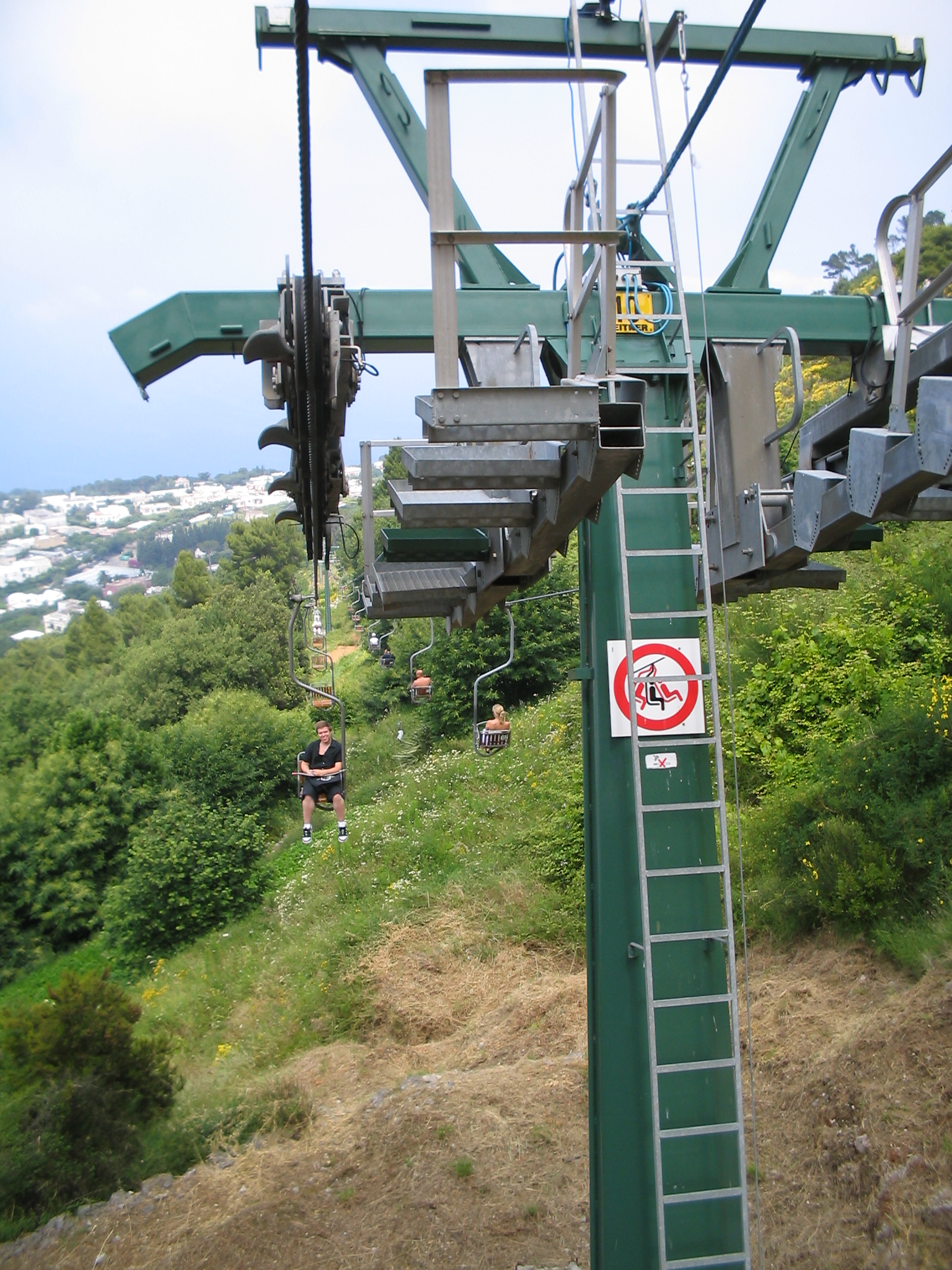
Marina Grande where the ferry docks is a colorful village on the waterfront clustered with souvenir shops and cafes.  It was so crowded with tourists, however, (were we beginning to think that we were the locals?) that we decided to take a taxi to the town of Anacapri on top of the island to explore the shops and have lunch.  After we finished our pizza margherita, David, Ben and I boarded the “funicular” (a one person chair lift) up to Mount Solaro, which is the highest point on the island.   The views of the village below and the deep turquoise sea were spectacular.

At the top we searched for the trail that we had heard you could hike back down to Anacapri.

Dove e la traccia a Anacapri? (Where is the trail to Anacapri?)” I asked one of the funicular operators?

He looked surprised as most tourists rode the funicular round trip.

Vada dietro il negozio (go behind the store)”, he explained waving his hand in the direction of a faded sign and worn path.

We started the trek down which took us about 45 minutes through a quiet forest, an old cemetery and numerous back yards.  Chickens, stray dogs and children playing gave us a look at the countryside where the local people lived and worked.  It was a hot day and we were perspiring by the time we got to the bottom of the trail.

We found Brandi and Kirsten enjoying cups of gelato while they waited for us.  We purchased bottles of water from the tabacchi shop and flagged a cab to take us back to Marina Grande.

Buona Sera,” greeted a wiry man with a wide smile as we exited the cab.  “Would you like to go on a boat trip around the island?” he asked in English.

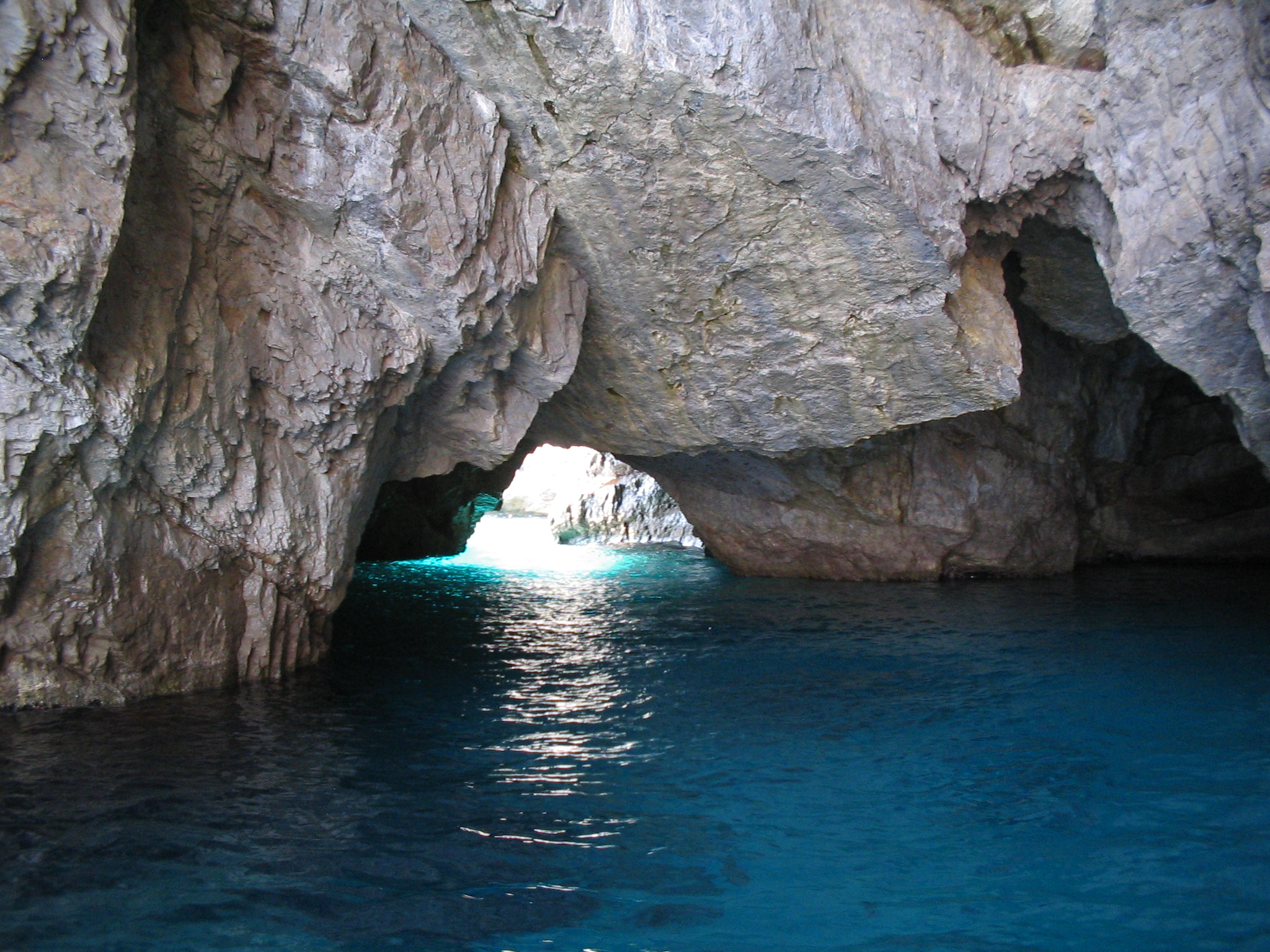
He explained that he would take us on a tour for less than the big tour boats charged.  We had been thinking of visiting the famed Grotta Azzurra, or Blue Grotto where if the tides are right, you can take a low boat through the shallow opening into a cave to see the water glowing a deep cobalt blue due to the light refraction. We decided to take him up on it.  He led us to a medium sized motor boat and led us onboard.

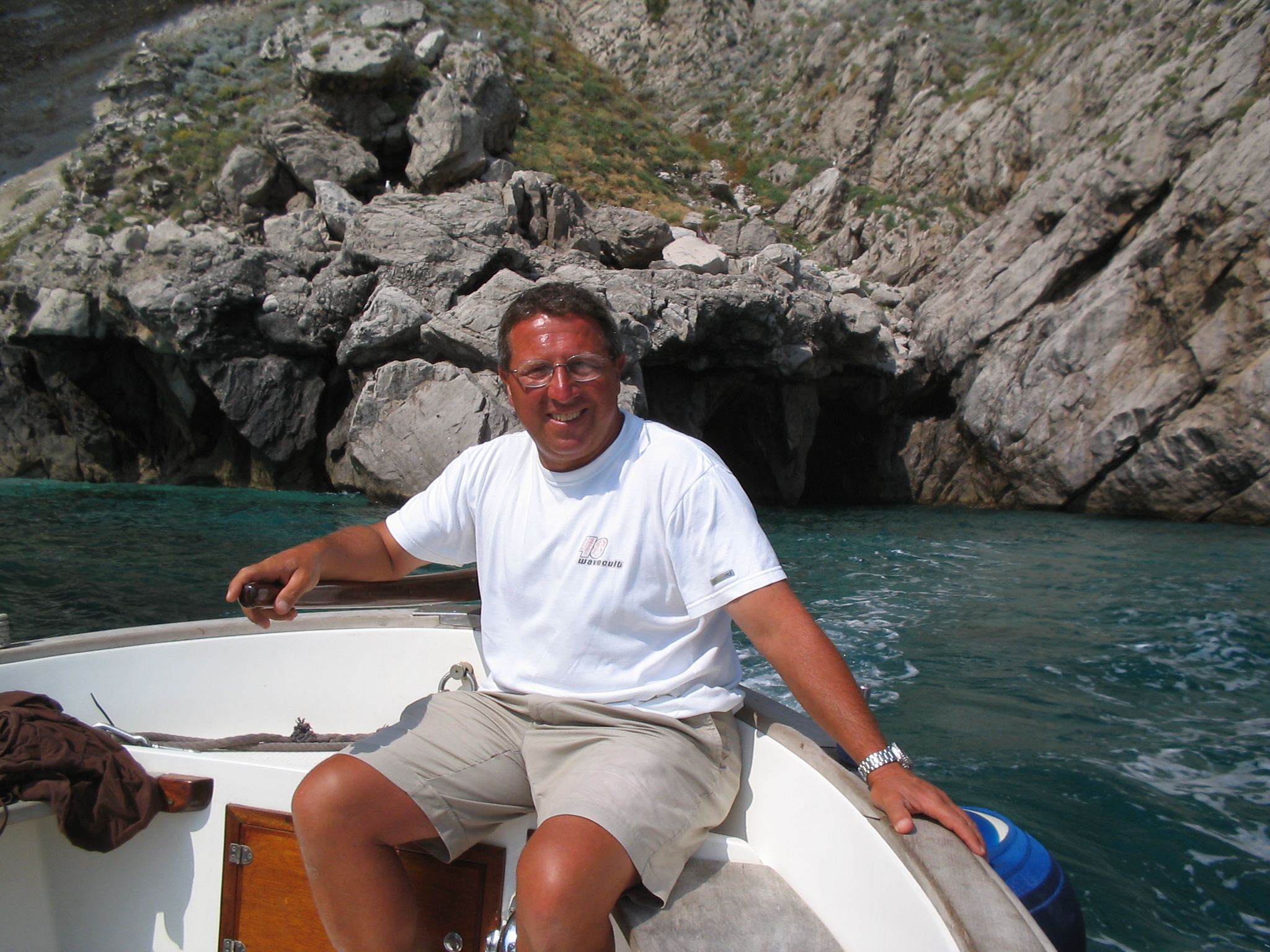
The salt spray felt good on our parched faces. We saw lots of natural rock formations and Mussolini’s house on a cliff.  Our boat driver, Alfonzo, showed us three other rocky grottos and asked us if we wanted to go swimming.

Little Blue Grotto

Brandi, Kirsten and I were wearing dresses and the boys were wearing Bermuda shorts.  None of us had thought to wear a bathing suit! The boys decided it sounded like a good idea, pulled off their t-shirts and jumped in the water in their Bermuda shorts. Kirsten wanted to go too and asked Ben if she could wear his t-shirt into the water. When he consented, she discreetly removed her bra and sundress and wearing only her bikini panties and one of the boy’s t-shirts, she dove in after them.  They splashed around in the cool water and swam to some jagged rocks protruding out near the rocky coastline.

David, Kirsten & Ben Swimming in Capri

After they got back on the boat, the driver couldn’t keep his eyes off Kirsten’s wet t-shirt which left little to the imagination.  She slipped her sundress on over the wet t-shirt, slid the t-shirt off without exposing herself and then put her bra on from underneath the sundress.  Alfonzo kept grinning through the whole process. By the time we were back to the marina, the boat driver had invited her for gelato later that afternoon and told her that if she ever wants to go around the island again, she could go for free as long as she goes swimming.

Il Mercado (The Market)

We have had a couple of weeks of cool, rainy weather and I am sympathetic towards all the tourists who are in town to enjoy the sun and sand.  I was glad that I had brought an umbrella with me, but wished I had also brought a sweater or fleece.  It was chilly on the way to and from the bus stop.  All the clothing boutiques in Positano sold sundresses, summer skirts and beautifully detailed blouses.  I saw a sign in a shop window that read “Sconto di sui vestitit di inverno” (50% discount on winter clothing) and decided to see if they had any sweaters.

Buona sera,” greeted the shopkeeper whose nametag read “Gabrielle.” She spoke English fluently so she could converse with all the foreign tourists who came into her shop.

Buona sera,” I replied.  “Do you have any sweaters?  I am so cold when the weather is rainy.”

Gabrielle rummaged through a pile of sweaters on one shelf, but all of them were either too large or too small for me.

“Are there any outdoor markets here?” I asked.  “Where I can buy a sweater for less money than the shops charge in Positano?”

“I really shouldn’t be telling you,” said Gabrielle.  “But there is an outdoor market at Piano di Sorrento.  It is the town that you come to right before you get toSorrento.  You can take the bus and ask anyone when you get off.  Everyone knows where the market is.  But it is only open on Mondays.”

“Oh, Monday is my day off!” I beamed.  I introduced myself to Gabrielle and told her why I was in Positano for the summer.  From then on, I never failed to stop in and see her on my way down the hill to the piazza in the center of the village.

The next Monday we were off work, Brandi and I took the 7:00 AM bus to Piano di Sorrento. She needed to find a few basic items and I was going in search of that sweater.  When we got off the bus, we went into a bar for coffee and a croissant. Brandi is a pastry chef and was always interested in seeing what type of pastries and desserts were on display.  I’m surprised that the Italians as a whole are not heavier than they are considering the pastries and pasta they consume, but I think it’s all the walking they do that offsets it.  We finished our cappuccino and left the bar to look for signs of the market.

Dove é il mercado?” we asked people on the street.

They would wave their hands around as they directed us to the local open-air market. We walked two or three blocks and then rounded a corner to see stalls set up along the sidewalk.

Brandi at the market in Sorrento

Most of the tables were littered with clothing—underwear, t-shirts, and children’s clothes. One booth was filled with shoes. Brandi bought sandals for €5 a pair that would have been €72 in Positano!  I purchased a cream colored cotton sweater that would be perfect for the cool evenings for only €1 (about $1.35). The last booth we came to offered olive oil, local cheeses and sausages.  I like the way the vendors will offer samples of anything that you might be interested in purchasing. We picked out some smoked provolone and fresh mozzarella to take back to the apartment. It was really enjoyable to spend a day with the locals and to use our limited Italian language skills.

Afterwards, we returned to Positano and had lunch at Tre Sorrelle (Three Sisters) Café by the beach.  We shared the fried zucchini blossoms and a green bean salad with mozzarella and grape tomatoes.

The zucchini squash have male and female flowers, and you are supposed to use the long male ones for this dish.  They should be fresh and firm.  The zucchini blossoms are fried in a light, thin batter much like the Japanese tempura batter.  You can also fry large fleshy sage leaves and serve them as an appetizer as well. They were delicious!


Vegetables Italian Style

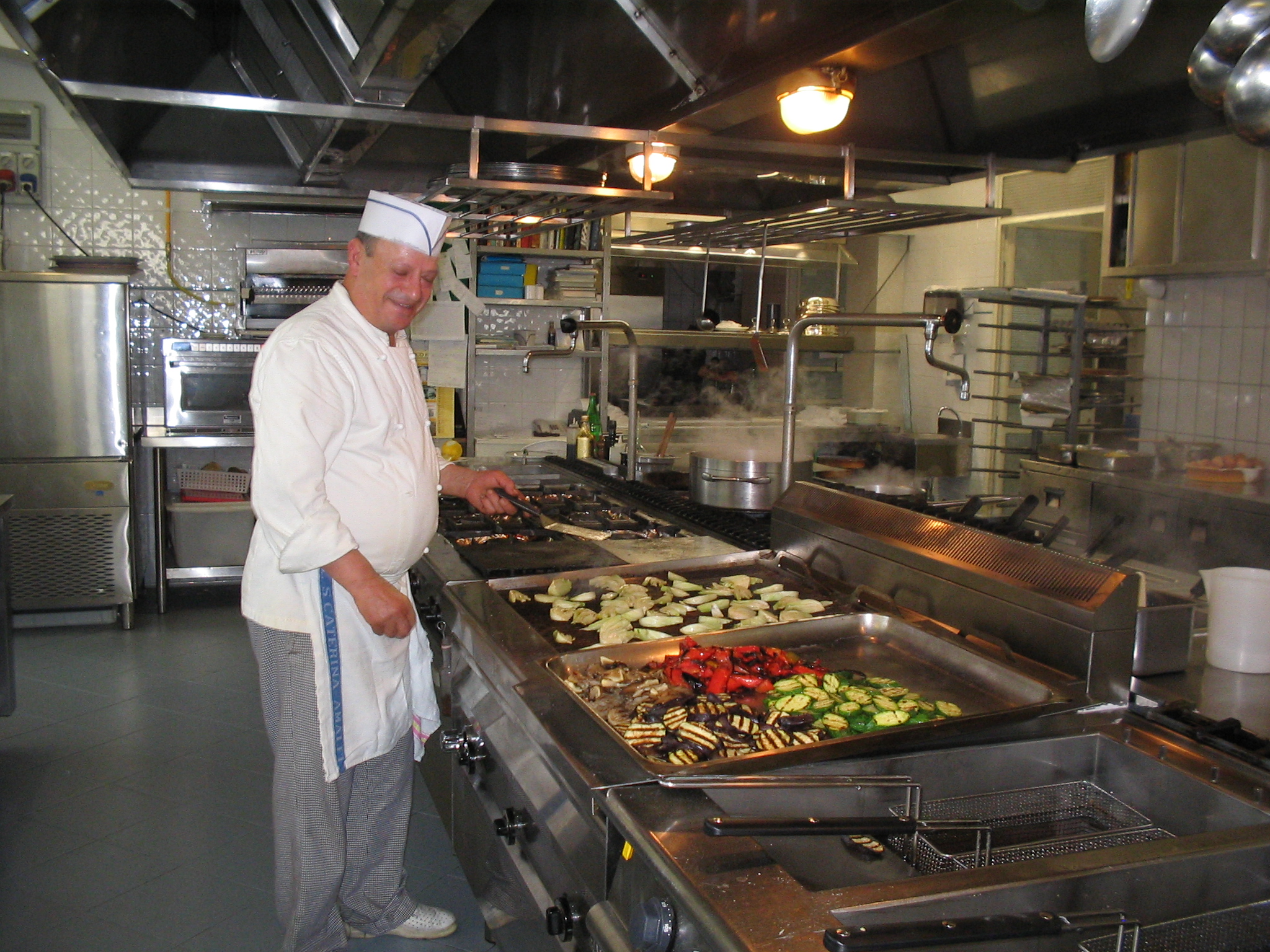
One of the chefs in the kitchen, Alberto, is a gruff old guy who is not comfortable with me in the kitchen because I am a woman. I decided to go to him directly and offer my help. Maybe I could break through that crust. “Che cosa posso aiutarlo oggi?” (What can I help you with today?) I asked. He looked rather surprised and didn’t say anything, but he directed me to slice eggplant, zucchini, fennel (called “anise” in our grocery stores in the states) and red peppers.

Alberto was grilling vegetables to be reheated as the contorno, or vegetable to accompany the evening meal. He brushed them with olive oil and used the indoor grill to put those black hash marks on them. Grigliata Mista di Verdure (Mixed Grilled Vegetables) Fennel (usually mislabeled anise in the produce section of the grocery store) Eggplant Zucchini Red, yellow and green bell peppers Slice, brush with olive oil and roast on the grill. I was glad when the time came to break came for lunch. I think it’s going to take awhile for Alberto to accept me.

In the afternoon I did not go down to the restaurant by the pool. Instead, I remained in the main kitchen and helped Alessandro make several eggplant dishes as we had received a very large delivery of small, Italian eggplants that morning. They would all be refrigerated for use for lunch and dinner services over the next couple of days. I shifted my weight from one foot to the other as I peeled eggplant. I was tired and began to have some doubts about owning my own restaurant some day. It would mean working seven days a week until well after midnight each night. Although I really enjoyed cooking and was certainly learning a lot, I wasn’t sure I liked the long hours and the hectic pace of a restaurant kitchen.

After chopping the eggplant, I tossed it with salt and set it aside in a colander so the moisture drawn out by the salt could drain. Then I took the colander of eggplant over to the deep fryer basket and cooked several batches until they were golden brown. Alessandro was mixing ricotta with very finely diced carrots that had been boiled. He had a worried look on his face as he said, “They do not pay us enough here. I have a baby coming and need bigger place to live, but I cannot afford. I used to be paid €1,800 a month but was not paid in winter when restaurant is closed.” I raised my eyebrows as if to ask why.

“No tourists.” Then he continued, “I told Chef I need to be paid every month and he said okay, but he reduce my salary to €1,200 a month! The rent for our apartment is €650. How can I manage on that?”

“If the restaurant is closed in the winter, what do you do?” I asked with genuine concern.

“Many chefs work on the big ships – how you say, cruise? Or they work on island in Caribbean. I don’t want to leave my wife and child, but I will have to.”

We placed the prepared eggplant casseroles in the refrigerator and began assembling the next dish which was eggplant parmigiano, although it was made differently from the way I always made it at home. Alessandro had me fry the eggplant slices in the deep fryer as he grated the cheeses using the buffalo chopper.

It was rainy and cool when I left the restaurant and I was glad that I had brought an umbrella in my backpack. I decided not to walk down the hill to Amalfi, but rather to try to catch the bus at the hotel bus stop. I knew that it would be crowded with standing room only, but I didn’t feel like walking down in the rain. I climbed up the steps, stamped my bus ticket in the validating machine and squeezed my way down the aisle. It was hard to hang on as we were going around all those hair pin turns. I wondered if the bus drivers drove Italian race cars on their days off. The rain certainly didn’t slow them down!

Porcini Mushrooms

Porcini mushrooms (Boletus edulis) are considered superior in flavor and texture. Its Italian name means “Little piglets,” which describes its appearance with pudgy stalks and rounded brown caps. Its flavor is earthy,  nutty and slightly meaty, with a smooth, creamy texture. Porcini are prominent in Italian cuisine and are widely exported and sold in dried form, reaching countries where they do not occur naturally.

When purchasing fresh porcini mushrooms, look for ones that are firm, with white stalks and brown caps that are not nicked or broken. If the undersides of the caps have a yellowish-brown tinge to them the mushrooms are beginning to decay. Also avoid any with black spots on them or the under caps are deep green. The other thing you should look for in a tired mushroom is signs of worms. When you get home, scrape any dirt you may find off the stalks and wipe the mushrooms clean with a damp cloth.

If you purchase dried porcini mushrooms, which are widely available in larger U.S. grocery store chains, look them over carefully. If they’re crumbly they’re likely old and probably won’t have much flavor. Also, look the mushrooms over for pinholes, and if you see any, check the bottom of the package for worms. If you find any worms, it’s better to discard the package. To prepare dried porcini steep them in just enough boiling water to cover for 20 minutes or until they’ve expanded. Drain them, reserving the liquid, and mince them. They’re now ready for use. I use the liquid as well, substituting it for any other liquid called for in the recipe.

Garlic and Herbs


Italian cooking uses the freshest ingredients and would not be complete without the distinctive flavor of garlic and fresh herbs. When Gretchen and I took cooking classes in Florence, I remember being impressed with the way our chef instructor would rush out the back door of the kitchen and pick fresh herbs from pots in the back yard to use in the recipes he was preparing. Parsley, basil, oregano, rosemary, sage, and garlic, although not an herb, are essential to Italian cooking.

Garlic is a member of the onion family and is one of the most essential flavorings used in Italian cooking. Italians consumed 108 million pounds of garlic in 2006, a 4 percent increase over the previous year, according to Coldiretti, Italy’s leading farmers association. Garlic is a bulbous plant of the genus allium. It grows underground in large bulbs or “heads” with a papery skin. Inside each head are anywhere from 10 to 20 cloves. Garlic’s most well known medicinal property is that of an antibiotic, as the allicin in raw, crushed garlic has been shown to kill 23 types of bacteria. It has also historically been used for repelling mosquitos and scorpions, treating dog bites and to increase stamina. Vitamins A, B, and C, in garlic stimulate the body to fight carcinogens and get rid of toxins, and may even aid in preventing certain types of cancer, such as stomach cancer. Garlic’s sulfur compounds can regulate blood sugar metabolism, stimulate and detoxify the liver, and stimulate the blood circulation and the nervous system. Garlic is found in a variety of sausages and salamis and is used in recipes to flavor meats and sauces.

Flat-leaf Italian parsley is much more flavorful than the curly, decorative variety that we use most often in the U.S. Its medicinal properties include use as a breath freshener, digestive aid, and in tea to treat high blood pressure and rheumatism. Because it is high in vitamins A and C, it has also been used as a quinine substitute to treat malaria. Parsley is used in meat marinades, soup stock, vegetable dishes and as a colorful garnish. The Greek word for basil, basilikon, means “regal herb.”

Basil is prolific throughout the Mediterranean region but grows primarily in summer, although it can be cultivated during the other seasons in greenhouses. The most common variety of basil is Sweet Italian Large Leaf, although Genovese Basil is also used. One variety of basil, Ocimum gratissimum, is believed to have mosquito-repellent properties. Basil, combined with oil, garlic and pine nuts is the essential ingredient in fresh pesto sauce. Basil also complements tomato sauces and is essential in the classic Caprese salad – tomato, mozzarella di bufala and basil drizzled with olive oil.

The name “oregano” comes from the Greek words oros, for mountain, and ganos, for splendor. This aromatic herb is a perennial that grows wild in the mountains and flourishes in late summer, in warm, sunny fields. Its delicate flowers have a reddish-pink tint and thick, dark green, velvety leaves. Oregano has been used for various medicinal purposes throughout history. Its pure oil extract helps in the reduction of tooth pain and when poured directly into the tooth cavity, it acts as an analgesic. In cooking, oregano compliments tomatoes and olive oil, and is an essential seasoning for pizza. It is often sprinkled on bruschetta, and included in meat marinades.

Rosemary has a tea-like aroma and piney flavor. It is a spiky perennial bush common to the coastal regions of Italy and other Mediterranean countries, characterized by silvery green leaves similar to pine needles. It is a symbol or remembrance and friendship. Rosemary is used to relax muscles, calm nerves and as an antiseptic. It is a wonderful addition to potatoes and roasted meats like lamb, pork, chicken, and rabbit, and is added to foccacia bread.

“Sage” derives its name from the Latin salus, for health, and refers to the herb’s curative properties. An evergreen perennial, sage flowers in early to late summer and flourishes in sandy, dry soil. Sage’s medicinal properties include stopping the bleeding of wounds, calming asthma attacks, stimulating menstrual flow and decreasing milk flow in lactating women. In lotion form, it is useful for treating sores and other skin problems. Also, as a hair rinse, it removes dandruff and gives hair a softer and shinier texture. Sage is one of the most commonly used herbs in Italian cooking. It seasons poultry, veal, rabbit, fish and butter-based pasta sauces without overshadowing other flavors.

The Circuit Hike

The next day was our day off and Brandi and I decided to take a 45 minute circuit hike around Positano. We left the apartment at about 9 AM and stopped at the coffee shop for a cup of cappuccino and a pastry (for energy?) and then headed down to the beachfront.

I had purchased the Sunflower Landscapes book “Sorrento– Amalfi—Capri” by Julian Tippet which described the walk as “a moderate hike.” Craig and I had maintained a section of the Appalachian Trail when we lived in Virginia and we did a lot of hiking.  I was looking forward to exploring the outdoors in Italy. The circuit hike sounded like a good one with which to start.  Eventually I wanted to tackle the Sentiero degli Dei (Walk of the Gods) which is supposed to be a spectacular hike along the mountain ridges.

We started with what promised to be an easy path to Fornillo beach, adjacent to the main beach at Positano and guarded by two ancient stone towers.  We followed paved stones set in the sand past the quiet beach, sea canoes that you can rent, and a beachside bar.  We located the steps leading up the hill and started ascending, and ascending, (whew!) and ascending! The guide book said “Ascend these until you reach Fornillo church.”  It failed to mention that the church was a long, long way up. Every time we got to what we thought was the top, the stairs turned the corner an continued to climb towards the sky. I think we climbed at least 2,000 steps (if that’s a “moderate” hike according to my guide book, I can’t imagine what a strenuous one would be!)  It took us two hours and when we reached the top we were drenched with perspiration.

As we walked along the paved street past shops in the upper village, a young Italian man emerged from a beauty salon with two brochures which he handed to us. He looked concerned as he examined our bright red faces and pantomimed that we could use the brochures as fans to cool ourselves.

Grazie,” we smiled and accepted the brochures with a nod of thanks. Exhausted, we stopped at a sidewalk café overlooking Positano and after ordering large bottles of ice cold acqua naturale, we shared pasta with a clam sauce

The view of the sea was beautiful from the top of the hill, but we were glad when we were able to walk on a road that curved down the hill. On the way we passed a small grocery store, where I purchased a bottle of the local white wine, Falanghina, to take back to the apartment.  When we reached the village center, Brandi wanted to stop at the news stand to look for paperback Italian pastry cookbooks which she had heard that they carried.

That evening, over a glass of the chilled wine, we agreed it had been a great walk and spent a couple of hours translating some of the recipes in Brandi’s cookbooks and reviewing cooking terms.

I was looking forward to a good night’s sleep and had just drifted off when David started pounding on my bedroom door.

“Marcia, come quick,” he urged.  “It’s an emergency!”

I swung my feet over the side of the bed and splashed them into a wet puddle. The apartment was flooded! David had been doing laundry when the washer hose that sends water out of the machine had come loose from the wall.  The hose gyrated like a snake spewing water into the bathroom and down the hall. David, Brandi and I grabbed available bath towels, sopped up the water and wrung them out in the bathroom sink, slipping and sliding on the wet towels as we did so.  It took us an hour to clean up the mess.

“If only we had some duct tape,” I said.  “We could secure the hose to the pipe in the wall.”

“Kirsten brought everything in the world with her in two 100 lb bags, and I think she actually has some duct tape.” replied Brandi.  “It’s a shame she’s in Ravello.  Even if we had a car so we could go get it, the gas prices are £1.43 liter!”

Our neighbor, Paulo, is our landlord, so I went next door to tell him what had happened.

“I call the repair man in the morning,” he promised.

The next evening, it took us 10 loads of wash to get the towels clean again! The washer was very, very small and vibrated wildly during the spin cycle.  There were towels drying all over the front lawn on porch railings, clothes lines & drying racks.