Category Archives: Food

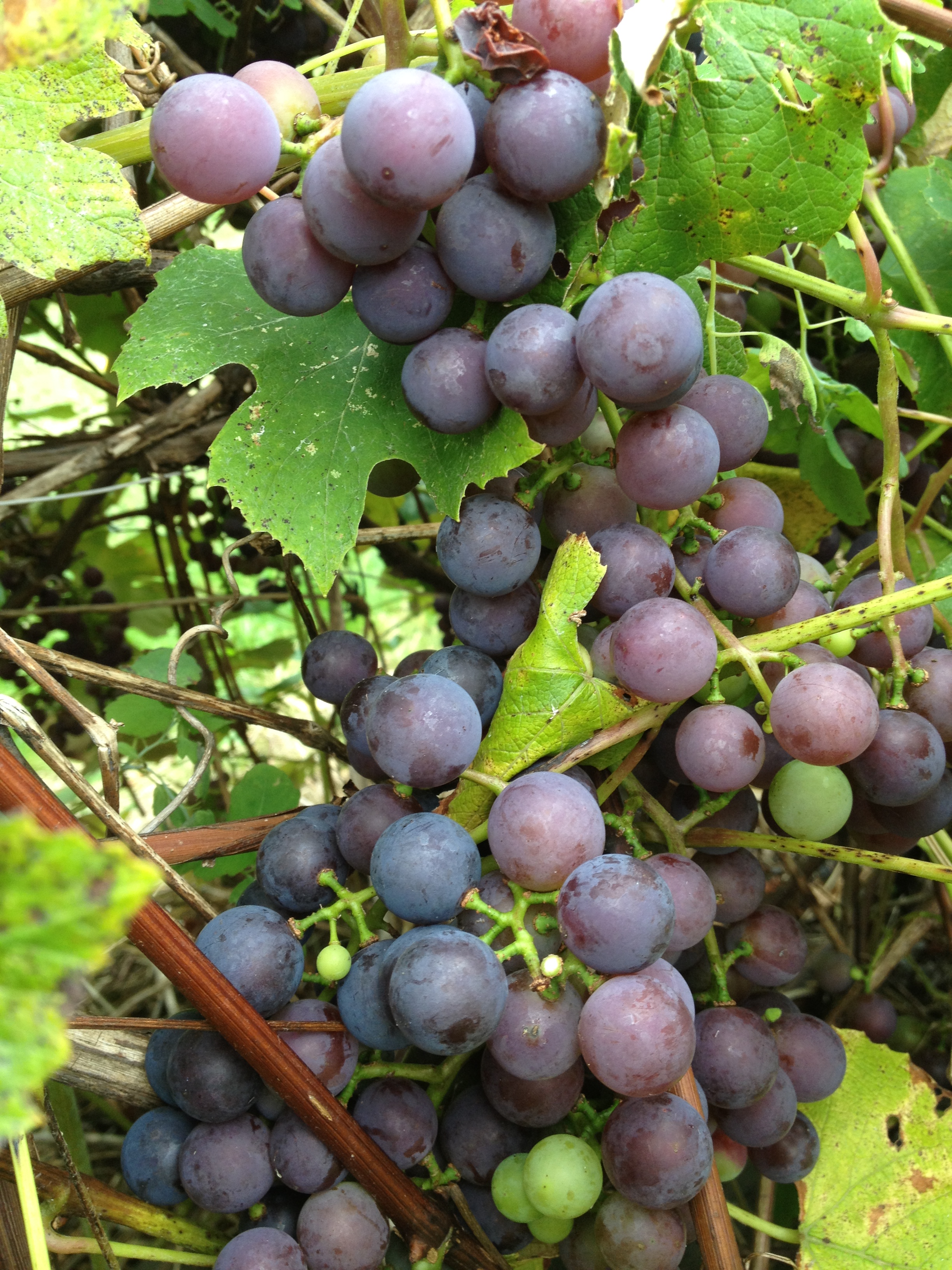
Week 24: Concord Grapes

IMG_2350

My husband and I have submitted a contract on an historic home built in 1680 in Maine. It is a lovely old farmhouse on a river with beautiful wood floors, plenty of fireplaces to ward off the winter chill, a detached barn for his woodworking shop, an orchard and Concord grape vines. We’ve grown apples, cherries and pears before, but we’ve never had grape vines.  I wasn’t sure about how to harvest them or what I could make with them and decided to do a little research.

The Concord grape is derived from the grape species Vitis labrusca (also called fox grape). The skin is typically dark blue or purple, and  is sometimes covered with a lighter-colored “bloom” that can be rubbed off. Concord grapes have large seeds and are highly aromatic. They are a slip-skin grape variety, meaning that the skin is easily separated from the fruit.

Cultivation

Concord grapes produce fruit in the first year they are planted and can grow as much as 20 feet per year. If they are not pruned heavily during the dormant season, the vine will be forced to support long sections of non-fruiting wood with shorter sections of fruiting wood at the end and productivity will be limited.

Concord grapes need a special climate to grow – specifically, chilly areas near large bodies of water like the Great Lakes, the Finger Lakes Region of New York, Southwestern Michigan and the Yakima Valley in Washington. In the United States over 400,000 tons of Concord Grapes are harvested each year in September and October.

History

Though American Indians had long enjoyed Concord grapes, they were not considered particularly enjoyable by early colonists.  It wasn’t until the 1850s, when American grapes began to be hybridized with European varieties, that they became more widely grown and consumed.

Legend has it that amateur farmer Ephraim Wales Bull planted 22,000 wild grape seedlings in 1849. After six years he finally selected a single vine he thought worth keeping and named it after his hometown. In 1853, Bull’s grape won first place at the Boston Horticultural Society Exhibition and was then introduced to the market in 1854. It quickly spread throughout the country and became one of the most popular variety of grapes due to its hardiness and ability to withstand cold climates.  The grape is now widely grown in Washington, New York, and what has become known as the “Concord Grape Belt” of  eastern Lake Erie.  Bull’s original vine still exists today in Concord and its descendants have produced the most commonly-used grape in American commercial production.

Dr. Thomas Bramwell Welch developed the first Concord grape juice in 1869. Fermentation was inhibited through the process of pasteurization. Welch originally introduced the grape juice to his church, to be used for communion.

Uses

Concord grapes are still used to make Kosher wine and Sacramental wine. The oldest sacramental winery in America, O-Neh-Da Vineyard, still produces a concord wine for the altar. However, they are primarily used for jelly and grape juice, soft drinks and candy.

Health Benefits

Concord grape juice has been shown to provide many of the same heart-health benefits of red wine, without alcohol consumption. They contain plant nutrients called polyphenols which act as antioxidants. Concord grapes also support the immune system and cognitive health and are an excellent source of manganese, vitamin K, and thiamin (vitamin B1).

Resources

American Indian Health and Diet Project

Concord Grape Association

Wikipedia

http://www.grapescience.com

http://www.welchs.com

Week 23: Mustard


mustard plant


Mustard is a condiment made from the seeds of a mustard plant. The term “mustard” is derived from the the French words moust (must) and ardens, which means “burning.”  A moustarde was originally made from unfermented juice pressed from grapes and mustard seed and made into a pungent table relish.

The mustard plant is biennial which means that their life cycle lasts two years, although only annuals are cultivated today. They are known as cruciferous plants because of their four-petaled flowers that resemble a cross. Cruciferous plants (radishes, horseradish, turnips, and cress) are very high in sulfur which adds to their pungency. There are three types of mustard seeds: white, brown and black.

History

Mustard has been cultivated for thousands of years – the ancient Chinese grew several species in their gardens.  One of the earliest written references to mustard was found on a 4,300 year old clay Sumerian tablet. Mustard seed was prescribed medicinally by Hippocrates (460-370 BC) who is considered to be the father of medicine. Wild mustard plants were described by the Roman naturalist Pliny the Elder (A.D. 23-79) as growing wild everywhere in Italy without cultivation. Pope John XII was so fond of mustard that he created a new Vatican position – grand moutardier du pape (mustard-maker to the pope) – and promptly filled the post with his nephew.

Mustard seeds contain 30-35 percent oil. At one time, the oil was used as a lubricant, in soap-making and was burned in crude oil lamps.  Mustard is also used as a cover crop to hold soil in place and when plowed under, it nourishes the soil.

Mustard is available in three forms:  mustard seed, ground mustard or cream, a blend containing vinegar or wine and various spices. Ground mustard seeds develop their pungency when cold water is added. which causes a chemical reaction between an enzyme in the seed and a substance called gycoside.  The reaction takes about 15 minutes to reach its peak. 

Culinary Uses 

Mustard is high in calcium, folic acid, vitamin C and potassium. Dijon-style mustards are made from brown or black mustard seeds.  The exact formula for Grey Poupon dates back 200 years and is a closely guarded secret.

 Grey Poupon

The most commonly used mustard in the United States and Canada is American Mustard sold as “Yellow mustard,” a very mild prepared mustard colored bright-yellow by turmeric. The R.T. French Company first introduced it on a hot dog at the 1904 St. Louis World’s Fair.

 French's mustard

Medicinal Uses

In Biblical times, mustard seeds were used for their laxative properties and to treat indigestion.  In the Middle Ages, mustard was used for asthma, coughs and chest congestion. In China today, mustard seeds are used to treat colds, stomach problems, abscesses, rheumatism, lower back pain and ulcers.  The leaves of the mustard plant are used to treat bladder inflammation. Mustard helps cleanse the entire respiratory tract by breaking up nasal and lung congestion and by clearing the sinuses. Medicinally, the most common use of mustard is in a plaster applied topically to warm the area and to relieve pain, ease sore muscles and loosen stiff joints.


Resources

Wikipedia

Antol, Marie. The Incredible Secrets of Mustard.

http://homecooking.about.com


Week 22: Artificial Food Color

Why is some cheddar cheese orange when it is made from white milk?

English farmers first began dyeing cheeses in the 16th century (originally using marigold petals or carrot juice) because the dye made low-fat cheese look more like high-fat cheese, which commanded higher prices. When U.S. commercial cheese production took off in the second half of the 19th century, dyeing with annatto, a yellow orange vegetable dye which is made from the seeds of the achiote tree, to achieve consistency in cheese color. Cheese made from spring and summer milk tended to be naturally yellower than cheese made from fall and winter milk, since grass is more abundant and nutritious in spring and summer. Today, many supermarket cheddars are still colored to satisfy consumer’s expectations of what cheese should look like – but they are colored with artificial food colors. And cheese is not the only product which contains Artificial Food Color (AFC).

We are exposed to artificial food colors on a daily basis from food products that include beverages, cheese, cereal, pickles, pudding, popsicles and nearly all processed foods in addition to nonfood items like toothpaste, shampoo, laundry soap and cosmetics.

For centuries, people and companies used dyes derived from natural ingredients to color food. But many of these natural colors contained toxins such as mercury, copper and arsenic.

  • Red lead (Pb3O4) and vermillion (HgS) were routinely used to color cheese and confectionery.
  • Copper arsenate (Cu3(AsO4)2) was used to recolor used tea leaves for resale. It also caused two deaths when used to color a dessert in 1860.

Around the turn of the 20th century, scientists began creating synthetic colors, derived from coal tar (a petroleum product) to replace the natural ones that were toxic. In 1856, mauveine, the first synthetic color,  was developed by Sir William Henry Perkin.

In 1906, the Pure Food and Drugs Act (a.k.a. the “Wiley Act”) instituted the first restrictions on color additives in the United States. In general terms, the law banned artificial colors that proved “injurious to health,” and the government hired chemist Dr. Bernard Hesse to investigate which of the existing 80 dyes being used in foods were safe enough to keep legal. The next three decades saw a process of eliminating colors that caused recurrent adverse health effects in the public. By 1938, only 15 synthetic colors were still legal, and those were subsequently divided into three categories: those suitable for foods, drugs, and cosmetics; those suitable only for drugs and cosmetics; and those suitable only for cosmetics.

Today only seven colors remain on the FDA’s approved list.

  • Blue No. 1 – Blue
  • Blue No. 2 – Indigo
  • Green No. 3 – Turquoise
  • Red No. 3 – Pink
  • Red No. 40 – Red
  • Yellow No. 5 – Yellow
  • Yellow No. 6 – Orange

The most commonly used AFC is Red #40 (82 foods and candies), with Yellow #5 (69 foods/candies) and Yellow #6 (62 foods/candies) next.

food colors

In a recent study published in Clinical Pediatrics, Purdue University researchers found the products with the greatest amount of AFCs were Cap’n Crunch’s Oops All Berries (the No. 1 worst cereal, with 41 mg of AFCs and 15 g of sugar per serving), Fruity Pebbles, Trix and Fruity Cheerios. Among candies, those highest in AFCs included M&Ms, Reese’s Pieces, Strawberry Twizzlers and Skittles. Also ranking high were candy corn, jelly beans and Peeps.

The authors quote several behavioral studies that have shown that AFCs “caused significant hyperactivity-type changes in children both with and without ADHD.” A study in 2007 at the University of Southampton, six dyes that came to be known as the “Southampton Six“ were linked to hyperactivity in children, and now require warning labels in the E.U. The FDA, however, is not so convinced that such measures are necessary. FDA scientists have theorized that bad reactions to artificial colorings in certain individuals may be like a food allergy, affecting only a small number of people rather than the entire public.

The Grocers Manufacturing Association which represents Coca Cola, Nestle and General Mills and is not in favor of labeling. The companies rely on coal tar colors for visually-appealing products and the cost of finding replacement ingredients, changing recipes, and possibly losing sales could put them out of business.

A recent petition by the Center for Science in the Public Interest, a consumer advocacy group, has called for a ban on the use of artificial dyes in food.  The group has targeted its petition at the U.S. Food and Drug Administration, seeking the phasing out of artificial food dyes linked to serious health risks.

More and more companies are voluntarily making changes as the desire for natural products increases. The cheese industry is making a shift toward using annatto color to replace Yellow #5. Naturally colored and flavored alternatives to gummies, lollipops, cereals, yogurts and gum are now readily available. Look for the label that states:  “Contains no artificial colors, flavors or preservatives.”

Cooking at home?  The best way to avoid artificial food coloring is to fill your plate with fresh fruits and vegetables. To enhance the foods you prepare, you can use the juices from the following foods to add color to your culinary creations:

  • Green: spinach juice
  • Orange: pumpkin or carrot juice
  • Pink: raspberries or beetroot
  • Blue: blueberries
  • Purple: red cabbage or grapes
  • Yellow: yellow carrots, turmeric powder, saffron flowers

Using natural food colors will produce more of a pastel color than the commercially produced dyes so you may need to experiment if you seeking a very specific end result. However, the taste will be better, you won’t experience allergic reactions or side effects and your body will thank you!


Resources

http://foodmatters.tv

http://www.laweekly.com

http://www.forbes.com

http://www.slate.com

http://www.wikipedia.com


Week 21: Fiddleheads


It is finally spring on the New Hampshire Seacoast!  The snow has melted.  Crocuses, hyacinths and daffodils are blooming. And the local farmers markets will begin soon – with an abundant selection of organic meats and cheeses, farm fresh eggs, breads, and early produce – lettuce, spinach, peas and fiddleheads.

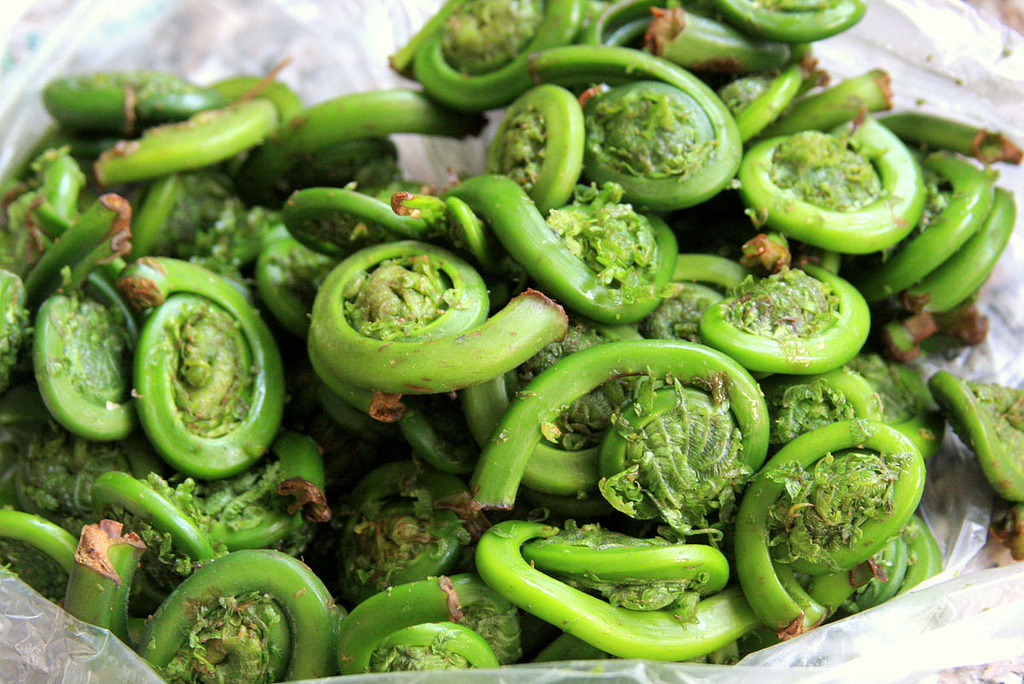
fiddleheads

“What is a fiddlehead?”   Fiddleheads are the furled fronds of an ostrich fern. They get their name from their resemblance to the head of a fiddle or violin. Fiddleheads are harvested early in the season before the frond has opened and reached its full height. Bright green specimens are best with only an inch or two of the stem.

A number of fiddlehead festivals are held in New England to celebrate the arrival of spring. Maine celebrated its 3rd Annual Fiddlehead Festival in early may and Vermont is celebrating their First Annual Fiddlehead Festival at Mount Snow Valley this weekend,  May  23-26,  with music, cooking classes and contests, children’s games and fiddling contests. Vintners, artists, distillers, publishers, cheese makers, weavers, potters, jewelers, chefs, photographers, farmers, and artisan chocolatiers will be showcasing their products.  For more information, visit http://vermontfiddleheadfestival.com.

Culinary Uses

Fiddleheads taste somewhat like asparagus or young spinach, freeze well and are easy to prepare. Do not eat fiddleheads raw as they can be the source of food-borne illnesses.  Rinse in cold water, steam or sauté with butter. They can be added to salads, omelets or grains.

Health Benefits

Fiddleheads have antioxidant activity, are a source of Omega-3 and Omega-6 fatty acids, and are high in iron and fiber. Certain varieties of fiddleheads have been shown to be carcinogenic.

Resources

http://localfoods.about.com

http://www.vermontfiddleheadfestival.com

Wikipedia


Week 20: Mushrooms

“Edible” mushrooms are the fungi with no poisonous nor adverse affects when consumed by humans. They grow both above and below ground and may be wild harvested or cultivated.

Edible mushroom species have been found in association with 13,000 year old ruins in Chile, but the first reliable evidence of mushroom consumption dates to several hundred years BC in China. The Chinese value mushrooms for medicinal properties as well as for food. Ancient Romans and Greeks used mushrooms for culinary purposes.

No one has yet developed a simple test to tell if a mushroom is edible or not. Roman Emperors used “food tasters” to make sure that mushrooms were safe to eat.The old myths of cooking with a silver coin or spoon, and the Laotian belief that harmful mushrooms make rice turn red have not been substantiated.

Over 20 species of mushrooms are commercially cultivated.  The most common are:


enoki  mushrooms

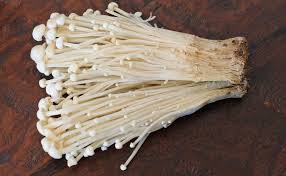
Enoki  (enokitaki or golden needle mushrooms) –  long, thin mushrooms grown in clusters on the stumps of the Chinese Hackberry tree and also on mulberry and persimmon trees. They exist in the wild and are also cultivated in a carbon dioxide-rich environment which ensures longer stems and a white color, as opposed to those found in the wild which are usually a darker brown. They are used in Asian cuisine, particularly in soups.

oyster mushrooms

Oyster mushrooms – scalloped-shaped mushrooms that grow like “shelves” on the bark of dead hardwood trees.  They have an anise-like aroma and can be gray, blue, pink, yellow or white. Occasionally tan caps can be found that grow up to 18 inches in diameter.  Generally, oyster mushrooms can be harvested two or three times from the same bark during the growing season. Oyster mushrooms are used in stir-fry recipes since they have a thin cap which cooks quickly.

button mushroom

White mushrooms (“button”) – most commercially available mushroom.  Freshest specimens have closed caps. Considered a universal mushroom, it has a mild, fresh flavor and may be cooked or eaten raw.
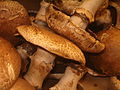
Portobello mushrooms

Portobellos (also baby bellas) – A cousin of the white mushroom, portobellos resemble an umbrella with thick, meaty flesh. The larger portobellos are often substituted for meat in sandwiches and vegetarian recipes.

Shitake mushrooms

Shitake – the second most widely cultivated mushroom in the world. The shiitake has a medium-sized, umbrella-shaped, tan to brown cap. The edges of the cap roll inwards. The underside and stem are white.

The Chinese were the first to cultivate this mildly fragrant mushroom more than six hundred years ago. Yield and quality varied from year to year until scientific techniques were developed. Japanese scientists developed a method of inserting pencil-shaped plugs of mycelial spawn grown from specially selected varieties into holes bored in oak logs. Today shitake mushrooms are grown in the United States as well as in Asian countries on a variety of materials containing cellulose, such as sawdust enriched with rice bran.

The following species are commonly harvested from the wild:
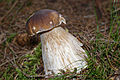
Porcini mushroom

Porcini (Pig mushroom) – sold fresh in Europe but is only available dried in the U.S. Known in Germany as “stone mushrooms”, in Russia as “white mushrooms”, in Albanian as “wolf mushrooms”, and in France as the “cèpe”.

changerelle mushrooms

Chanterelle – The yellow chanterelle is one of the best and most easily recognizable mushrooms, and can be found in Asia, Europe, North America and Australia. The cap is fleshy, with wavy, rounded cap margins tapering downward to meet the stem. The gills are not the usual thin straight panels hanging from the lower surface of the cap, as we see in the common store mushroom. Instead, the ridges are rounded, blunt, shallow, and widely spaced. At the edge of the cap they are forked and interconnected. The chanterelle’s aroma is variously described as apricot- or peachlike. The European and Asian varieties are about the size of a thumb, while North American varieties can weigh up to two pounds.
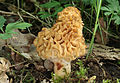
Morel mushroom

Morels – usually found in open scrub, woodland or open ground in early spring as the snow melts. They resemble tall pointed hats pitted with hollow spaces. Because of it’s appearance, it is sometimes referred to as the “sponge mushroom.”  Avoid morels whose caps are soft or mushy, or become granular when rubbed, as they old and wormy.

Maitake mushroom

Maitake (also “hen of the woods” or “sheep’s head”) – a large, hearty mushroom commonly found on or near stumps and bases of oak trees.
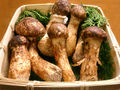
Matsutake mushroom

Matsutake (“pine mushroom”) – highly prized in Japanese cuisine, this mushroom grows most abundantly along the coast of the state of Washington. The cap is dark brown, scaled, and bell-shaped, and perches atop a massive round stem that looks like the cut section of a ripe sugar-cane stalk.With age, the cap and stem develop rusty stains where bruised. It is distinguished by a clean, spicy odor.

Buying and cleaning mushrooms

When buying mushrooms, look for firm caps and wholesome odors. If the mushrooms are beginning to decay, brown, slimy, smelly soft spots will appear on their surface. Avoid fragmenting gills or pore surfaces, and worm holes.

Do not clean mushrooms until you are ready to use them as they will deteriorate rapidly when wet. Cut off the lower portion of the stems, and brush gently with a nylon mushroom brush or wipe off with a damp cloth to remove any soil or growing medium. Rinse the gills, if exposed, as they can harbor insects. Dried mushrooms will keep in the refrigerator or freezer for several months and can be rehydrated in hot water when you are ready to prepare them.

Drying mushrooms

After cleaning the mushrooms, using as little water as possible, cut into slices about 3/8 inch thick. The slices should be of uniform width so that they will dry at the same speed. Plan to work on your mushrooms as soon as you bring them home. Do not leave them lying around to deteriorate. Avoid overlapping the slices on trays so that they will dry evenly.

If you do not have a commercial food dehydrator, you can dry your mushrooms in flats of wire screen doors, or plastic mesh above ovens, fireplaces, or heating units. One mushroom enthusiast used an abandoned refrigerator with a fan and a 75-watt light bulb.

When slices are completely dry, place them in metal cans or glass jars. If you are uncertain about their state of dryness, transfer them into paper bags, and hang in a dry, warm place over an oven or fireplace for a few days. Then put them into containers, adding a few dried bay leaves or a handful of whole black peppers to discourage insect pests. Be sure to label containers with the date and the species identification.

Health Benefits

Mushrooms, when exposed to UV light, convert ergosterol, a chemical found in large concentrations in many mushrooms, to Vitamin D2.

In Japan and China the chemicals found in shiitakes have been analyzed for medicinal properties, although some of their medicinal claims have not been proven. Extracts have been used in treating cancer, and claims have been made that they reduce cholesterol, enhance sexual power, prolong life, kill viruses, and improve circulation.

 Resources

http://www.mssf.org

Wikipedia
Week 19: Chilies vs. Peppers

Five-Peppers-Colors-1

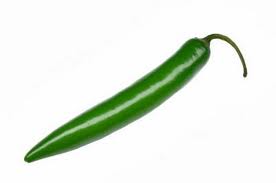
What is the difference between chilies and peppers? They are actually the same thing and are differentiated by their potency. Chili peppers are fruit from the plant from the genus Capsicum which are members of the nightshade family. Chili peppers have been a part of the human diet in the Americas since at least 7500 BC. They originated in the Americas and there is archaeological evidence at sites located in southwestern Ecuador that chili peppers were cultivated more than 6000 years ago. A physician on Columbus’ second voyage to the West Indies in 1493, brought the first chili peppers to Spain and first wrote about their medicinal effects in 1494. They were likely introduced to Asia by Portuguese traders in the 16th century.

 Peppers are commonly broken down into three groupings: bell peppers, sweet peppers, and hot peppers. The substances that give chili peppers their intensity when ingested or applied topically are capsaicin and related chemicals, referred to collectively as capsaicinoids. When consumed, capsaicinoids bind with pain receptors in the mouth and throat that are responsible for sensing heat. These receptors send a message to the brain that the person has consumed something hot and the brain responds to the burning sensation by raising the heart rate, increasing perspiration and releasing endorphins.

 The “heat” of chili peppers was historically measured in Scoville heat units (SHU), a method developed in 1912, which is a measure of the dilution of an amount of chili extract added to sugar syrup before its heat becomes detectable to a panel of tasters; the more it has to be diluted to be undetectable, the more powerful the variety and therefore the higher the rating. Smaller chili peppers are usually hotter than larger varieties.The modern method for measuring the SHU rating uses liquid chromatography.

 Some of the more common chili peppers are:

 bell peppers

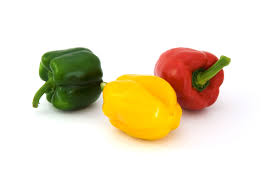
Bell Pepper- (SHU 0) red, green and yellow varieties add color and texture to recipes.

 cayenne

Cayenne – (SHU 30,000-50,000) often used in Cajun recipes.  Green cayenne peppers ripen in the summer, while hotter red cayenne peppers come out in the fall. They are also dried and ground.

 chipotle

Chipotle – (SHU 3,500-8,000) a smoked, dried whole jalapeno pepper, usually canned.

 ghost pepper

Ghost Pepper (SHU 855,000-1,463,700) – the hottest of all peppers, with no culinary nor medicinal uses.

 habanero

Habanero – (SHU 100,000-350,000) extremely hot chiles with a fruity flavor.

 japenos

Jalapeno – (SHU 3,500-8,000)  spicy chiles with rich flavor.  Green jalapenos are best in the late summer, while red jalapenos appear in the fall.  Canned jalapenos aren’t as fiery as the fresh ones.

 poblano

Poblano –  (SHU 1,000-2,500) These mild, heart-shaped peppers are large and have very thick walls, which make them great for stuffing.  They’re best in the summer.

Paprika peppers in Central Market in Budapest

Paprika peppers in Central Market in Budapest

Paprika – (2,500-8,000) Common in Hungarian cuisine. Usually sold dry or ground, with some versions smoked.

 scotch bonnet

Scotch Bonnet – (SHU 100,000-350,000) almost indistinguishable from the habanero, except that it’s a bit smaller;  popular in the Caribbean.

 serrano

Serrano – (SHU 10,000-23,000) These have thin walls, so they don’t need to be charred, steamed, and peeled before using.

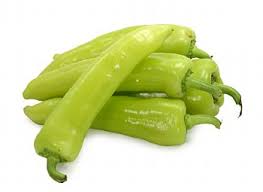
 banana pepper

Sweet Banana Pepper – (SHU 100-900) long, thin-skinned yellow pepper with a mild, fruity flavor often used in salads.

 Culinary Uses

Chili peppers are used both fresh or dried. The leaves of every species of Capsicum are edible and do not contain any toxins. They are often cooked as “greens” or added to soups. Fresh or dried chilies are often used to make hot sauces that can be added to other foods to add spice.

Red chilies contain large amounts of Vitamin C and small amounts of Vitamin A. Yellow and especially green chilies (which are essentially unripe fruit) contain a lower amount of both substances. In addition, peppers are a good source of most B vitamins, in particular Vitamin B6 and are very high in potassium, magnesium, and iron.

Chili peppers contain oils which can burn skin and especially eyes. Avoid direct contact as much as possible. Many cooks wear rubber gloves while handling chilies, or generously grease your fingers with any kind of shortening (even the cooking sprays can help). In any case, after working with the chilies, be sure to wash your knives, cutting board and anything else thoroughly with hot soapy water.

 Medicinal Uses

Although chilies have been used as a topical analgesic to ease the pain of arthritis, herpes zoster (cold sores) and headaches, a study done in 2008 linked it to skin cancer. Capsaicin extracted from chilies is used in pepper spray.

Resources

allrecipes.com

culinaryarts.about.com

Wikipedia
Week 18: Rosemary

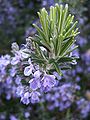
Rosemary is a perennial herb with fragrant, evergreen, , needle-like leaves and white, pink, purple, or blue flowers.  The name “rosemary” derives from the Latin word ros for “dew” and  marinus for “sea”  or “dew of the sea”. Rosemary is used as a decorative plant in gardens and can grow quite large and retain attractiveness for many years.  It can be pruned into formal shapes and low hedges, and therefore is used for topiary. Rosemary also has many medical and culinary uses.

90px-Rosmarinus_officinalis133095382

Health Benefits

In the lab, rosemary has been shown to have antioxidant properties. Antioxidants can neutralize harmful particles in the body known as free radicals, which damage cell membranes, tamper with DNA, and even cause cell death. Also in the lab, rosemary oil appears to have antimicrobial properties (killing some bacteria and fungi in test tubes).

Rosemary contains substances that are useful for stimulating the immune system, increasing circulation, improving digestion, relieving heartburn, flatulence, liver and gallbladder complaints, and loss of appetite. It is also used for gout, cough, headache, and high blood pressure. It improves blood flow to the head and has a reputation for improving memory and has been used as a symbol for remembrance during weddings, war commemorations and funerals in Europe and Australia. During the Middle Ages, a bride would wear a rosemary headpiece and the groom and wedding guests would all wear a sprig of rosemary, and from this association with weddings, rosemary evolved into a love charm. Newlywed couples would plant a branch of rosemary on their wedding day. If the branch grew, it was a good omen for the union and family.

Rosemary is applied topically to the skin for preventing and treating baldness; and treating circulation problems, toothache, eczema, and joint or muscle pain, such as myalgia, sciatica, and neuralgia. It is also used for wound healing, in bath therapy, and as an insect repellent.

Culinary Uses

Native to the Mediterranean region, rosemary leaves are used as a fragrant flavoring in foods such as eggs, potatoes, roast lamb, pork, chicken and turkey. Rosemary is high in iron, calcium and vitamin B6.

Fresh rosemary should be stored in the refrigerator either in its original packaging or wrapped in a slightly damp paper towel. You can also place the rosemary sprigs in ice cube trays covered with either water or stock that can be added when preparing soups or stews. Dried rosemary should be kept in a tightly sealed container in a cool, dark and dry place where it will keep fresh for about six months.

Resources

http://www.botanical.com

http://www.herbco.com

https: //umm.edu/health

http://www.webmd.com

Wikipedia

Week 17: Milk Alternatives

Milk is the best source of calcium and vitamin D for our bodies.  It promotes healthy bones and teeth too. But what if you’re lactose intolerant? Lactose intolerant means you can’t digest lactose, a type of sugar found in dairy products. What can you use on cereal in the morning or for baking? Here are some solutions for milk alternatives.

Almond Milk

almond milk

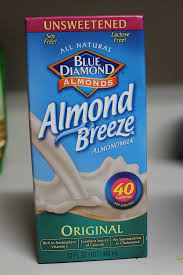
Almond milk is a beverage made from ground almonds. It does not contain any animal products, is cholesterol and lactose-free. It is slightly beige in color and often has added vanilla and sweeteners.  Historically, almond milk was used in medieval kitchens because it had a long shelf life and did not spoil.

Almond milk has less protein than cow’s milk, but it is rich in nutrients including fiber, vitamin E, magnesium, selenium, manganese, zinc, potassium, iron, phosphorus, tryptophan, copper, and calcium. Almond milk is available in unrefrigerated cartons with the Blue Diamond or Silk brand label.

Coconut Milk

coconut milk

Coconut milk is the liquid that comes from grated coconut. Coconut milk is used in many tropical cuisines and as a base for curries.  Coconut milk works well in baked goods and can be found canned or in cartons in the milk aisle. It has a high saturated fat content, but is rich in vitamins C, E, B vitamins, and minerals including iron, selenium, sodium, calcium, magnesium and phosphorous.

Rice Milk

Rice milk

Rice milk is usually made from brown rice and comes unsweetened. It is generally thinner in consistency than nut milks or soymilk, and it has a lighter, sweeter flavor that is good for use in cereal or coffee. Compared to cow’s milk, rice milk contains more carbohydrates, does not contain cholesterol nor lactose and does not contain significant amounts of calcium or protein. Commercial brands of rice milk are often fortified with vitamins and minerals.

Soy Milk

soy milk

Soymilk is not technically milk, but rather a beverage made from soybeans. It is the liquid that remains after soybeans are soaked, finely ground, and then strained. The earliest existence of soy milk is evidenced in a kitchen scene on a stone slab from China that dates to 25AD.  Soy milk is very prevalent in Asian households and is used to make tofu. “Sweet” and “salty” soy milk are both traditional Chinese breakfast foods, served either hot or cold, usually accompanied by steamed buns. One cup of unfortified soymilk contains almost 7 grams of protein, 4 grams of carbohydrate, 4½ grams of fat, and no cholesterol. Although soymilk supplies some B vitamins, it’s not a good source of B12, nor does it provide a significant amount of calcium.

Resources

http://www.bbcgoodfood.com

http://www.dairyfreecooking.com

http://www.fitday.com

http://www.latimes.com

http://www.supercow.com

http://www.wikipedia.com

Week 16: Asparagus

My husband and I visited Vienna, Austria a few years ago during the “Spargel Festival.” Spargel is the German word for asparagus. Spargelfests, celebrated from mid-April to mid-June, include peeling contests and even the crowning of an asparagus queen! We stayed at the Hotel im Palais Schwarzenburg surrounded by spectacular flower gardens in the center of Vienna. It is a real palace, a part of which was converted to a five-star hotel to help support its maintenance costs. One afternoon we rented bicycles for a ride along the Danube. Every restaurant in Vienna was offering menu items using tender stalks of white asparagus and we stopped at a riverside cafe for lunch. I enjoyed a creamy asparagus soup while my husband opted for a plate of steamed asparagus.  It was delicious!

We normally associate asparagus with spring as it is one of the earliest vegetable to emerge from the soil. But it is now available in markets year round and makes hearty soups, risottos and strudels to warm chilly winter nights.

IMG_1600

History

Asparagus has been used both as a vegetable and medicine since ancient times.  A recipe for cooking asparagus was found in one of the oldest surviving cookbooks, Apicius’s third-century AD De re Coquinaria,  Book III.  It was also depicted as an offering in a 3000 AD Egyptian frieze. Although asparagus was cultivated in France during the 16th century, it didn’t reach the United States until 1850.

Cultivation and Purchase

Asparagus is a perennial garden plant and member of the lily family.  Its spears from a crown that is planted about a foot deep in sandy soil, although it is usually not harvested until three years after planting.  A well cared for asparagus plant can live for 15 years, producing spears for about 6-7 weeks during the spring and summer. Asparagus spears can grow up to 10 inches in a 24-hour period and must be picked often.

There are three varieties of asparagus: the green asparagus we see most often in the supermarket, white asparagus (soil is heaped on the spears as they emerge which inhibits the development of chlorophyll content, therefore creating its distinctive white coloring), and purple asparagus (only 2-3 inches tall and fruitier in flavor).

When purchasing asparagus, look for straight spears that are not wrinkled or dried out. Although some people think the thinner stalks are more tender, that is not always true. White asparagus is very tender, although it must be peeled with a vegetable peeler, as the outside is fibrous and even woody at times.  Wrap asparagus spears in a damp paper towel or cloth and refrigerate until ready to cook. Do not keep asparagus for more than a day or two after purchase as it will dry out and become tough.

Health Benefits

Asparagus is a nutrient-dense food which in high in Folic Acid and is a good source of potassium, fiber, vitamin B6, vitamins A and C, and thiamin. Asparagus has no fat, contains no cholesterol and is low in sodium. It also contains saponins which are known to have anti-inflammatory and anti-cancer properties.

Resources

Wikipedia

World’s Healthiest Foods (www.whfoods.com)

Week 15: Root Vegetables


Root vegetables generally refer to any part of a root that is used for food and can include tubers, corms, bulbs and rhizomes – basically any part of the plant that grows below ground.  Root vegetables lend themselves well to cold storage and are generally served during the winter months. Most common root vegetables are carrots, turnips, beets, onions, parsnips, rutabaga, potatoes, and sweet potatoes but also include garlic, celery root, and ginger root,

Carrots

Historically carrots were grown for their seeds and leaves, although the taproot is the portion that we eat today. Carrots are usually orange, though purple, red, white, and yellow varieties exist. The modern carrot originated in Afghanistan about 1100 years ago.  Carrots contain no starch, are rich in Vitamin A, antioxidants and minerals.

Turnips

turnips

The most common turnip, which is also a taproot,  is mostly white-skinned where it is grown underground and reddish or purplish where it is exposed to sunlight. The interior flesh is entirely white.  Turnip “greens” or leaves are also eaten. At one time, lanterns made from hollowed-out turnips were used for Halloween and in Nordic countries, the turnip was a staple before potatoes were introduced. Turnips are high in Vitamin C.


Beets

golden beets 

The beet is another taproot that is eaten, as are the beet greens. Beets are generally red although yellow varieties are also popular.  In Eastern Europe beet soup, known as borscht, is common. Beets are antioxidant, anti-inflammatory, and aid in detoxification. They help protect against heart disease, birth defects and certain cancers, especially colon cancer.


Onions

The onion bulb is cultivated as a vegetable, although it is generally used as a meat or vegetable accompaniment and rarely served alone. They are very pungent when cut and contain compounds that irritate the eyes. Onions come in white, yellow and red varieties.  In the Middle Ages, onions were thought to be such important vegetables that they were given as gifts and used to pay rent. Gladiators were rubbed down with onions to firm their muscles, and at one time onions were considered a remedy for hair loss and snakebites. Onions have potential anti-inflammatory, anti-cholesterol, anticancer and antioxidant properties


Parsnips

 parsnips

The parsnip is a cream-colored taproot that was once used as a sweetener before cane sugar was introduced to Europe. The sap of the parsnip plant is toxic and can cause chemical burns on skin. Parsnips are rich in vitamins and minerals, especially potassium. They have anti-inflammatory, antioxidant, anticancer and anti-fungal properties.

Rutabagas

The rutabaga is a cross between a cabbage and a turnip, and is thought to have originated in Scandinavia or Russia.  The roots and top are both edible and are also used as fodder for livestock. In the US, rutabaga is mostly eaten as part of stews and casseroled, served mashed with carrots, or baked in a pastry.  They are often part of a New England boiled dinner. Rutabagas are high in antioxidants, has anti-cancer properties, is high in Vitamin C and forms both collagen and the thyroid hormone thyroxine, which protect cells against damage, encourage wounds to heal, fight infections, and promote healthy bones, teeth, gums, and blood vessels.

Potatoes

The potato is an edible tuber introduced to North America from the Andes in the 1600s. Potatoes are the fourth largest food crop and there are over 5,000 varieties worldwide. They are best known for their carbohydrate or starch content which provides fiber and bulk. Potatoes provide protection against colon cancer, improve glucose tolerance and insulin sensitivity, lower plasma cholesterol and triglycerides, increases satiety, and possibly even reduces fat storage

Sweet Potatoes

The sweet potato is not related to the regular potato. It is an edible tuberous root with a smooth skin whose color ranges between yellow, orange, red, brown, purple, and beige. Its flesh ranges from beige through white, red, pink, violet, yellow, orange, and purple. Sweet potato varieties with white or pale yellow flesh are less sweet and moist than those with red, pink or orange flesh,  They originate from South America where remains of the sweet potato have been found that date to 8,000 BC. Sweet potatoes are rich in carbohydrates, Vitamin A, Vitamin C and potassium.


Resources

Wikipedia

http://www.thedailygreen.com

http://www.whfoods.com