A rooster was crowing somewhere. The room was still dark, but the sky outside the small rectangular window high on the wall above my bed had lightened to a pale gray. I opened one eye and tried to focus on the clock—5:45 AM. I was tired and the idea of getting up early for work didn’t seem as much like a good idea as it had the night before.
I dragged myself out of bed and went down the hall to the bathroom. After dressing and applying my makeup one eye at a time (the mirror on my bedroom wall was too small to see anything more), I pinned my hair up. Picking up my chef’s uniform on its hanger, I quietly slipped out into the cool morning air without waking my roommates. Their shifts also started at 9 AM, but they were all working in restaurants in Positano and could get up later and still have time to walk to work. I needed to catch the bus to Amalfi at 7:05 AM.

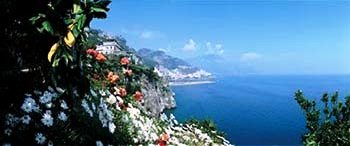
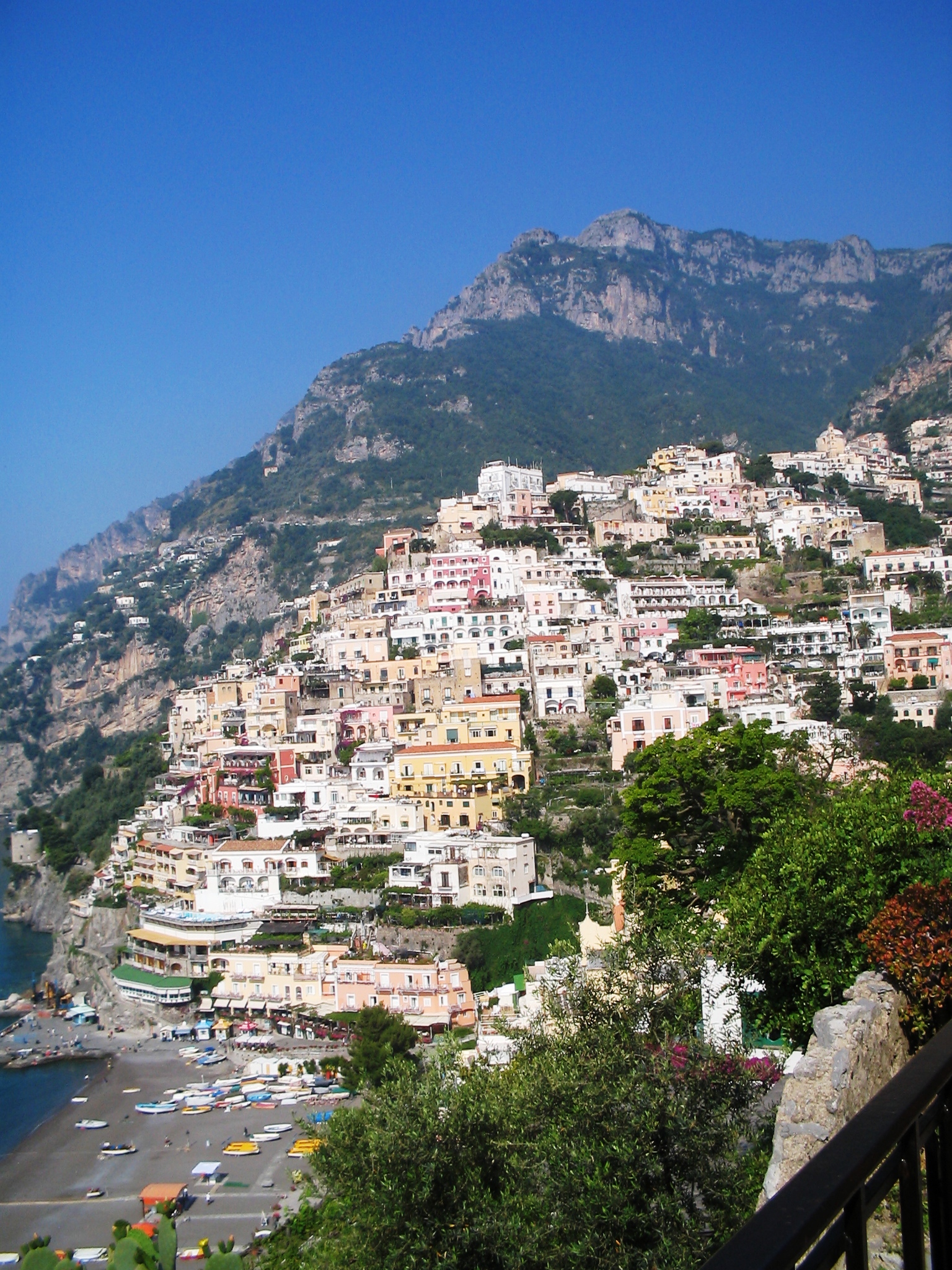
The costiera amalfitana, orAmalfiCoast, is located on the southern edge of theSorrentoPeninsula south ofNaples and is distinguished by the majesticLattariMountains that plunge to theTyrrhenian Sea. The town of Positano, where I was living for the summer with three other culinary interns, was known as la citta verticale, the vertical city. It was impossible to walk anywhere without encountering hundreds of stone steps. Faded pastel-colored stucco houses perched on the cliffs with the older, bougainvillea-draped homes at the top. Laundry danced from balconies in the sea breezes. Narrow cobblestone passageways tumbled down the hillside, lined with expensive shops selling hand-made leather sandals, brightly-colored beach ware, hand-painted ceramics and products, like Limoncello liqueur, derived from the huge, aromatic lemons for which the area is known. Candles with a sweet citrus scent and bars of lemon-scented soap perfumed the air. There were numerous hotels and restaurants, a deli, a coffee shop, a couple of Tabacchi shops and an internet cafe near the bottom of the village along the gray sand beach.
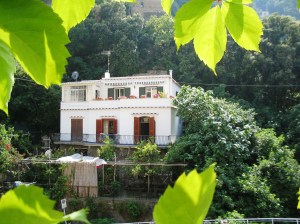
Our apartment sat in a hollow in the center of the village, accessed by walking down more than 200 wide stone steps. (That meant that to leave the apartment, you had to walk UP all those steps!) As I left for the bus stop, I passed a man sweeping steps outside a barber shop. Small garbage trucks stopped to collect trash bags set outside the doorways of houses and shops. A stout woman with a watering can showered brightly colored flowers in clay pots on her balcony.
“Buon giorno,” greeted a woman walking her dog down the hill.
“Buon giorno,” I replied as I trudged up the hill.
The sea was calm – a darker gray than the horizon. There were a couple of fishermen in their bright blue and yellow rowboats just off shore. The sun flashed a smile as it peeked around the mountains to the east. I reached the stone bench at the bus stop just as I heard the rumble of a diesel engine and the big, blue SITA bus came to a screeching halt in front of me.
Because the villages along theAmalfiCoastare cut into the steep cliffs, the road connecting them is a series of hairpin turns along the cliffs. The hotel where I was working in the town ofAmalfiwas curved to fit the winding road and clung to the hillside several stories down between the road and the sea. It was cream-colored stucco with dark green trim adorned with window boxes spilling with colorful flowers. A brass plaque to the left of the front door identified it as a “Five Star Hotel” and a “Member of the Small Leading Hotels of the World.” A cluster of motor scooters, yellow, silver, blue and white, huddled by the employee entrance to the left of the main door.
I entered the open doorway and went down three flights of stairs (Ugh! I’m going to have to walk back up) to the basement where I shared a locker with one of the dishwashers. The room was the size of a coat closet. I quickly changed into my uniform, took a deep breath and climbed the steps to the kitchen.

Pots and utensils banged as a woman gathered them from the end of a stainless steel table and took them to the sink where hot water was streaming into a sink of soap bubbles.
“Buon Giorno,” greeted Roberto, the pastry chef. The whirr of the large floor mixture added to the cacophony of the kitchen as he added eggs to the homemade mayonnaise that he was making.
“Buon Giorno, Roberto.”
I stepped aside as a delivery person pushed a dolly stacked with crates of vegetables into the kitchen. He handed an invoice to the head chef who began checking the items to make sure the order was complete. An animated discussion ensued, the chef’s voice sounding like a staccato typewriter as he questioned the delivery man about the freshness of the fennel and eggplant.
A waiter entered through the swinging door from the dining room with a tray of dirty dishes. He placed it on the counter, gathered up a basket of fresh croissants and quickly returned to the dining room.
Everyone in the kitchen was Italian which challenged my language skills. They were always shouting across the room to each other and dramatically waving their hands around. I only understood part of what was being said and sometimes felt like I was living in a Godfather movie!
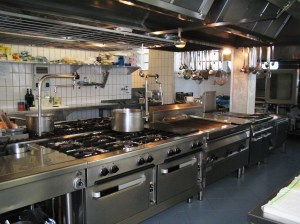
I retrieved a fresh apron from a drawer in the kitchen and tied it around my waist. In the mornings we did a lot of prep work. At first I thought they were giving me all the tomatoes to dice, carrots and potatoes to peel and zucchini to shred with the mandoline because I was the intern or apprentice (or maybe a woman? InItaly, the kitchen is a man’s domain. Only our dishwashers were female). But I looked around and noticed that everyone else was also dicing and slicing ingredients for the day’s recipes.
This morning I was separating the basil leaves from the stems and getting ready to wash them. When I was finished with the basil, I minced the garlic and then diced cherry tomatoes for the tomato sauce and grated fresh Parmigiano cheese. My final task for the morning was to peel and cut carrots into a julienne cut (think shoestring potatoes – very thin slivers). I was told to fill an entire bucket with carrots which took most of the morning.
The kitchen staff at the hotel was organized more like the French brigade system. Instead of having a number of line cooks, they were all station chefs and were assigned specific duties in the kitchen based on either the cooking method or category of items to be produced. The grill station chef was responsible for all grilled items and also prepared the employee lunch for the day, which we ate at 11:30AM before the hotel lunch service began. The Executive Chef (we just called him “Chef”) posted the daily specials on the bulletin board along with that day’s employee menu. The employee lunch was generally some type of meat, a vegetable and pasta of the day. Today’s meal was breaded chicken cutlets, green beans and macaroni and cheese. The hotel fed about 60-70 employees for lunch and another 20 at dinner time.
The chef’s lunch room was an enclosed porch just off the kitchen. The table was always set with a white table cloth and paper napkins. There were platters of fruit, baskets of fresh bread and bottled water – both acqua naturale and gassata—on the table. Only the chefs sat on the porch. The other hotel employees used a lunchroom that was down one flight of stairs in the basement. I was the only woman among 15 men at the chef’s table and feeling a little self-conscious, I ate quickly and returned to the kitchen.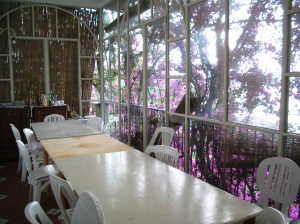
In the afternoon, I helped one of the chefs, Alessandro, make pasta dough using a dough hook and a huge mixer that sat on the floor. He placed the big ball of dough on the “pastry sheeter.” This was a piece of heavy equipment that resembled a wood planer, if you’re familiar with woodworking equipment. It was about 6 feet long and sat on the floor. It had a waist-high 18 inch wide conveyer belt on it. In the center was a “press” that you could adjust downwards. You controlled the forward or backward movement of the conveyor belt with levers on the side of the machine. Each time the dough moved along the conveyor belt, you lowered the press a little more so that you ended up with a thin sheet of pasta dough when you were finished. (The Pastry Chef also used the sheeter to make “laminated” doughs—these are the ones with layers and layers of dough alternating with butter that are used to make flaky croissants.)
Next Alessandro laid the long, thin sheet of pasta dough on a large marble table. He showed me how to brush it with an egg wash that would help the ravioli seal when we added the top layer. (I had made ravioli several times at home, but they always came apart. Perhaps this egg wash was the secret step I was missing?)

Chef used a spatula to put pumpkin ravioli filling into a pastry bag and then piped teaspoon-sized portions of the filling at intervals along the pasta dough. Alessandro placed a second sheet of dough over the first and let me cut heart-shapes around each “lump” of filling with a cookie cutter. We pressed them together around the edges to seal each piece of ravioli and placed them on a metal sheet pan. Then the sheet pan was put into a flash freezer that would freeze them solid in just a couple of minutes. The finished raviolis were stored in a plastic container in a regular reach-in freezer until needed for service.
I glanced up at the clock and noticed that it was almost time to go home. We were always so busy that the day passed quickly. Removing my soiled apron, I tossed it into the laundry basket and dashed down the steps to the locker room. I changed into my regular clothes and hurried back up the steps to street level, emerging breathless from the hotel just as the bus arrived. The bus ride along the winding coast road took about 45 minutes and was crowded with tourists. Back in Positano, I maneuvered down the cobbled alleyways to the internet café near the beach to check my email from home and then headed back up the hill to the main piazza. (My legs were certainly getting a work out here!)
Fresh tomatoes were displayed in crates outside the deli along with eggplant, zucchini, fennel, onions, garlic and a dazzling display of fresh flowers. I decided to stop and get something for a light dinner. The deli was narrow with shelves on one side stacked from floor to ceiling with paper products, pasta, olive oil, vinegar and canned goods. The refrigerated glass case on the other side held a vast array of meats and cheeses. I selected two ripe, red tomatoes, a fresh baguette, a bottle of olive oil and a wedge of soft provolone cheese. The old man behind the counter weighed and tabulated my purchases, placing them in a white plastic sack for me to carry back to the apartment.
At the apartment, I unpacked my purchases and drizzled olive oil on a crusty slice of bread. I layered it with a slice of provolone and a juicy slice of tomato for my dinner and took it outside to eat on the porch. We had two metal chairs that sat on our porch which was shaded by lemon trees and overlooked our yard of evenly-spaced basil plants (no grass). It was a very peaceful place to read and I needed to review my Italian language before the next day at work.



 theadmiralschef